
 EN
EN



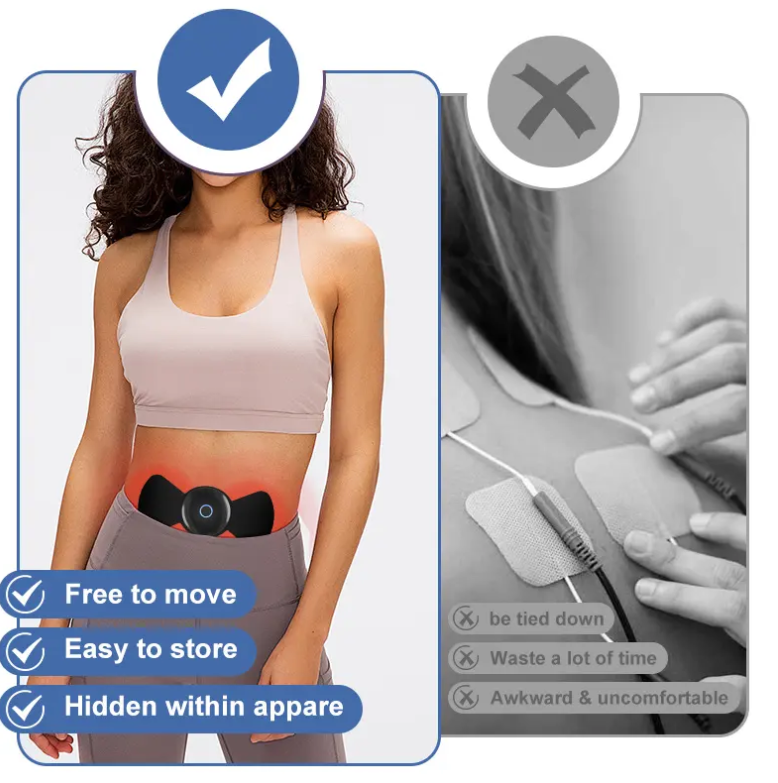
The Simple Job That Makes or Breaks the Therapy
Electrode pads might look like unremarkable sticky patches, but their role in TENS and EMS therapy is absolute. Without a reliable connection between the device and the skin, even the most advanced stimulator becomes useless. These pads serve as the conductive bridge, transferring controlled electrical pulses from the device into the targeted nerve or muscle tissue. The consistency of that transfer determines whether a session feels like a clean, comfortable signal or an erratic, stinging annoyance. When a therapist or an athletic trainer complains about inconsistent results, the first question rarely targets the machine itself. Nine times out of ten, the culprit sits right on the surface of the skin, slowly degrading with every use.
Cutting Through the Confusion Between TENS and EMS Pad Demands
A common assumption treats all electrode pads as interchangeable commodities, but the electrical requirements of TENS and EMS differ in ways that punish a one-size-fits-all approach. TENS targets sensory nerves for pain relief, typically relying on shorter pulse durations and higher frequencies that prioritize surface-level comfort. EMS, by contrast, drives deeper into motor nerves to trigger muscle contraction, often demanding a larger conductive surface area and a more aggressive waveform. A pad that performs well for a low-current TENS setting may falter badly when asked to sustain the repeated, higher-energy pulses of an EMS muscle recovery program. The failure mode is silent and gradual, showing up first as a hot spot under the pad edge rather than a full loss of signal.
Why the Gel Layer Deserves More Respect
The heart of any electrode pad is the hydrogel layer, a engineered polymer network swollen with water and ionic compounds. This layer does not just glue the pad to the skin. It manages the critical interface impedance, filling the microscopic air gaps between the metal or carbon conductor and the rough terrain of human skin. A higher-grade gel maintains low impedance over a longer period, resisting the drying effect of body heat and ambient air. Cheaper formulations with a lower water-binding capacity can degrade quickly, especially in dry indoor environments where forced-air heating drops the relative humidity below thirty percent. When impedance climbs, the stimulation device compensates by raising output voltage, which in turn increases the perception of discomfort and reduces battery life. The difference in materials cost between a premium hydrogel and a generic one amounts to only a few cents per pad, yet that margin entirely shapes the user experience.
A Closer Look at Real-World Pad Failure
Back in a physical therapy clinic in Tampa, Florida, the staff noticed a pattern of patient complaints clustered in the summer months. The same electrode pads that lasted two weeks in winter were failing in five days during July and August. The air conditioning kept the indoor temperature steady, so the obvious suspect was humidity. High ambient moisture was infiltrating the gel’s polymer matrix, causing it to absorb excess water from the air, swell, and lose both tack and conductivity. The clinic switched to a pad with a slightly more cross-linked gel structure designed for high-humidity environments, and the seasonal failures stopped. That single change reduced patient rebooking rates linked to equipment issues by a noticeable margin, without any upgrade to the stimulator hardware itself.
The Carbon Film Versus Metal Mesh Debate
Two electrode construction methods dominate the market, and each carries a distinct electrical signature. Carbon film pads offer an even current distribution across the entire surface, which makes them forgiving on sensitive skin and ideal for low-intensity TENS applications. Their weakness appears under sustained high-current EMS protocols, where the resistive nature of the carbon film generates mild internal heating and accelerates gel degradation near the center of the pad. Metal mesh pads, often built with silver or aluminum layers, conduct more efficiently and hold up better under repeated high-power pulses. The trade-off is a slightly higher risk of edge-effect current concentration if the pad loses adhesion unevenly. Neither design is universally superior, and the right choice hinges on the specific waveform intensity and the user’s skin sensitivity.
| Electrode Type | Current Distribution | Best Suited For | Durability under High Current | Edge Effect Risk |
|---|---|---|---|---|
| Carbon Film | Uniform, forgiving | Low to medium TENS | Moderate, prone to gel heating | Low |
| Metal Mesh | Efficient, conductive | EMS and high-power TENS | High, better heat dissipation | Moderate if adhesion fails |
Replacing Pads Before They Lie About Performance
Old electrode pads rarely announce their failure with a complete disconnect. Instead, they begin lying to the therapy device, returning a higher impedance reading that triggers unnecessary voltage compensation. Users experience this as a sharper, more irritating sensation, and the natural reaction is to dial down the intensity. The therapy then drops below the effective threshold, wasting the session. A practical storage routine, such as keeping pads in a sealed pouch away from direct sunlight and wiping the skin clean of lotion before application, extends service life significantly. Even so, the moment a pad loses its edge tack or causes a localized stinging sensation, replacement is the only honest fix. For companies sourcing OEM electrode pads, consistent gel chemistry matters more than initial price, because a batch that degrades ten percent faster can damage brand perception long before the supply contract comes up for renewal. SUNMAS integrates that thinking into every stage of production, maintaining gel formulation consistency and automated precision cutting inside a manufacturing environment that combines ISO 13485 certification with a quality team of 150 specialists. When the pad performs exactly the same on unit number ten thousand as it did on unit number one, the therapy outcome stops being a variable.

