 ×
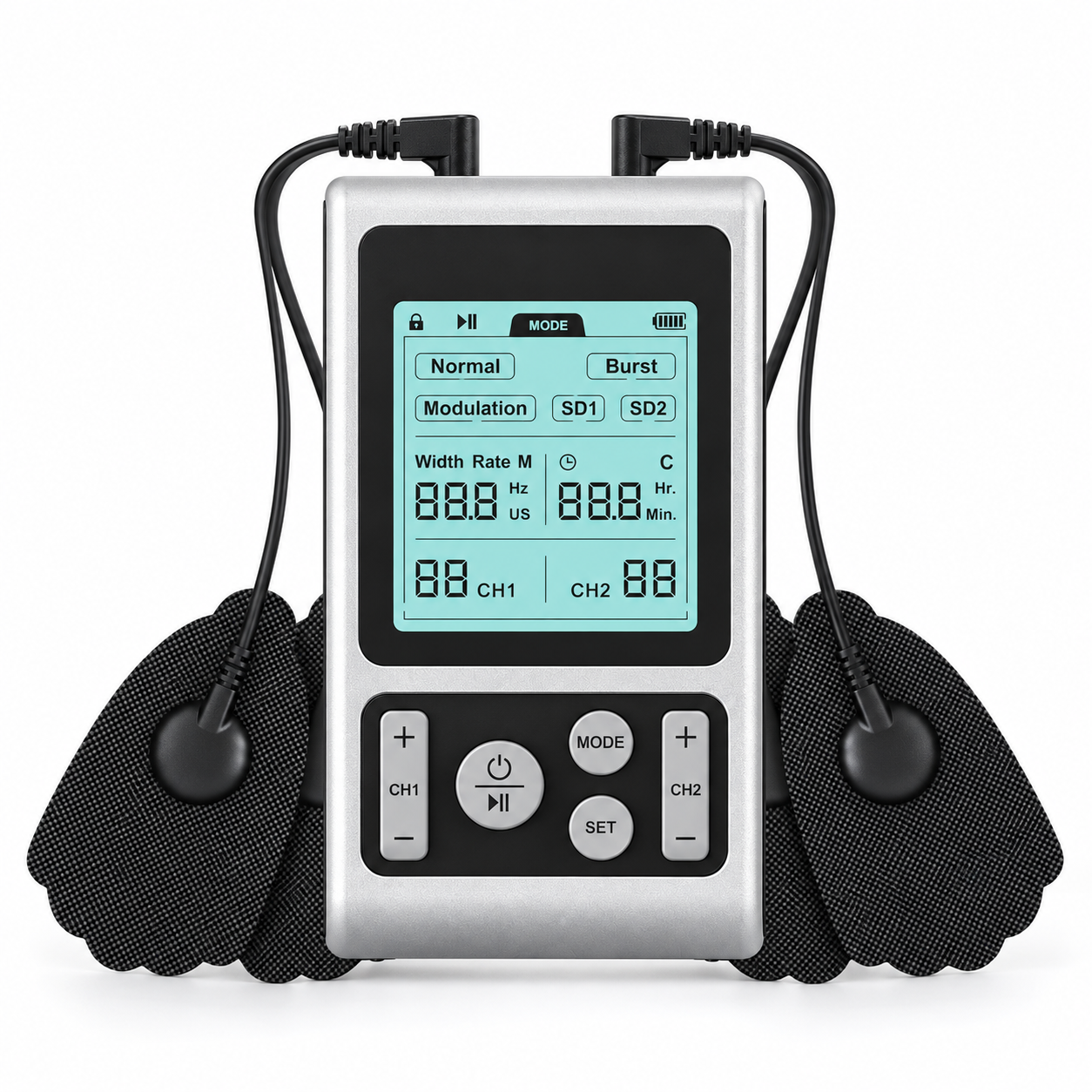
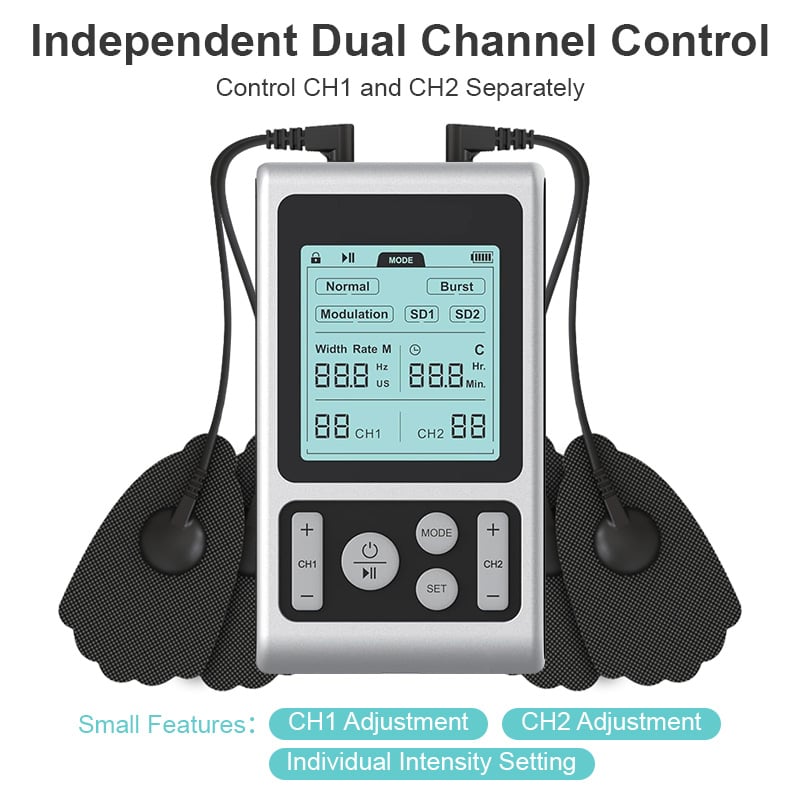
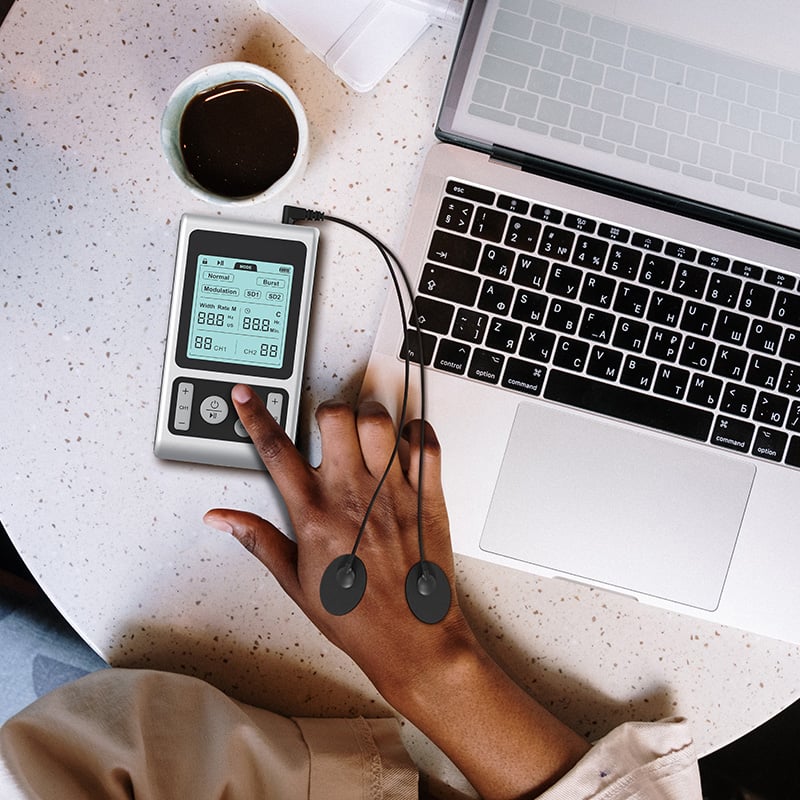
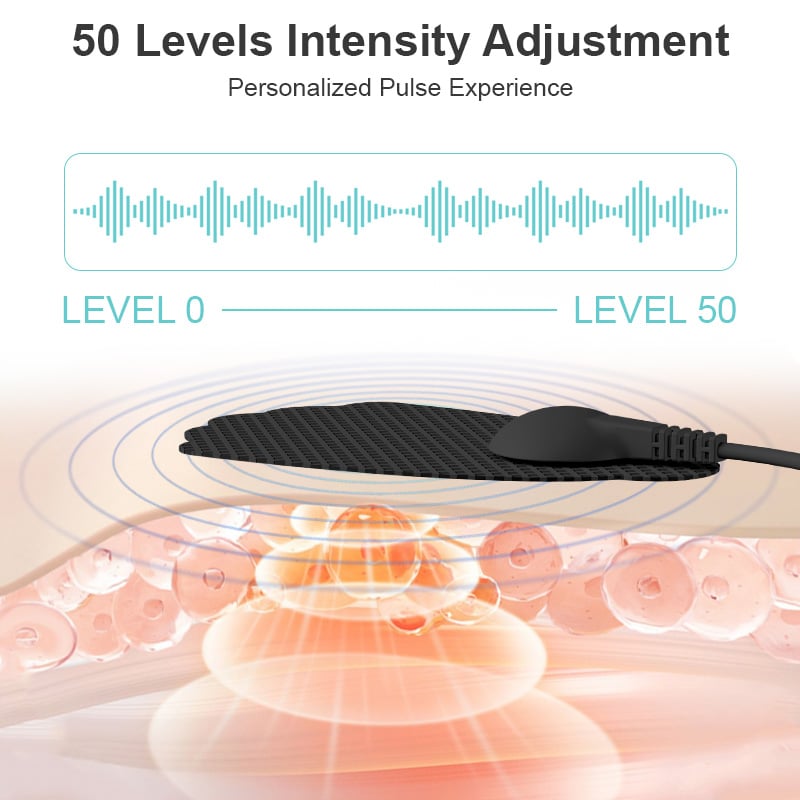
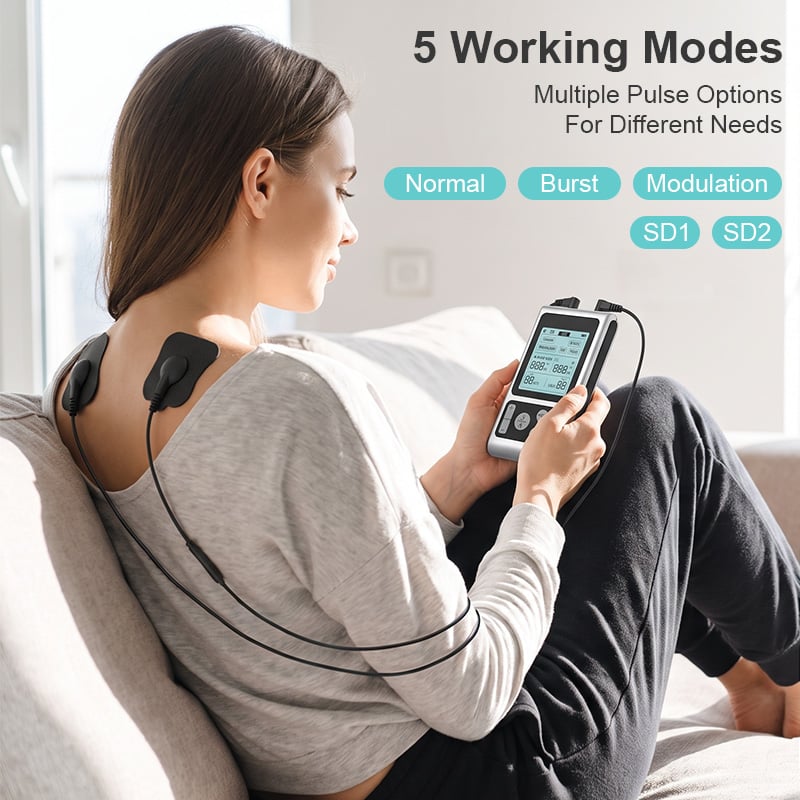
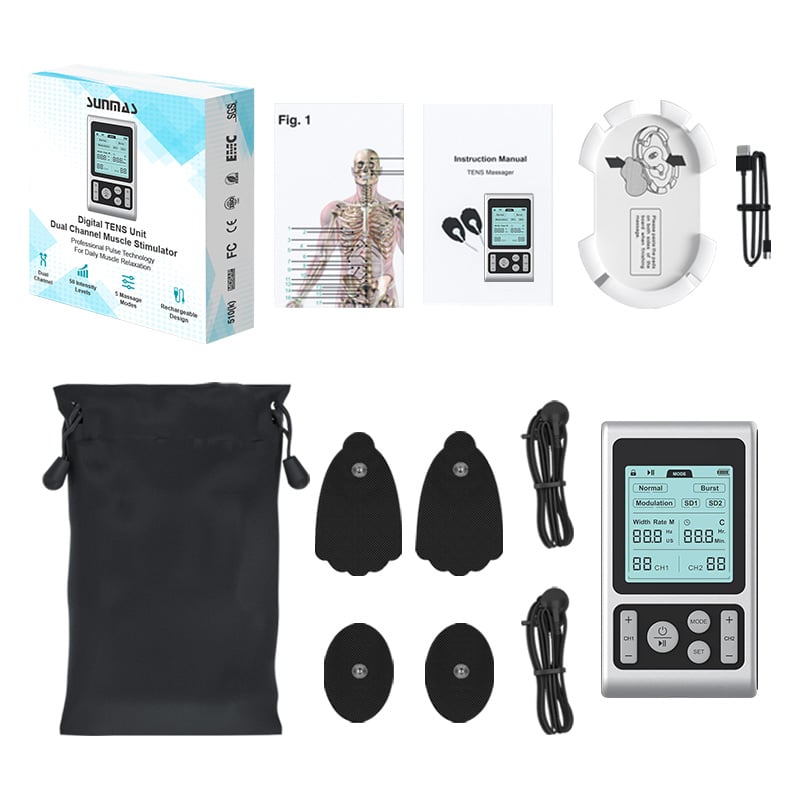
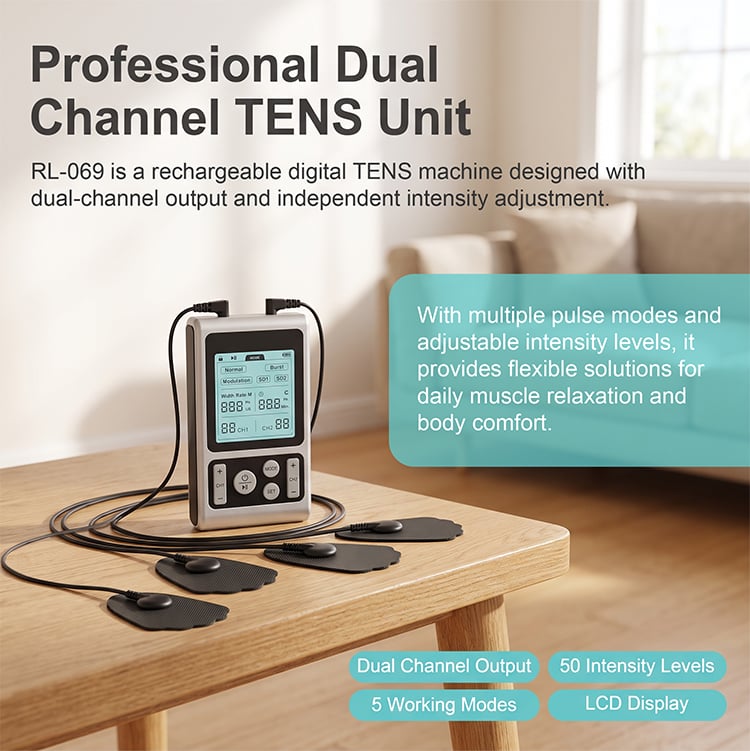
The SUNMAS dual channel TENS EMS unit SM9069A is a rechargeable low-frequency stimulation device designed for pain relief, muscle stimulation and body relaxation. It provides two independently adjustable output channels, allowing users to control the stimulation intensity of each channel separately. The TENS EMS unit features six stimulation modes, 50 intensity levels and adjustable pulse frequency, pulse width and session time.
Product Overview
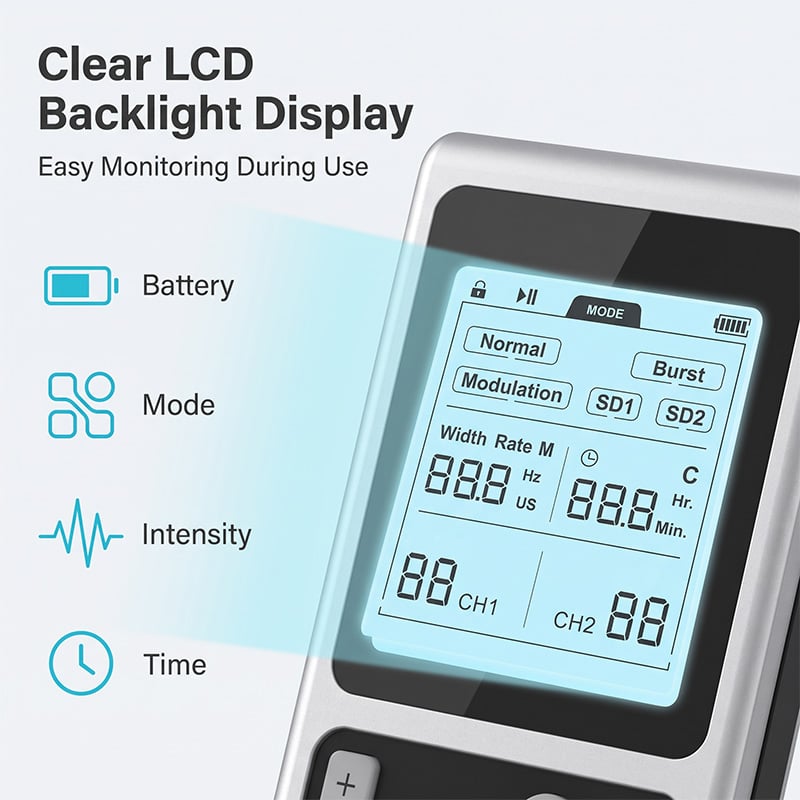
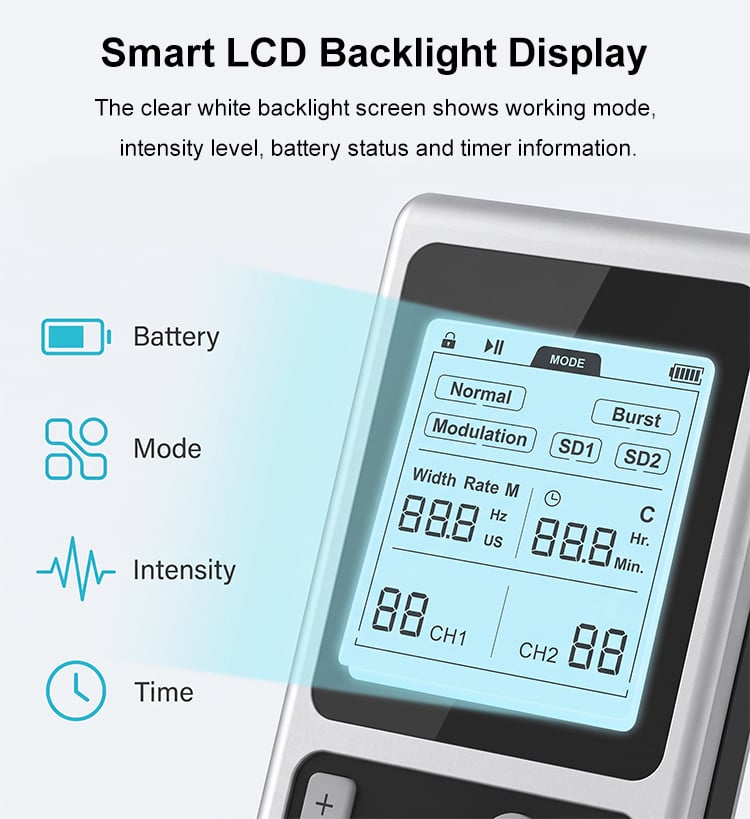
Six mode names, 50 intensity levels, and two dials most units in this category don't have: pulse frequency and pulse width. The SUNMAS SM9069A is a rechargeable dual channel TENS EMS unit built for users who want to shape the stimulation pattern, not just its strength. The two output channels adjust intensity separately, the timer runs from 10 to 90 minutes with a continuous option, and a white-backlit LCD reports mode, intensity, pulse settings, timer and battery status. Memory restores previous settings, up to 60 session records are stored, and no-load detection returns intensity to level 0.

A Closer Look at the Device
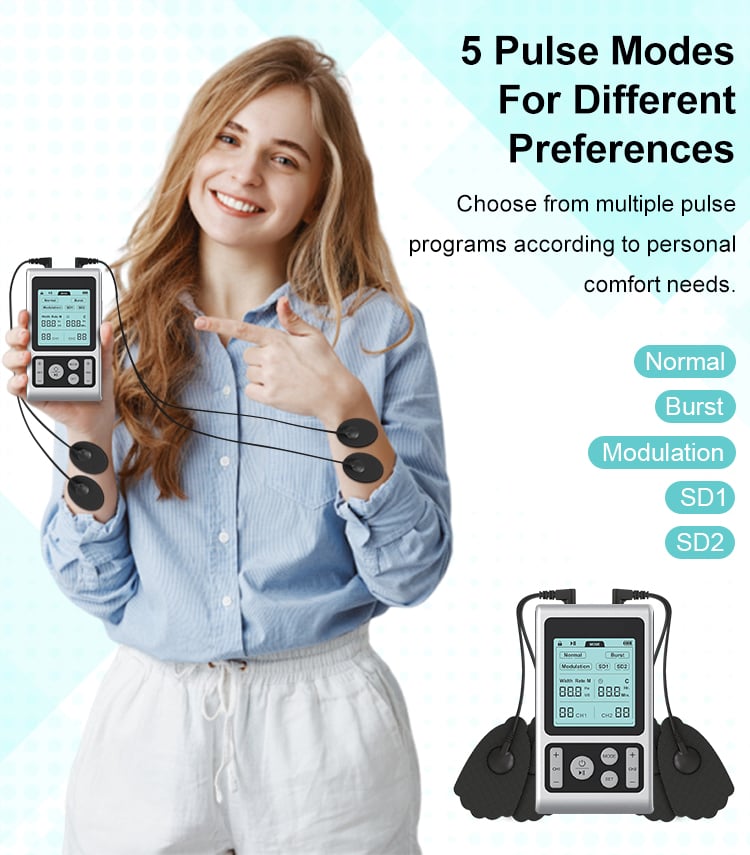
Six modes is not a large number in this category, so the mode list isn't where the SM9069A stands apart. Normal, EMS, Burst, Modulation, SD1 and SD2 cover the familiar pattern types — Normal for steady output, Burst for intermittent pulses, Modulation for patterns that vary over time. SD1 and SD2 are less self-explanatory, and that's worth flagging for buyers writing packaging copy: they'll need a one-line explanation each, because customers will ask. Treating them as two additional stimulation patterns rather than as named technologies is the safer and more accurate framing.
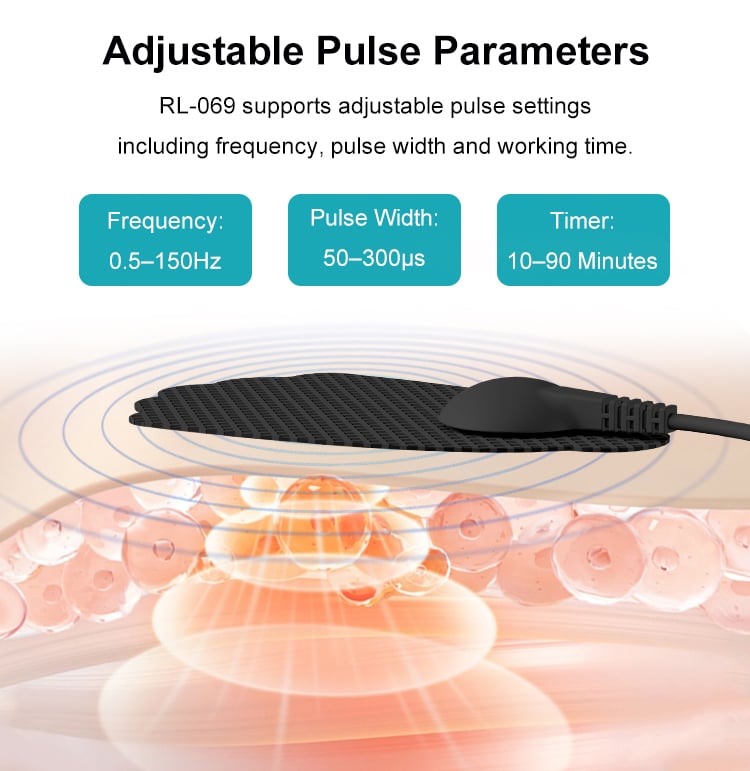
The real differentiator sits below the mode list. Pulse frequency and pulse width are the two parameters that determine how a stimulation pattern actually feels. Frequency governs how often pulses arrive; width governs how long each one lasts. Most devices in this price band lock those values behind a mode name and expose only intensity. The SM9069A lets the user set them directly, which is why it tends to appeal to people who've used stimulation devices before and have opinions about what they want to change. For a first-time user, the same controls are there but not mandatory — pick a mode, set intensity, and the pulse settings can stay where they are.
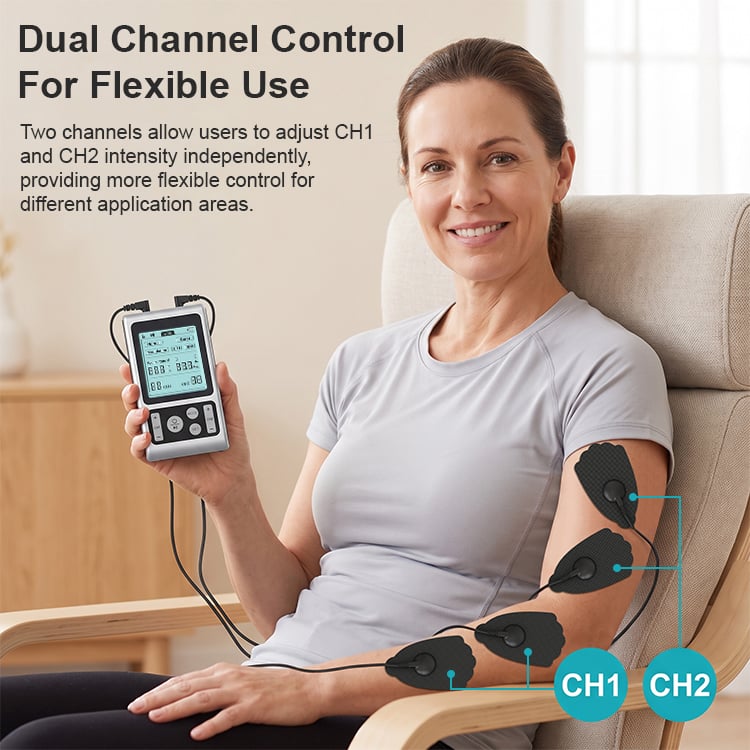
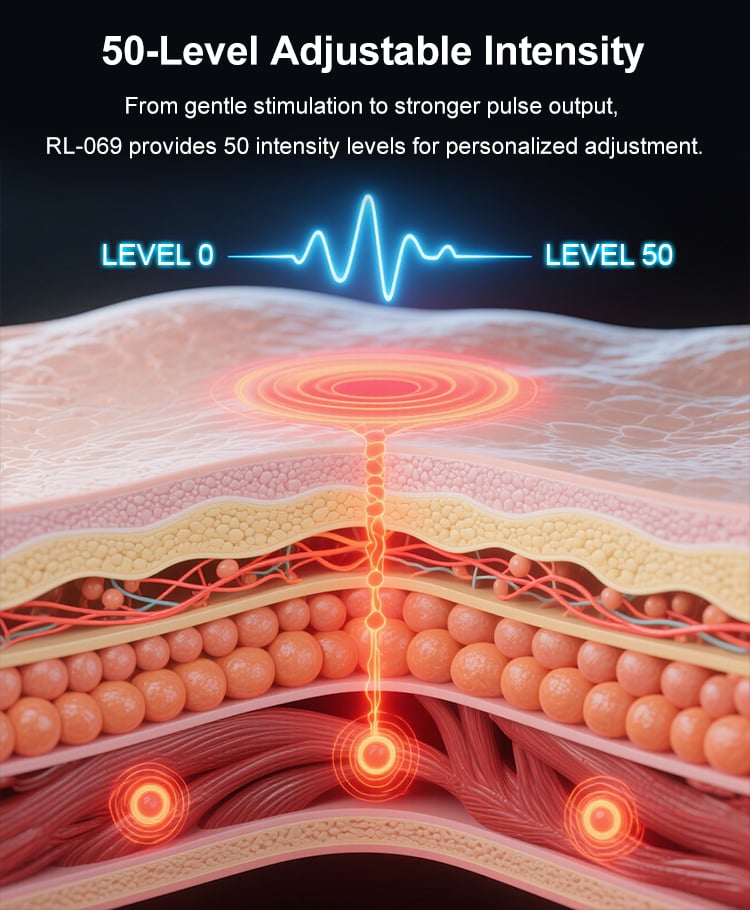
The two channels are independent on intensity: 50 levels each, starting from 0. That's enough resolution to tune two areas separately without landing on a step that's slightly too strong or slightly too weak. Note that the channels share the mode and pulse settings — it's intensity that adjusts per channel. Buyers comparing dual channel models should check that distinction, since "independent channels" gets used for both arrangements.
The timer is where this model departs most visibly from the pack. It runs from 10 to 90 minutes, and there's a continuous operation option for users who don't want a countdown. Ninety minutes is longer than the 60-minute ceiling most comparable units stop at, and continuous operation is rarer still. Both point to a device intended for extended sessions. The practical caveat is battery life: longer sessions and continuous operation draw more from the battery than short timed sessions do, so buyers should pair the timer specification with runtime expectations rather than reading the 90 minutes as a free extension.
Session records are the other feature worth a practical note. The device stores up to 60, alongside memory that restores previous settings. Memory is the convenience feature — switch on, and the last setup returns. Records are the continuity feature, useful for a user running a regular routine who wants to look back at what they did. Neither is essential, but together they suit the kind of user this device is aimed at.
No-load detection and automatic shutdown handle the edges. When no load is detected, intensity returns to level 0 rather than holding at a set strength. Automatic shutdown cuts unnecessary battery draw when the device isn't in operation. The backlit LCD reports mode, intensity, pulse settings, timer and battery status — five readings, which is the minimum for a device whose whole argument is that the parameters should be visible.
Key Features
Two output channels with separate intensity adjustment for different treatment areas.
Six selectable modes — Normal, EMS, Burst, Modulation, SD1 and SD2.
50 intensity levels per channel, with output starting at level 0.
Adjustable pulse frequency and pulse width for shaping the stimulation pattern.
Timer from 10 to 90 minutes, with a continuous operation option.
White-backlit LCD showing mode, intensity, pulse settings, timer and battery status.
Memory and session-record functions — restore previous settings and store up to 60 session records.
No-load detection returns intensity to level 0; automatic shutdown reduces unnecessary battery use.
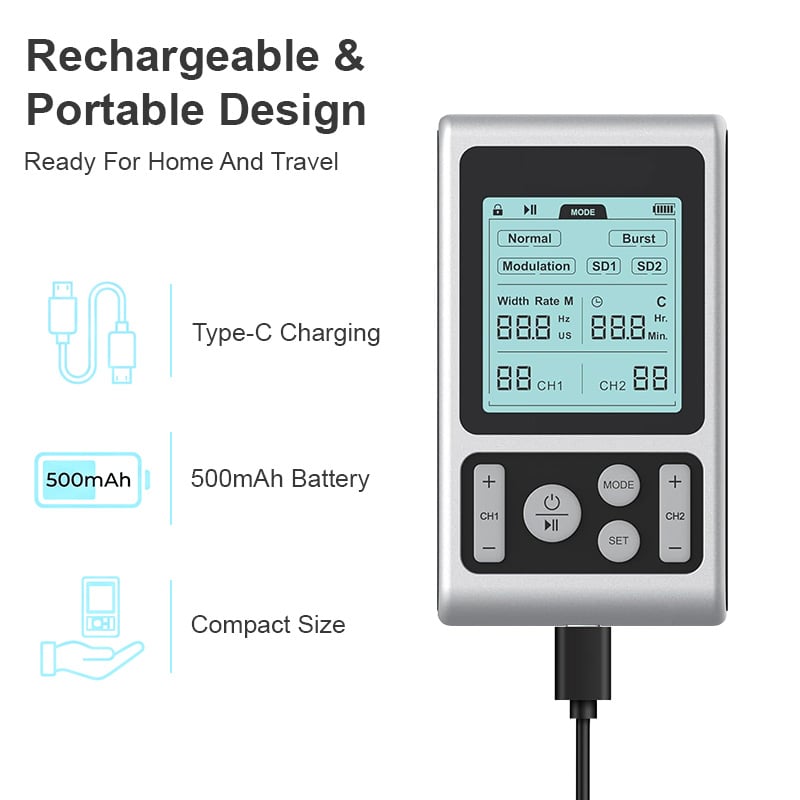
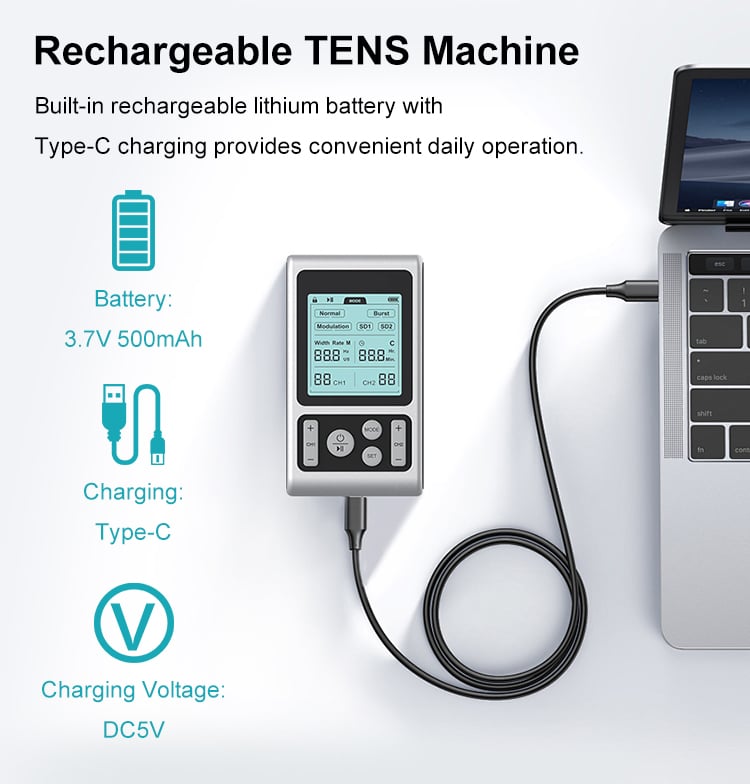
Rechargeable operation.
Technical Advantages
Pulse parameters exposed, not buried. Adjustable frequency and width let users shape the pattern itself. Intensity alone changes how strong a session is; these two change what it feels like.
Fifty intensity steps per channel. Fine resolution on each side means two areas can be tuned independently rather than approximated to the nearest available level.
A 90-minute timer with continuous operation. The range and the continuous option extend the device past short sessions. Read alongside battery behavior, they define what kind of use the unit is built for.
Session records paired with memory. Memory handles the everyday convenience of returning to a previous setup; records handle continuity across a routine, storing up to 60 sessions.
No-load detection that resets rather than holds. Intensity returning to 0 when no load is detected is the careful version of the behavior — the device doesn't sit armed at a set strength.
A display that shows the parameters being adjusted. Mode, intensity, pulse settings, timer and battery on one backlit LCD. On a device that exposes pulse frequency and width, visible values are what make adjustment practical.
Where It Fits
The SM9069A is suitable for home and outdoor use. Connected to compatible electrode pads, it can be used for targeted TENS pain relief, EMS muscle stimulation and everyday body relaxation. Users can adjust each channel independently when applying stimulation to different suitable body areas. Always follow the product instructions for electrode placement and intensity adjustment.
In the range, it's the parameter-led model. Simpler dual channel units offer modes and per-channel intensity; this one adds pulse frequency and width, a 90-minute timer with continuous operation, and session records. Flagship wireless or heated models trade those adjustments for cordless convenience and warmth. Buyers can position the SM9069A for customers who read specifications closely and run longer sessions — and who will want the mode names, particularly SD1 and SD2, explained in plain language on the packaging.
Why Buyers Choose SUNMAS
SUNMAS specializes in TENS and EMS stimulation products for B2B customers. The SM9069A combines dual-channel output, adjustable stimulation parameters, session records and rechargeable operation in one portable TENS EMS unit.
The feature set gives sales material something specific to work with: six named modes, 50 intensity levels per channel, adjustable pulse frequency and width, a 10–90 minute timer with continuous operation, 60 session records, no-load detection and a backlit LCD. Each point can be checked against the unit. The pulse controls in particular reward a slightly more detailed listing, because they're the reason an experienced buyer would choose this model over a simpler one — and the mode names are the place where wording needs the most care.
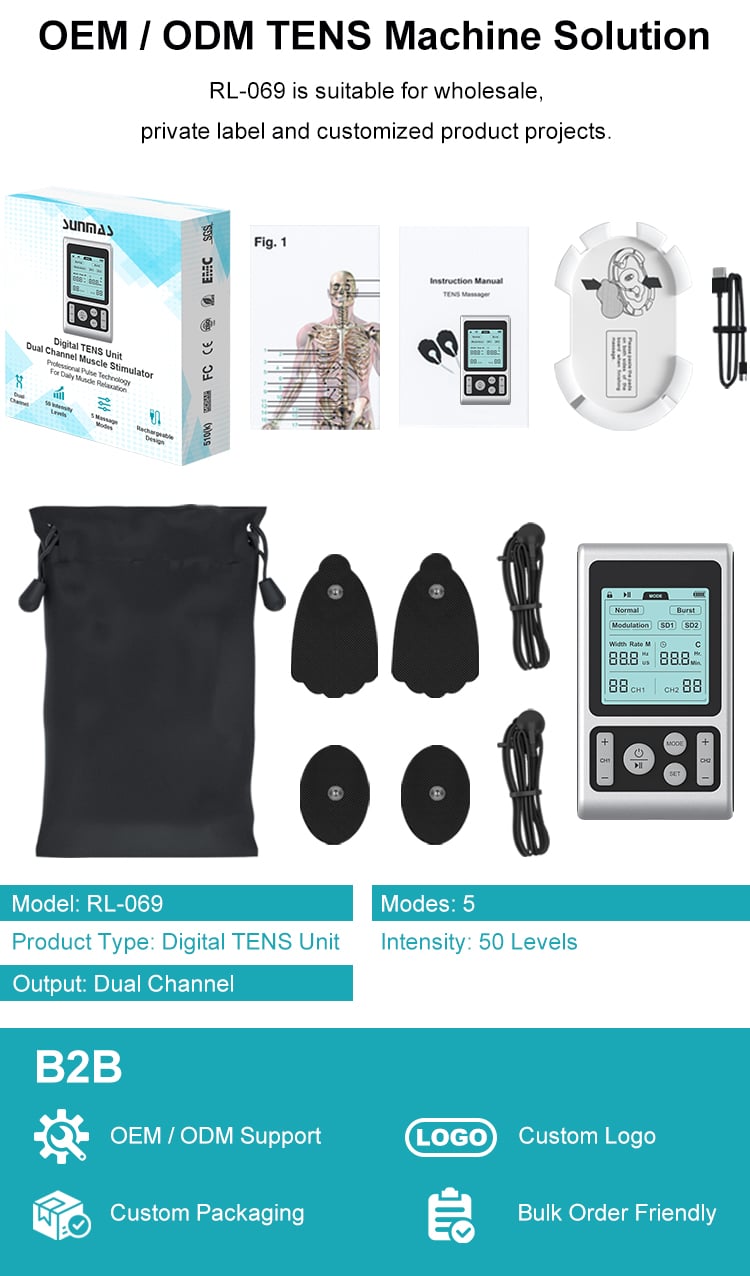
OEM and ODM services are available for product branding, packaging and market-specific configurations, so buyers can adapt presentation to their channel and customer base.
FAQ
What modes does the device include?
Six: Normal, EMS, Burst, Modulation, SD1 and SD2.
Are the channels independent?
Intensity is independent — two output channels with 50 levels each. Mode and pulse settings are shared across both channels.
What can I adjust besides intensity?
Pulse frequency and pulse width, which shape how the stimulation pattern feels.
How long can a session run?
The timer is adjustable from 10 to 90 minutes, and a continuous operation option is available. Longer and continuous sessions draw more from the battery than short timed ones.
Does it remember my settings?
Yes — memory restores previous settings, and the device stores up to 60 session records.
What happens when nothing is connected?
No-load detection returns intensity to level 0. The device also shuts down automatically to reduce unnecessary battery use.
What does the display show?
Mode, intensity, pulse settings, timer and battery status on a white-backlit LCD.
Do you offer OEM and ODM services?
Yes — for branding, packaging and market-specific configurations.
| Attribute | Specification |
| Product Name | Dual Channel TENS EMS Unit |
| Model No. | SM9069A |
| Application | TENS pain relief, EMS muscle stimulation and body relaxation |
| Main Function | Adjustable low-frequency TENS and EMS stimulation |
| Channels | 2 Independently Adjustable Output Channels |
| Modes | 6 Modes: Normal, EMS, Burst, Modulation, SD1 and SD2 |
| Intensity Levels | 50 Levels per Channel |
| Timer | 10–90 Minutes or Continuous Operation |
| Display | LCD with White Backlight |
| Battery Capacity | 3.7V / 500mAh |
| Charging Port | Type-C |
| Charging Time | Approximately 2.5 Hours |
| Pulse Frequency | 0.5–150Hz ±20% |
| Pulse Width | 50–400μs ±20% |
| Load Detection | Supported; Intensity Returns to Level 0 When No Load Is Detected |
| Memory Function | Restores Previous Settings and Stores Up to 60 Session Records |
| Product Dimensions | 110 × 62.3 × 29mm |
| Product Weight | 157.3g |
| Customization | OEM/ODM Available |


 EN