
 EN



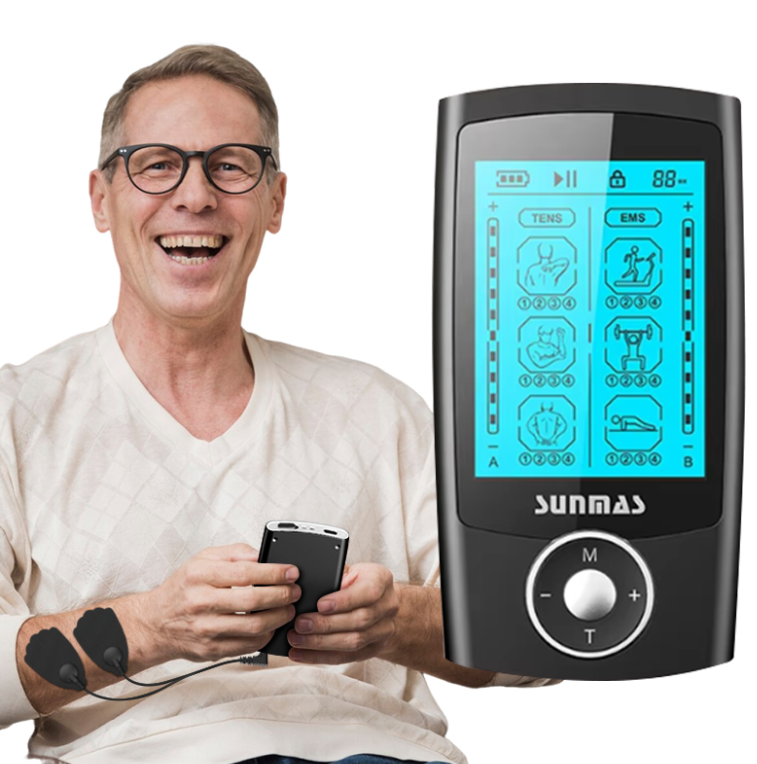
How Electrical Stimulation Recruits Muscle Fibers
Electrical physical therapy equipment does not think. It sends current. That current depolarizes motor nerves, which then trigger muscle contractions. This is the core mechanism behind neuromuscular electrical stimulation, or NMES. When a pad sits over a motor point, the electrical field reaches the nerve branches that innervate muscle fibers. If the current is strong enough and long enough, the nerve fires, and the muscle contracts. The difference between this and voluntary movement comes down to recruitment order. During natural contraction, the nervous system tends to activate slow-twitch fibers first. Electrical stimulation often reverses that order, recruiting fast-twitch fibers earlier. That reversal is useful in rehabilitation because fast-twitch fibers are the ones that atrophy fastest after injury or immobilization.
The Parameters That Decide Whether Muscles Respond
Not all electrical stimulation feels the same, and not all of it builds function. Four parameters do most of the work:
-
Frequency, measured in hertz, controls how often the muscle is stimulated per second. Low frequencies, around 2 to 10 Hz, tend to produce twitch-like contractions. Higher frequencies, 35 to 80 Hz, produce smoother, more sustained contractions.
-
Pulse width, measured in microseconds, affects how deeply the current penetrates and how comfortable it feels. Wider pulses recruit more fibers but can be less tolerable.
-
Intensity, or amplitude, determines how many motor units join the contraction. It should be set high enough to produce a visible or palpable contraction, but not so high that it causes pain.
-
Duty cycle, the ratio of on-time to off-time, affects fatigue. Muscles need rest between contractions, especially when the stimulation is driving the work.
A device that locks these settings into a single preset is limited. A professional unit that allows independent adjustment can match the protocol to the patient and the stage of healing.
| Parameter | Typical Range | Effect on Muscle Function |
|---|---|---|
| Frequency | 2–10 Hz for twitch, 35–80 Hz for tetany | Determines contraction type and fatigue rate |
| Pulse width | 100–400 µs | Influences recruitment depth and comfort |
| Intensity | Individualized to visible contraction | Controls number of active motor units |
| Duty cycle | 1:2 to 1:5 on/off | Balances work and recovery |
What Actually Improves: Strength, Endurance, or Control
Electrical stimulation can improve several aspects of muscle function, but not all at once. Strength gains come from repeated high-intensity contractions that overload the muscle. A 2018 meta-analysis in the Journal of Orthopaedic & Sports Physical Therapy looked at NMES after knee surgery and found that adding electrical stimulation to voluntary exercise produced greater quadriceps strength than exercise alone. Endurance changes are less consistent. Some studies show improved fatigue resistance with low-frequency protocols, while others find no difference. Motor control is another story. Electrical stimulation does not teach coordination. It can activate a muscle, but it cannot replicate the timing and sensory feedback of a functional task. That is why the best programs pair stimulation with task-specific practice.
Clinical Scenarios Where Electrical Stimulation Earns Its Place
Three situations tend to show the clearest benefit. First, post-surgical quadriceps inhibition after ACL reconstruction or knee replacement. The muscle often shuts down reflexively, and voluntary exercise alone may not wake it up. Second, stroke rehabilitation, where NMES can help activate wrist extensors or ankle dorsiflexors during gait training. Third, critical illness or prolonged bed rest, where muscle wasting is rapid and electrical stimulation can provide a mechanical load when movement is not possible. Outside these areas, results are mixed. Chronic low back pain, for example, has a weaker evidence base for NMES compared with TENS. The honest takeaway is that electrical stimulation is a targeted tool, not a universal muscle builder.
A Rehab Center Case That Changed the Protocol
A rehabilitation center in southern China was working with post-stroke patients who had foot drop. The initial protocol used a 40 Hz frequency, a 300 µs pulse width, and a duty cycle of 1:2. Patients tolerated it, but several reported that the stimulation felt like a sharp buzzing rather than a smooth contraction. Gait training did not improve as much as expected. The team decided to test a different approach. They lowered the frequency to 25 Hz, narrowed the pulse width to 200 µs, and changed the duty cycle to 1:4. They also moved the electrodes slightly to target the tibialis anterior more precisely. Within two weeks, the average ankle dorsiflexion angle during swing phase improved by about 8 degrees in the follow-up group. The change was not huge, but it was measurable. The lesson was that parameter tuning and electrode placement often matter more than turning up the intensity.
Limitations, Safety, and the Manufacturing Side
Electrical stimulation is not risk-free. Skin irritation, burns from poor electrode contact, and muscle soreness are possible. It should not be used over the carotid sinus, the head, or the front of the neck without specific clinical guidance. People with pacemakers or implanted defibrillators need to avoid it unless cleared by a cardiologist. The effects are also temporary. Muscle strength gained during stimulation fades if the underlying activity level does not change. That is why home programs need to be realistic and sustainable.
Manufacturing quality plays a quieter but important role. A device that drifts in output, delivers uneven current, or has unreliable connectors can undermine a therapy plan. Standards like ISO 13485 and MDSAP help ensure that medical devices are built and traced consistently. SUNMAS has been producing TENS and EMS devices since 2003, with a 30-engineer R&D center, a 150-member quality team, and a 5,000 square meter automated production facility. For clinics and brands building electrical therapy programs, that kind of manufacturing foundation supports consistent performance and stable supply.
Table of Contents
- How Electrical Stimulation Recruits Muscle Fibers
- The Parameters That Decide Whether Muscles Respond
- What Actually Improves: Strength, Endurance, or Control
- Clinical Scenarios Where Electrical Stimulation Earns Its Place
- A Rehab Center Case That Changed the Protocol
- Limitations, Safety, and the Manufacturing Side

