
 EN



Why Chronic Pain Needs More Than a Single Solution
Chronic pain is rarely a simple problem. It involves nerves, muscles, joints, sleep, mood, and daily habits. A single pill or a single clinic visit may not address all of those layers. That is why clinicians often recommend a combination of approaches. A TENS machine is one of those tools. It does not cure the underlying condition, but it can change how pain is experienced in the moment. For someone living with arthritis, diabetic neuropathy, or long-standing low back pain, that change can make the difference between staying active and staying still.
How TENS Interrupts Pain Signals at the Spinal Gate
The mechanism behind TENS comes from the gate control theory, first described by Melzack and Wall in 1965. Pain signals do not travel straight to the brain without competition. They pass through a checkpoint in the spinal cord. Large nerve fibers, the ones activated by touch, pressure, and vibration, can close that gate. Small fibers, which carry pain and temperature, can open it. A TENS machine sends mild electrical pulses through the skin, recruiting those large fibers. The result is less room for pain signals to get through.
That explanation is simplified. The full picture also involves descending pathways from the brain, release of endogenous opioids, and changes in local blood flow. A 2017 Cochrane review of 20 trials found low-quality evidence for TENS in some chronic pain conditions, with the strongest signal in diabetic neuropathy. The review did not dismiss the approach. It pointed out that many studies were small, poorly blinded, or inconsistent in how the device was used. That is a useful reminder. The tool matters, but the protocol matters just as much.
A Drug-Free Option That Fits Daily Routines
One advantage of a TENS machine is that it does not add another medication to the daily routine. For people who already take multiple prescriptions, or who cannot tolerate NSAIDs and opioids, that is not a small point. The device can be used at home, at work, or during travel. Sessions typically last 15 to 30 minutes, and many users apply it two or three times a day. The effect is temporary, usually fading within an hour or so after the session ends. That limitation is real. Still, for many people, having a non-drug option that can be used on demand is worth the trade-off.
| Approach | Typical Onset | Duration of Relief | Common Limitation |
|---|---|---|---|
| TENS machine | 5 to 15 minutes | 30 minutes to several hours | Temporary, habituation possible |
| NSAIDs | 30 to 60 minutes | 4 to 6 hours | GI and cardiovascular risks |
| Opioids | 30 to 60 minutes | 4 to 6 hours | Dependence, tolerance |
| Physical therapy | Weeks | Cumulative | Access and time commitment |
Adjustable Settings Make Personalization Possible
A TENS machine is not a one-size-fits-all device. Frequency, pulse width, intensity, and session duration all change how the stimulation feels and whether it helps. Low frequencies, around 2 to 10 Hz, tend to produce a tapping or pulsing sensation. Higher frequencies, 80 to 120 Hz, often feel smoother and are used more for pain modulation. Pulse width affects comfort and depth. Intensity should be raised until a strong but comfortable tingling appears, not until it hurts. Devices that allow independent adjustment give users room to find what works. Devices with only a few presets limit that process.
Pairing TENS with Movement and Rehabilitation
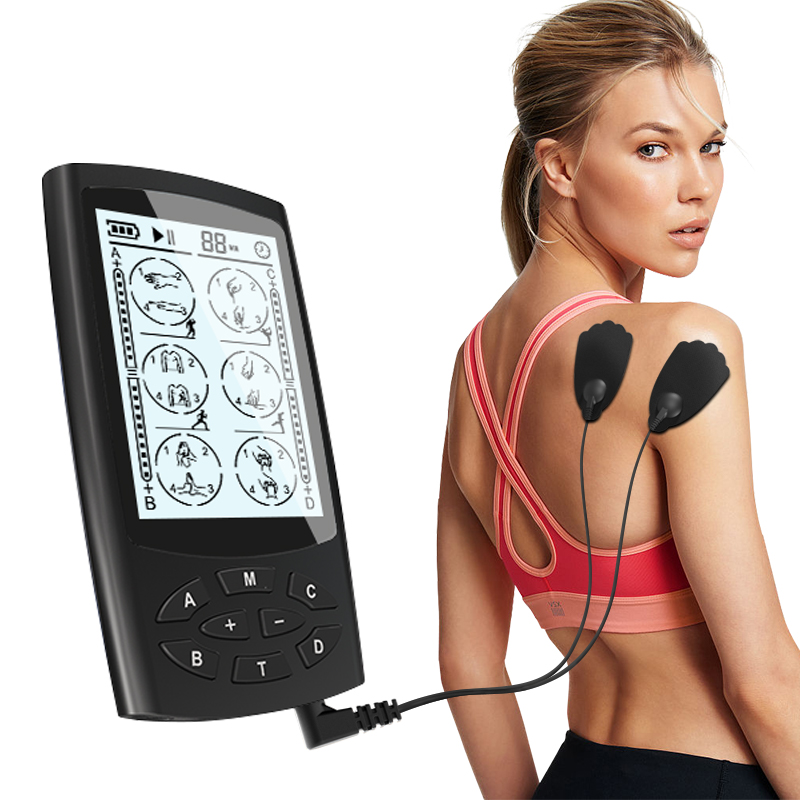
TENS works best when it supports activity, not when it replaces it. A rehabilitation clinic in southern China tested this idea with patients who had chronic neck and shoulder pain. The first protocol placed both electrodes directly over the most painful trigger point. Patients felt relief during the session, but it faded within an hour. The team changed the placement so one pad sat over the upper trapezius and the other over the cervical paraspinal muscles, allowing the current to cross the brachial plexus region. They also started sessions at 10 Hz for ten minutes, then switched to 100 Hz. In a small follow-up group, the average duration of relief increased from about 45 minutes to nearly three hours. The clinic did not claim a cure. It documented the change and adjusted the protocol. That kind of practical iteration is where TENS often earns its place.
Safety, Limitations, and What Manufacturing Quality Adds
TENS has a good safety record when used within established parameters. The most common side effects are skin irritation, redness, and mild tingling. Serious events are rare. Still, the device should not be used over the carotid sinus, the front of the neck, or the head without clinical guidance. People with pacemakers or implanted defibrillators need to avoid it unless cleared by a cardiologist. The benefits are also not universal. Central pain conditions such as fibromyalgia often respond less consistently than peripheral nerve pain. Honest expectations matter.
Manufacturing quality is the quiet part of the story. A device that drifts in output, delivers uneven current, or uses unreliable connectors can undermine a therapy plan. Standards such as ISO 13485 and MDSAP help ensure that medical devices are built and traced consistently. SUNMAS has been producing TENS and EMS devices since 2003, with a 30-engineer R&D center, a 150-member quality team, and a 5,000 square meter automated production facility. For clinics and brands building pain management programs, that kind of manufacturing foundation supports stable performance and reliable supply.

