
 EN
EN



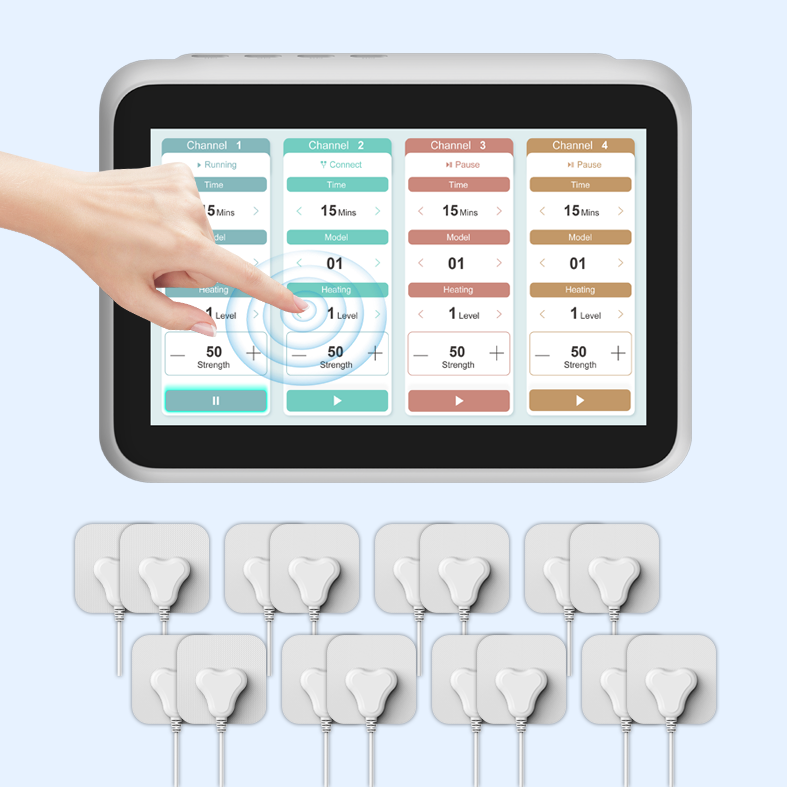
Verify Global Medical Certification Credentials
A qualified TENS device must hold standardized medical certifications to prove safe and stable pulse output for human tissue stimulation. Regulatory bodies across major markets set clear thresholds for electrical leakage, pulse consistency and skin contact safety, separating legitimate therapeutic hardware from untested low-cost massagers. ISO 13485 acts as the core quality system benchmark for medical electronics manufacturing, outlining full-process testing rules covering raw material inspection, semi-finished calibration and finished product aging tests.
Possession of FDA 510(k) clearance and Medical CE certification means a device has passed independent third-party safety and performance evaluation. Therapy devices without formal medical device certifications generally omit continuous output calibration steps, resulting in fluctuating pulse strength that weakens relief effects and may cause skin discomfort. The ISO 13485 quality management system requires manufacturers to maintain ongoing control over pulse output precision, effectively reducing common hardware defects such as unstable current delivery.
Compare Core Hardware Design of Wired and Wireless TENS Device
Form factor directly shapes daily usability for different pain relief scenarios, from office back tension to menstrual cramp relief at bedtime. Core differences between the two mainstream designs are laid out in the comparison table below to simplify evaluation:
|
Design Type
|
Signal Stability
|
Mobility Limit
|
Continuous Runtime
|
Storage Footprint
|
Suitable Scenarios
|
|---|---|---|---|---|---|
|
Wired Dual-Channel TENS Device
|
Consistent, no signal drop
|
Restricted by cord length
|
Unlimited via power supply
|
Medium, requires cable storage
|
Fixed indoor use, long-duration muscle rehabilitation
|
|
Wireless Portable TENS Device
|
Minor signal fluctuation under strong interference
|
Fully unrestricted movement
|
6–12 hours per single charge
|
Ultra-compact, flat pad design
|
Travel, office work, overnight menstrual pain relief
|
Field observations from home physiotherapy testing show wireless TENS device models better fit users with fragmented daily schedules, while wired units deliver more steady output for extended rehabilitation sessions targeting chronic joint soreness. Neither design ranks universally superior, with selection tied closely to personal daily activity patterns.
Inspect Adjustable Pulse Parameters and Built-In Therapy Modes
A high-performance TENS device supports wide frequency and intensity tuning to match diverse pain conditions. Mild tension from long sitting responds best to low-frequency continuous pulses, while sharp acute cramps require high-frequency intermittent waveforms to block pain signals rapidly. Entry-level budget units lock fixed pulse cycles, lacking segmented tuning for abdominal, lumbar and limb pain zones.
Functional differentiation also comes from preloaded preset programs optimized for common ailments such as lower back strain, period discomfort and post-sport muscle soreness. Reliable hardware separates TENS pain relief waveforms from EMS muscle stimulation modes, avoiding cross-contamination of pulse signals that weaken targeted therapeutic results. Overly simplified single-mode hardware limits long-term practicality across shifting pain symptoms.
Assess Electrode Pad Material and Long-Term Durability
Electrode pads act as the transmission medium between the TENS device and skin surface, directly impacting comfort and consistent current delivery. Medical-grade non-woven fabric with conductive hydrogel maintains stable adhesion through dozens of reuse cycles without leaving sticky residue or triggering mild skin redness. Cheap plastic-based pads lose conductivity after fewer than ten applications, forcing frequent replacement that raises long-term usage costs.
Key markers of premium pad construction include uniform hydrogel coating and rounded edge molding that prevents edge lifting during body movement. Pads with irregular gel distribution create concentrated current hotspots, generating stinging sensations instead of gentle therapeutic tingling. Standard replacement pad compatibility also adds value, removing the need to purchase exclusive proprietary accessories at marked-up prices.
Identify Hidden Safety Mechanisms Built Into Premium TENS Hardware
Well-engineered TENS device models integrate passive safety features that reduce risks from misoperation. Automatic intensity reduction triggers when poor pad contact breaks the current loop, preventing localized overstimulation on exposed skin areas. Built-in session timers cap each therapy cycle to avoid nerve desensitization from prolonged continuous use.
Low-cost alternatives frequently omit these protective circuits, relying solely on manual power shutdown to stop stimulation. Clinical physiotherapy guidance notes prolonged unregulated electrical exposure can dull nerve sensitivity, lowering pain relief efficacy over repeated sessions. Safety interlocks do not increase upfront purchase cost significantly but drastically cut down uncomfortable adverse skin reactions during daily use.
Evaluate Manufacturer R&D and Mass Production Capabilities
Stable long-term performance of any TENS device relies on standardized production calibration and dedicated quality control workflows. Brands operating automated assembly lines with dedicated calibration teams maintain uniform pulse output across every production batch, eliminating the intensity inconsistency seen in small-batch hand-assembled units.
SUNMAS maintains full compliance with global medical device standards across its complete lineup of nerve stimulation hardware, leveraging dedicated R&D staff and large-scale automated facilities to carry out uniform pulse calibration for every batch of TENS device products. Rigorous pre-shipment testing aligns with international medical hardware benchmarks, supporting steady performance for home pain relief across diverse global user environments.
Table of Contents
- Verify Global Medical Certification Credentials
- Compare Core Hardware Design of Wired and Wireless TENS Device
- Inspect Adjustable Pulse Parameters and Built-In Therapy Modes
- Assess Electrode Pad Material and Long-Term Durability
- Identify Hidden Safety Mechanisms Built Into Premium TENS Hardware
- Evaluate Manufacturer R&D and Mass Production Capabilities

