
 EN



Why Portability Changes the Pain Management Conversation
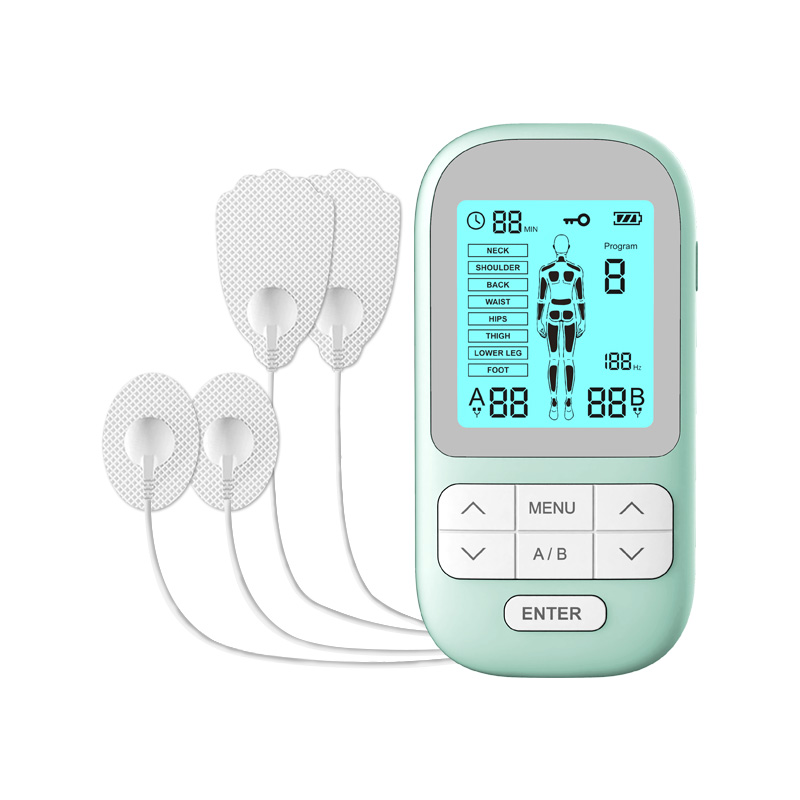
A portable TENS machine takes the basic principle of electrical nerve stimulation and puts it into a format that fits in a pocket or clips onto a belt. That shift from clinic equipment to personal device changes how people use pain therapy. Instead of scheduling sessions around appointments, users can apply stimulation when pain flares up, during a work break, or while traveling. The appeal is not just convenience. For chronic pain, timing matters. A device that sits in a drawer at home is less useful than one that travels with the person who needs it.
The tens machine category has matured significantly over the past two decades. Early units were bulky, had limited battery life, and required careful setup. Current designs often weigh under 100 grams, offer multiple programs, and run for hours on a single charge. Regulatory classification in the United States places most TENS devices in Class II, which means they are cleared for pain relief but not for curing underlying conditions. That distinction is worth keeping in mind. Portability improves access and adherence, but it does not change what the technology can and cannot do.
Freedom to Manage Pain Outside the Clinic
The most obvious benefit is location independence. Pain does not wait for office hours. A portable unit lets users start a session at home, at work, or during a commute without hunting for a clinic. For people with low back pain, arthritis, or menstrual cramps, that flexibility can mean the difference between managing a flare early and letting it escalate.
Clinical evidence supports TENS as a reasonable adjunct for several chronic pain conditions. A Cochrane review of randomized trials found moderate-quality evidence that TENS reduces pain intensity in chronic musculoskeletal pain compared with sham stimulation. The same review noted that study protocols vary widely, and responder rates are not uniform. Portable devices make it easier to test different parameters over time, which is closer to how clinicians individualize treatment. A fixed clinic session once a week cannot replicate that kind of trial-and-error tuning.
There is also a practical cost angle. Clinic-based TENS sessions require travel, scheduling, and staff time. A portable device has a higher upfront cost but lowers the per-session burden. For users who need frequent short sessions, the economics shift quickly.
Discrete Design Makes Consistent Use More Likely
Adherence is the quiet problem in pain therapy. A device that is awkward to wear or draws attention tends to stay in the drawer. Portable TENS units are designed to be worn under clothing, with lead wires routed to electrodes on the back, knee, or shoulder. Some models use wireless electrodes, which removes the wire tangle entirely.
Consistency matters because TENS effects are often cumulative and short-lived. A single session may provide relief for 30 to 60 minutes, but regular use throughout the day can help maintain a lower baseline of pain perception. Clinicians who work with chronic pain patients often recommend shorter, more frequent sessions rather than one long session. A device that is easy to put on and take off supports that pattern.
Design details also affect safety. Clear buttons, automatic shutoff, and locked intensity controls reduce the risk of accidental overstimulation. For older users or those with reduced dexterity, a simple interface is not a luxury. It is a usability requirement.
Battery Life and Electrode Management Matter More Than Spec Sheets
Marketing materials love to list program counts and output channels. In daily use, two factors matter more: battery reliability and electrode quality. A device that dies mid-session or has inconsistent output undermines trust. Rechargeable lithium batteries have largely replaced disposable cells, and most portable units now deliver several hours of active stimulation per charge.
Electrodes are the consumable that users underestimate. Hydrogel electrodes degrade over time, and worn electrodes create uneven current density. That can cause hot spots, skin irritation, and inconsistent results. Medical-grade electrodes with uniform impedance cost more but tend to last longer and feel more comfortable.
The table below compares portable TENS units with clinic-style and fixed-home devices on practical dimensions.
| Feature | Portable TENS Unit | Clinic-Style Device | Fixed Home Device |
|---|---|---|---|
| Typical weight | Under 100 g | 1 to 3 kg | 0.5 to 1 kg |
| Power source | Rechargeable lithium battery | AC power or large battery | AC power |
| Typical session setting | 20 to 60 minutes, multiple times daily | 20 to 30 minutes, supervised | 30 minutes, once or twice daily |
| Best use case | On-the-go flare management | Supervised rehabilitation | Stationary home routine |
| Main limitation | Smaller display, fewer channels | Not portable | Limited mobility |
A Home Care Case Where Portability Solved a Real Problem
A community rehabilitation program in a southern Chinese city ran into a familiar obstacle. Older patients recovering from knee replacement surgery were prescribed TENS as part of their post-acute pain plan, but many lived far from the clinic and had limited transport options. Attendance dropped after the first few weeks, and clinicians suspected that pain control at home was suffering.
The program switched to loaning portable TENS units with written and phone-based instructions. A 72-year-old patient who had been making three clinic visits per week started using the device twice daily at home. The initial electrode placement was not ideal, and a follow-up phone call led to a simple adjustment: electrodes moved from the sides of the incision to the dermatomal distribution above and below the knee. The patient reported better relief within two days. Over three months, the program recorded a rise in self-reported adherence from around 40 percent to roughly 75 percent, and average pain scores during routine activities dropped by about two points on a 10-point scale. The hardware did not change. Access did.
What Portability Does Not Fix
A portable device is still a tool, and tools have limits. TENS is not appropriate for severe acute pain, unexplained pain, or pain linked to a serious medical condition that has not been evaluated. It should not be used by people with implanted electronic devices such as pacemakers or spinal cord stimulators without medical clearance. Placement over the eyes, the front of the neck, the head, or broken skin is off-limits. Pregnant users should consult a healthcare provider before using TENS on the abdomen or lower back.
Responder rates are another honest limitation. Roughly 20 to 30 percent of users report little or no benefit, and there is no reliable pre-test to predict who will respond. Portable units make it easier to try TENS in daily life, but they do not guarantee that it will work. Electrode costs also add up over time, and skin sensitivity can develop with repeated use. Users with reduced sensation need to check skin after each session.
For partners bringing a portable TENS product to market, manufacturing consistency and documentation often determine whether a launch succeeds. SUNMAS, the core brand of Hong Qiangxing (Shenzhen) Electronics Co., Ltd., has been building home medical therapy devices since 2003. The operation includes a 5,000 square meter automated production facility, a 30-engineer R&D center, and a 150-member quality team. Its quality management system is certified to ISO 13485 and MDSAP, and selected products carry FDA 510(k), Medical CE, and UL certifications. That combination of production capacity and regulatory coverage helps turn a portable TENS concept into a product that can meet the testing and supply chain demands of international buyers.
Table of Contents
- Why Portability Changes the Pain Management Conversation
- Freedom to Manage Pain Outside the Clinic
- Discrete Design Makes Consistent Use More Likely
- Battery Life and Electrode Management Matter More Than Spec Sheets
- A Home Care Case Where Portability Solved a Real Problem
- What Portability Does Not Fix

