 ×
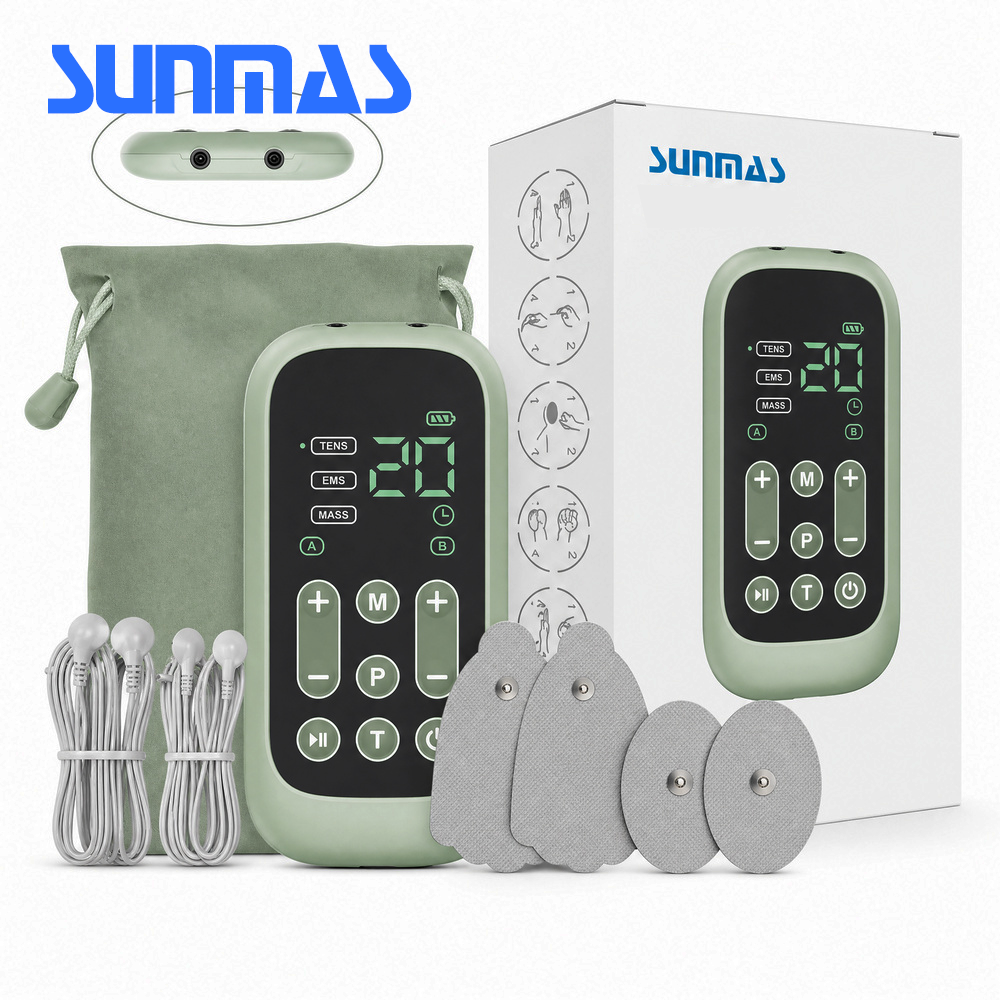
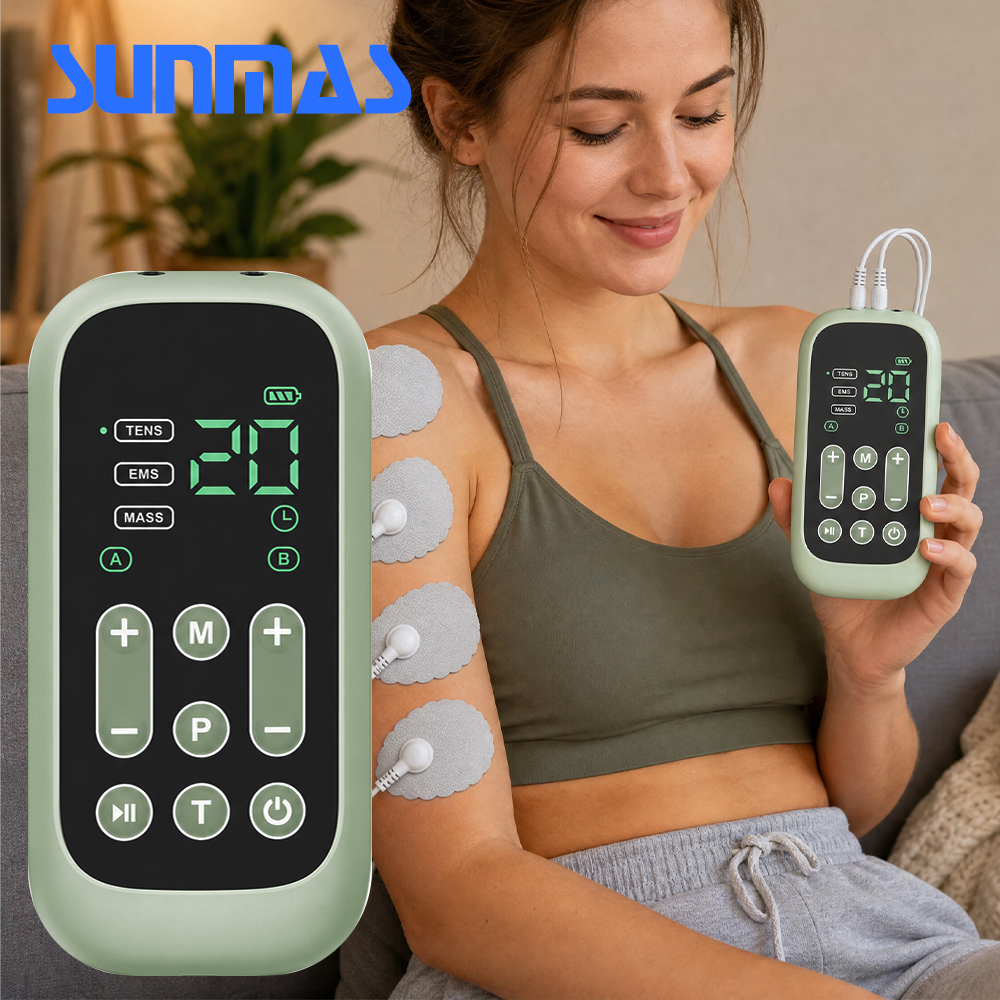
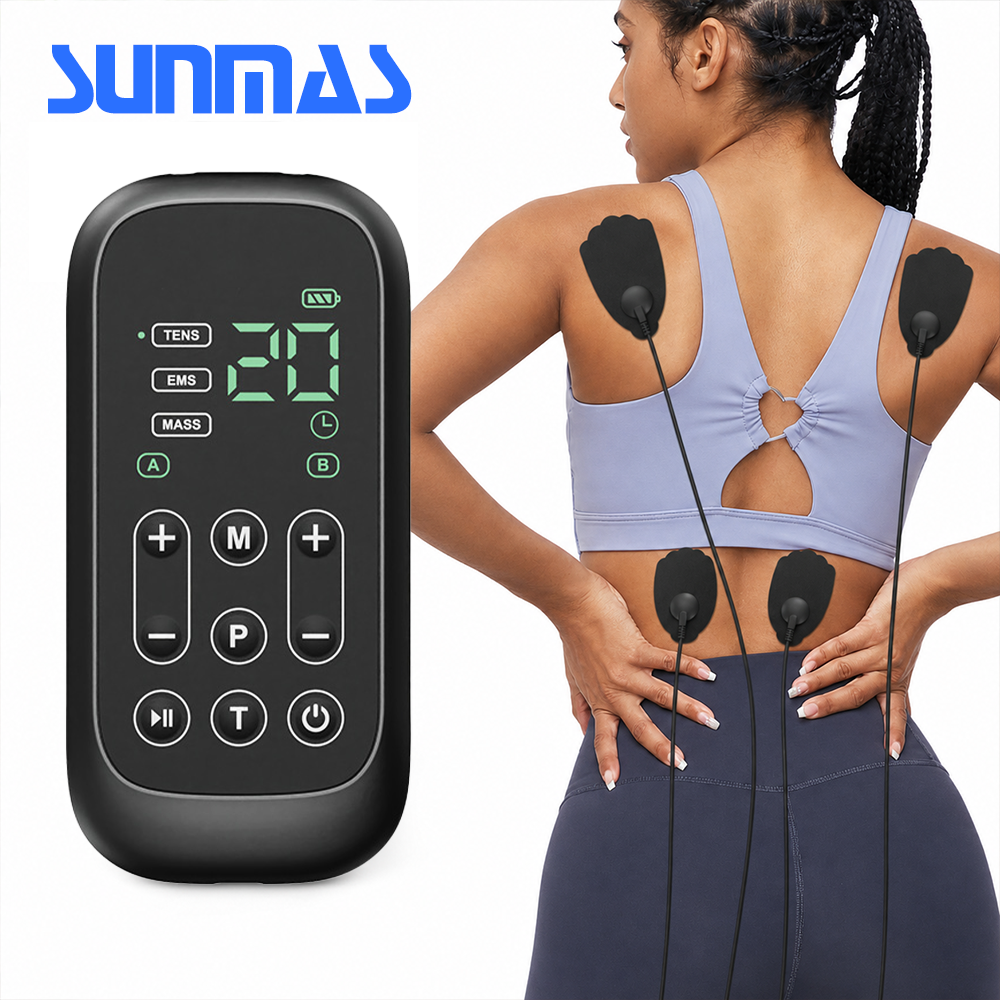
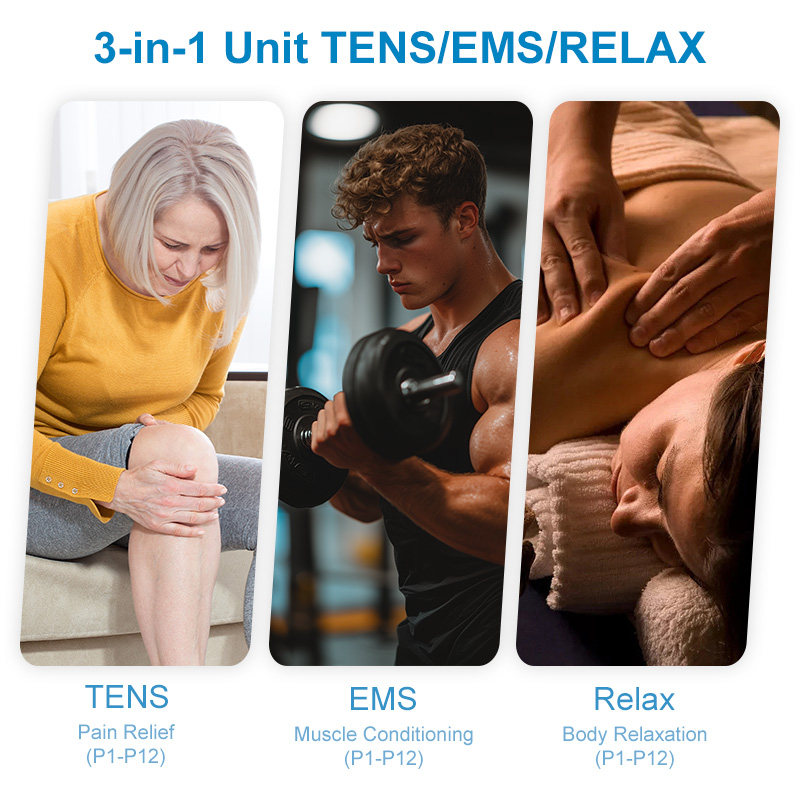

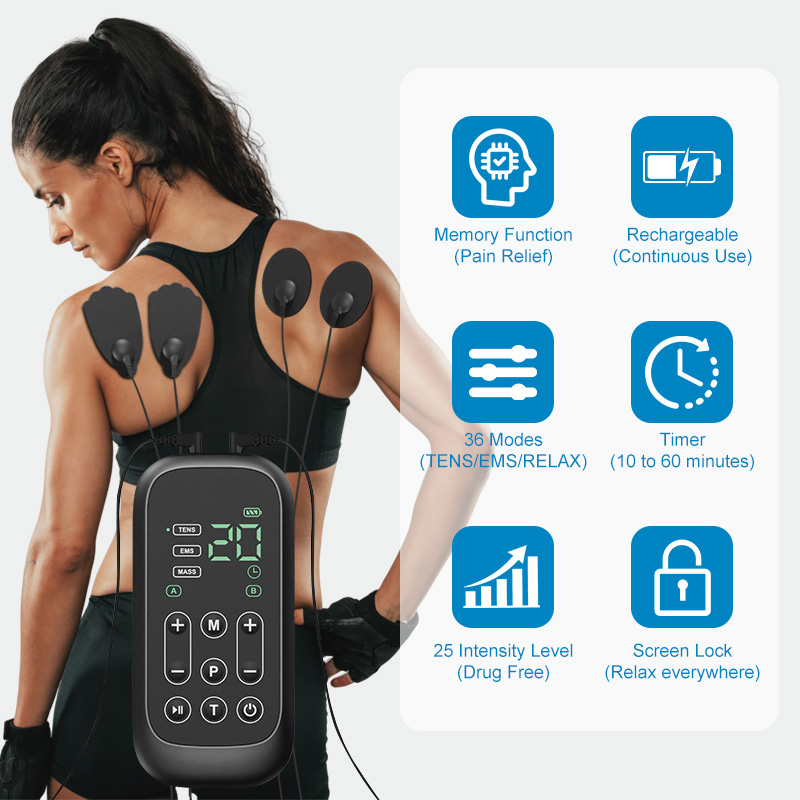
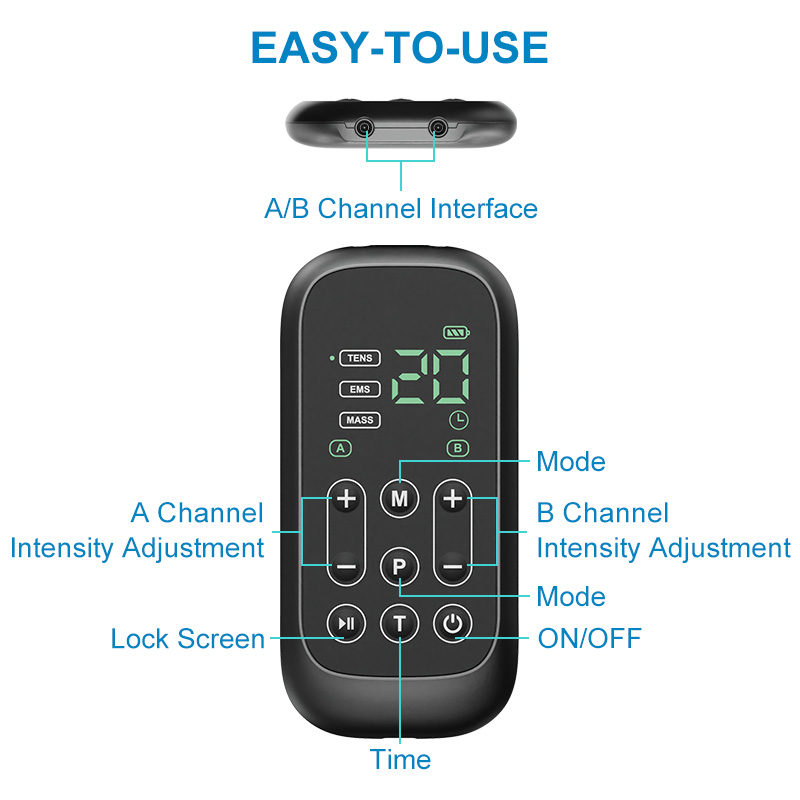
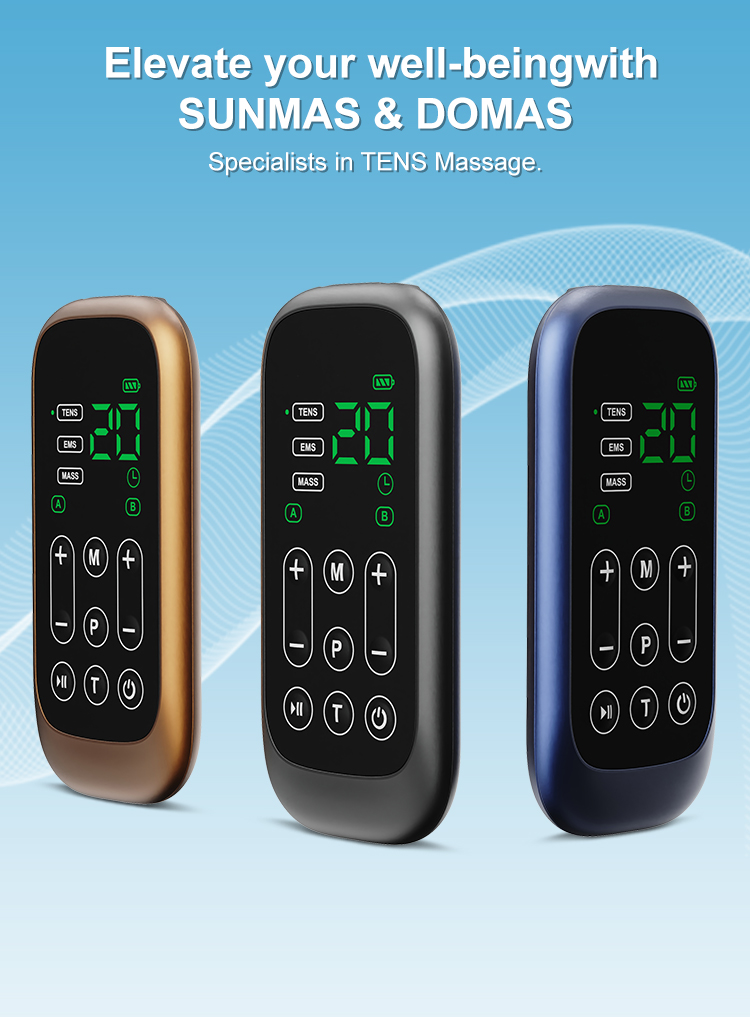
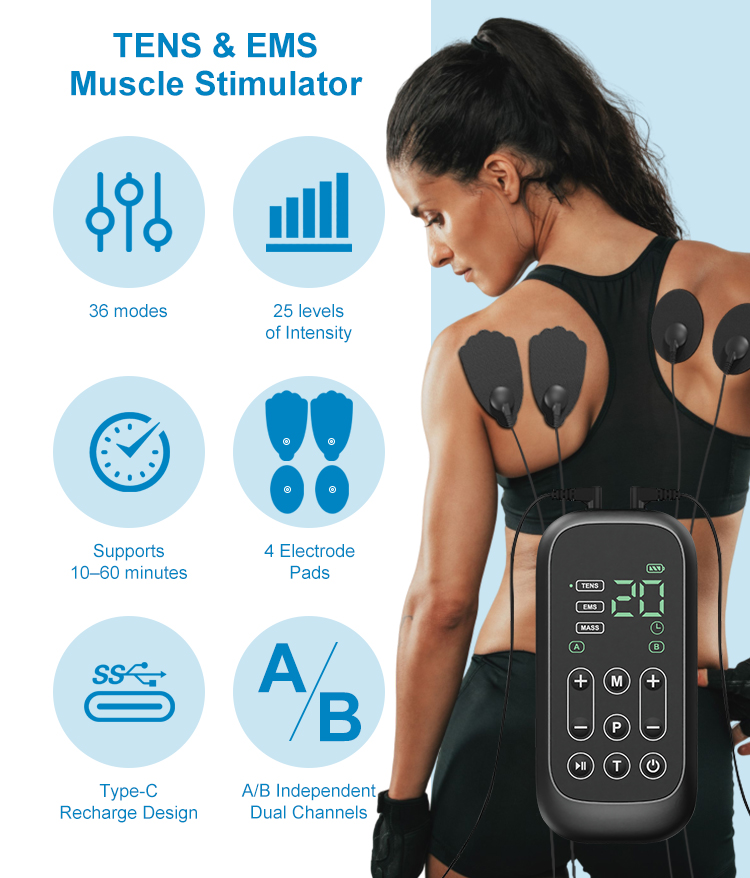
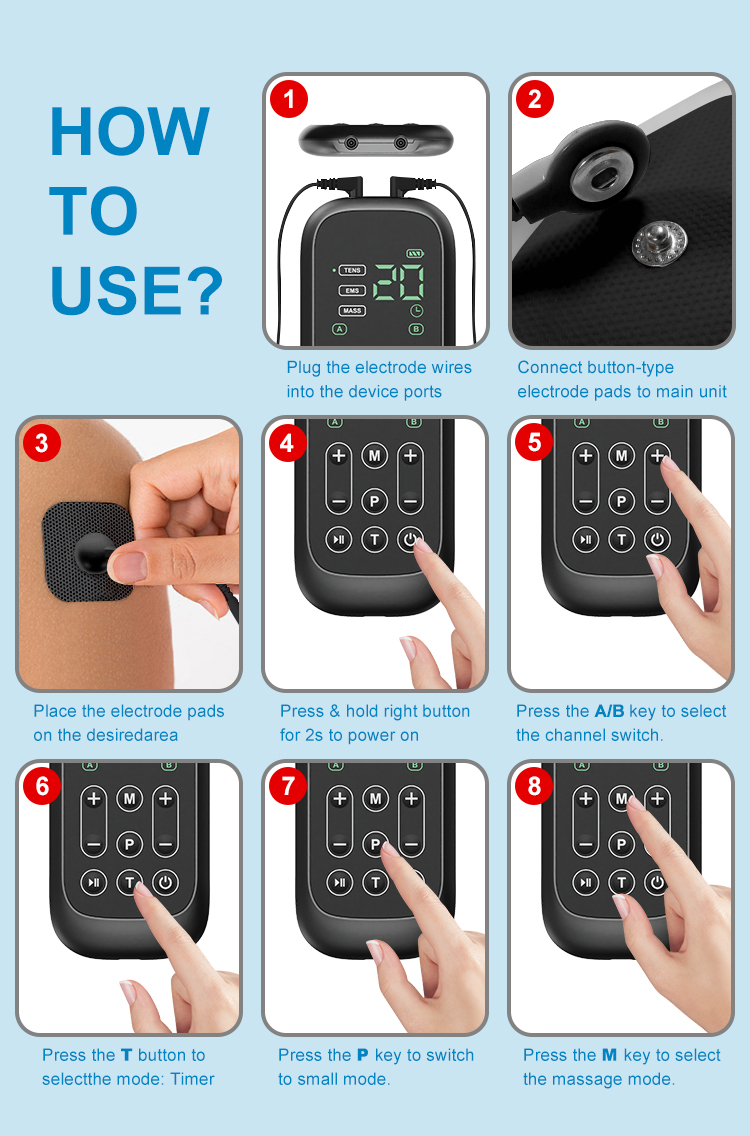
The SUNMAS SM9191A is a rechargeable wired stimulation device combining TENS, EMS and massage functions. It offers 36 programs in total, with 12 programs in each function group. Two output channels let users connect electrodes for two positions and adjust the intensity of each channel independently. The main unit has a compact body, button controls and a green LED display showing the selected settings and device status.
Product Overview
Catalog ranges tend to fill up at the top and bottom, and thin out in the middle. The SM9191A is aimed squarely at that middle. It's a rechargeable wired unit covering TENS, EMS and massage, with 12 programs in each group and 36 in total. Two output channels share the selected program but set intensity separately, 25 levels each — which covers the most common two-position use case without the cost of a fully independent dual-channel design. The session timer runs from 10 to 60 minutes, a pause button holds your place, and the 180 mAh battery charges over Type-C in about two hours.

A Closer Look at the Device
The first thing to get clear about the SM9191A is what "dual channel" means here, because the phrase gets used loosely across the category. On this unit, both channels run the same selected program. What you can change independently is intensity — 25 levels on Channel A, 25 on Channel B, set one without touching the other. If you're placing electrodes on two positions with different sensitivity, that's usually the adjustment that matters. If you need two entirely different programs running at once, this isn't that device, and it's better to know before you buy.
That distinction is the honest way to describe the product, and it's also where the value sits. A fully independent dual-channel design costs more and asks more of the user. Shared program with separate intensity handles the everyday case — one side needs less, one side needs more — while keeping the interface simple enough that someone can operate it without reading the manual twice.
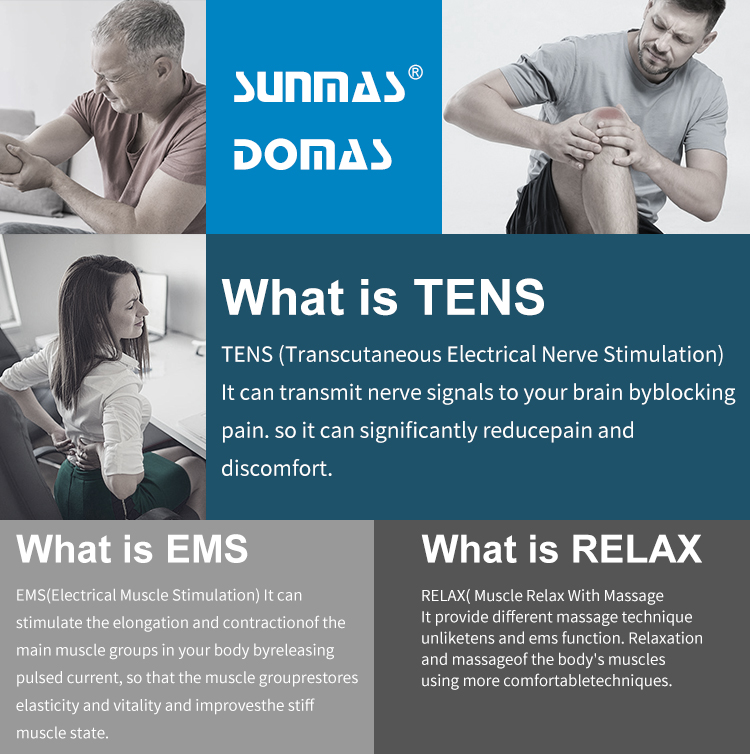
The three function groups follow the same logic. TENS, EMS and massage, 12 programs each. You pick a group, then a program inside it. Nobody is scrolling through a 60-item list to find what they want. For buyers writing packaging copy, "36 programs across TENS, EMS and massage" is a claim that survives a quick check, which is more than can be said for some program counts in this category.
Two behaviors deserve more attention than they usually get. First, changing programs mid-session doesn't restart the timer. If you're 12 minutes into a 20-minute session and want to try a different pattern, the countdown keeps going. That sounds minor until you've used a device where every program change sends you back to zero — it turns experimentation into a chore. Second, the pause button stops and resumes output without resetting the timer, and when the device is switched on again it recalls the last mode but starts at intensity level 0. So it remembers what you were doing, but not how strong it was. Given that intensity is the setting people most often forget they left high, starting from zero is the sensible default.
Timer flexibility is worth a note too. The default is 20 minutes, but it goes from 10 to 60 in 10-minute steps. Someone who wants a 40-minute session sets 40 and lets it run, rather than chaining two sessions together.
The battery spec is modest and stated with its conditions: 180 mAh, roughly two hours to charge over Type-C, and approximately 2.5 hours of operation under the stated maximum-output test conditions. That last part matters. Maximum-output testing is a harsher condition than typical use, so the figure is best read as a floor rather than a promise about everyday runtime. Buyers who need to publish runtime figures should carry the test condition with the number.
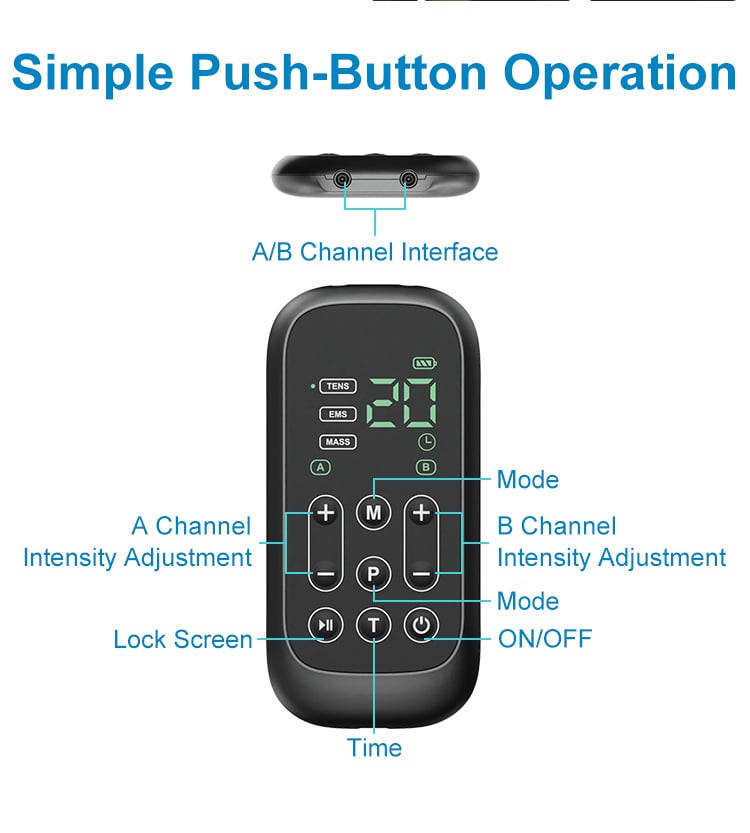
The body is compact, the controls are physical buttons, and the display is a green LED showing selected settings and device status. Nothing here requires a learning curve. The device also shuts down after two minutes without output or operation, which covers the case where it gets set down and forgotten.
Key Features
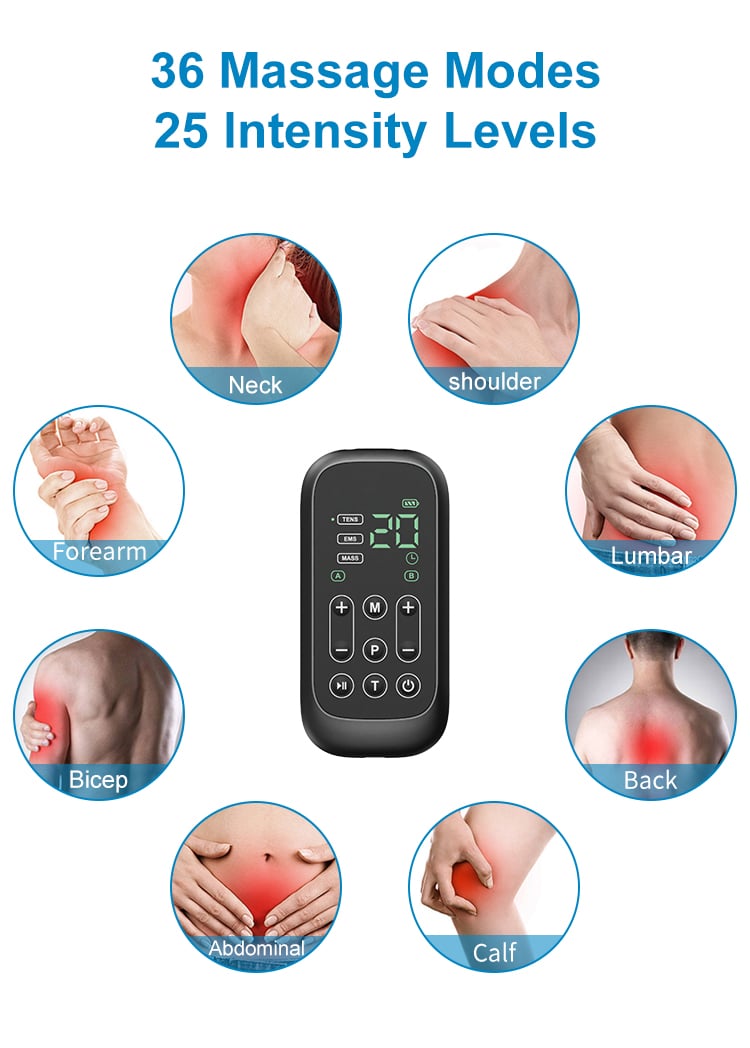
Three functions, 36 programs — 12 TENS, 12 EMS and 12 massage programs.
Independent intensity control — Channels A and B each offer 25 levels; the selected program is shared, output strength is set separately.
Adjustable session timer — default 20 minutes, settable from 10 to 60 minutes in 10-minute steps; changing programs does not restart the countdown.
Pause and mode memory — pause stops and resumes output without resetting the timer; on restart the device recalls the last mode and begins at intensity level 0.
Green LED display showing selected settings and device status.
Physical button controls on a compact main body.
Rechargeable design — 180 mAh battery, Type-C charging in approximately two hours, approximately 2.5 hours of operation under stated maximum-output test conditions.
Automatic shutdown after two minutes without output or operation.
Technical Advantages
Shared program, separate intensity — a deliberate simplification. The design covers the most common two-position scenario (different sensitivity on each side) while avoiding the interface complexity of fully independent channels. It's a narrower capability than some competing units, and describing it accurately is more useful to buyers than stretching the term "independent."
Program changes that respect the session. The countdown continues when the program changes. Users can compare patterns within a single session instead of restarting the clock each time, which makes the 36-program library something people actually explore.
Pause, plus a level-0 restart. Pausing preserves the timer; restarting recalls the mode but resets intensity. The pairing gives convenience without carrying over a strength setting the user may not remember selecting.
A three-group structure that stays navigable. Twelve programs per function keeps the library useful without turning selection into a menu exercise, and it keeps the product's headline claim easy to verify.
Runtime published with its test condition. Stating approximately 2.5 hours under maximum-output test conditions, rather than presenting a best-case figure as typical use, gives buyers a defensible number to work with.
Direct controls, no menu hierarchy. Physical buttons and a green LED display mean the device can be operated without studying a manual — relevant for buyers targeting users who want something that simply works.
Where It Fits
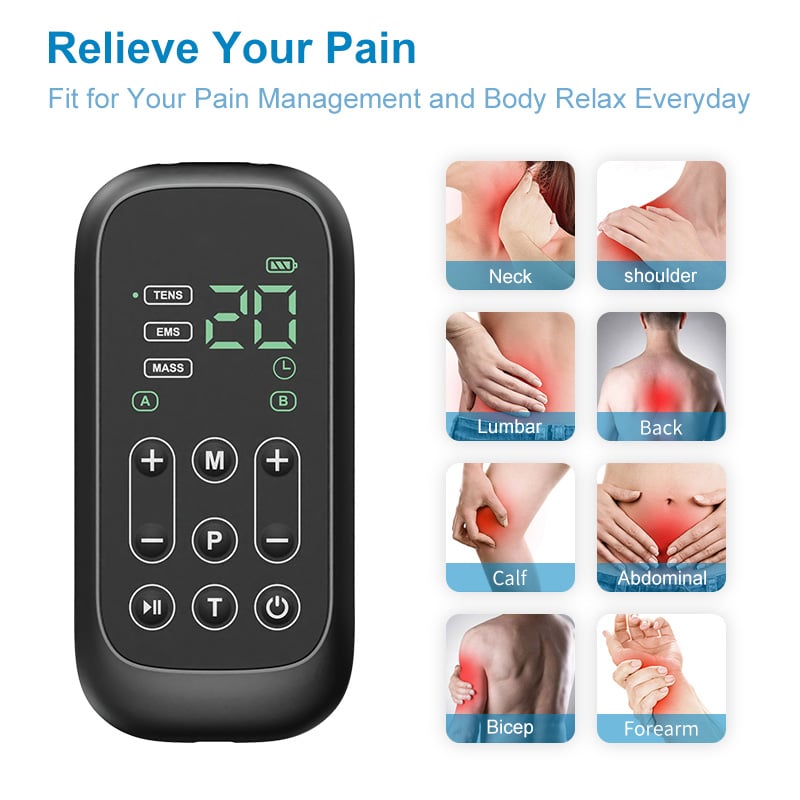
The SM9191A suits buyers seeking one device for TENS stimulation, EMS muscle stimulation and pulse massage. Its two wired channels allow users to place compatible electrodes at two positions while setting a comfortable intensity for each. Program selection and the adjustable timer support different personal-use routines at home or while travelling. Users should follow the supplied instructions for electrode placement and operation.
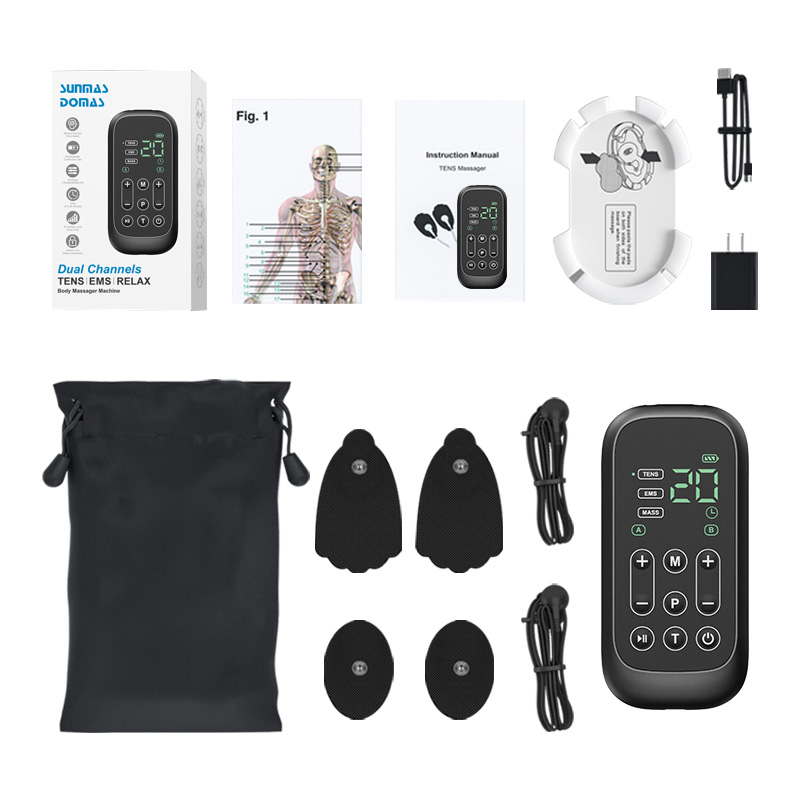
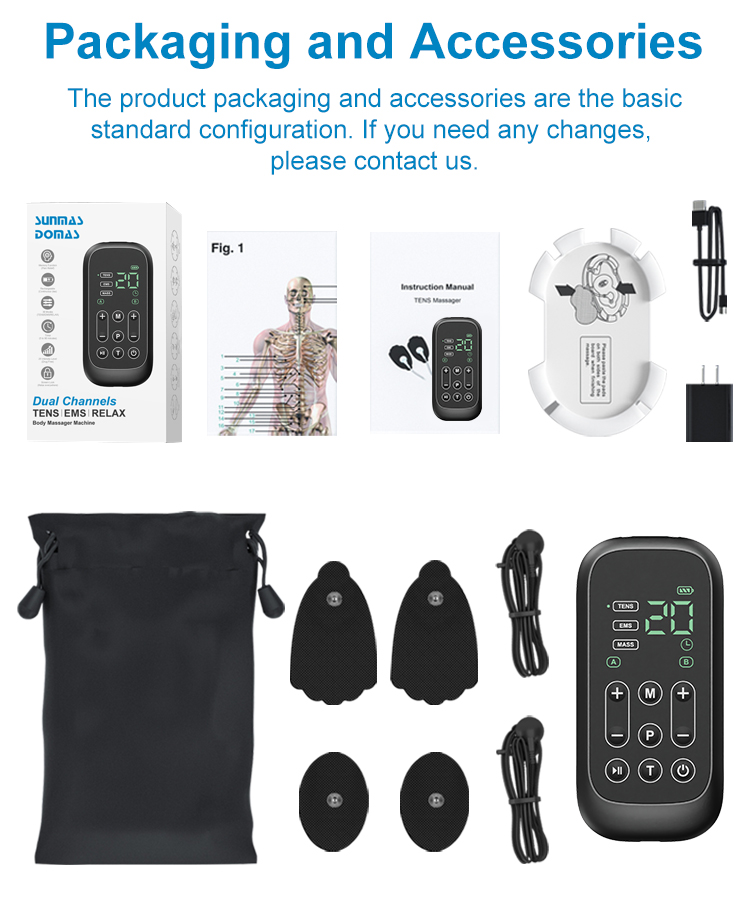
Three usage patterns come up repeatedly. Two positions with different sensitivity: same program, different intensity per channel. A longer session: set the timer to 40 or 60 minutes instead of running two shorter sessions back to back. Pattern comparison: switch programs mid-session while the countdown keeps running. None of these require accessories beyond compatible electrodes, which keeps the buying decision simple.
Why Buyers Choose SUNMAS
SUNMAS develops TENS and EMS products for B2B customers and offers OEM and ODM project support. The SM9191A brings three function groups, 36 programs, independent channel intensity and a rechargeable design into one unit.
Where it earns its place in a catalog is as the middle option: more capable than a single-channel entry unit, less complex and less costly than a fully independent dual-channel model. That makes it easier to position on a comparison page, and easier for sales staff to explain in one sentence — three functions, 36 programs, two channels with separate intensity.
OEM and ODM support covers branding, packaging, compatible accessories and order requirements, so buyers can shape the product around their market rather than working within a fixed configuration. Because the device runs on compatible electrodes, accessory planning belongs in the initial conversation rather than being sorted out later.
FAQ
How many programs does the SM9191A have?
36 in total — 12 TENS, 12 EMS and 12 massage programs.
Are the two channels fully independent?
No. Both channels share the selected program, but intensity is independent: Channels A and B each offer 25 levels and can be adjusted separately.
Can I change the session length?
Yes. The default is 20 minutes, adjustable from 10 to 60 minutes in 10-minute steps. Changing programs does not restart the countdown.
What happens when I pause or restart the device?
The pause button stops and resumes output without resetting the timer. When switched on again, the device recalls the last selected mode and starts at intensity level 0.
How long does the battery last?
Approximately 2.5 hours of operation under the stated maximum-output test conditions. Charging via Type-C takes approximately two hours.
Does it shut off automatically?
Yes — after two minutes without output or operation.
Is this a wireless device?
No. The SM9191A is a wired unit that uses compatible electrodes. The two channels refer to the two output connections.
Do you offer OEM and ODM services?
Yes — for branding, packaging, compatible accessories and product configuration.
| Attribute | Specification |
| Product Name | Dual Channel TENS EMS Unit with Massage Programs |
| Model No. | SM9191A |
| Application | TENS stimulation, EMS muscle stimulation and pulse massage |
| Main Function | TENS, EMS and Massage |
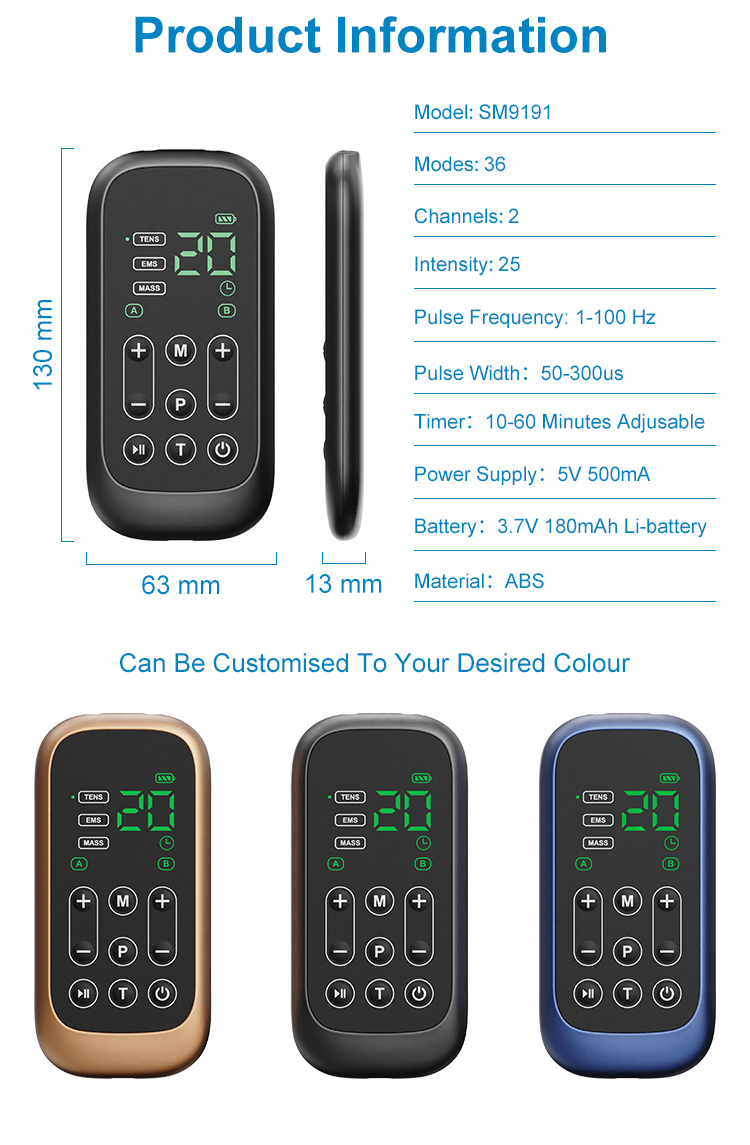
| Modes | 36 modes: TENS 12, EMS 12, Massage 12 |
| Channels | 2 Channels |
| Intensity Levels | 25 Levels |
| Timer | Default 20 Minutes; Adjustable 10–60 Minutes in 10-Minute Steps |
| Control Method | Main Unit Button Control |
| Display | Green LED Numeric Display and Status Indicators |
| Battery Capacity | 3.7V / 180mAh |
| Charging Port | Type-C |
| Charging Time | Approximately 2 Hours |
| Operating Time | Approximately 2.5 Hours under the Specified Maximum-Output Test Conditions |
| Pulse Frequency | 1–200Hz ±10% |
| Pulse Width | 100–300μs ±20% |
| Output Waveform | Monophasic and Biphasic Rectangular Waveforms |
| Output Ports | 2 Electrode Output Ports |
| Customization | OEM/ODM Available |


 EN