 ×
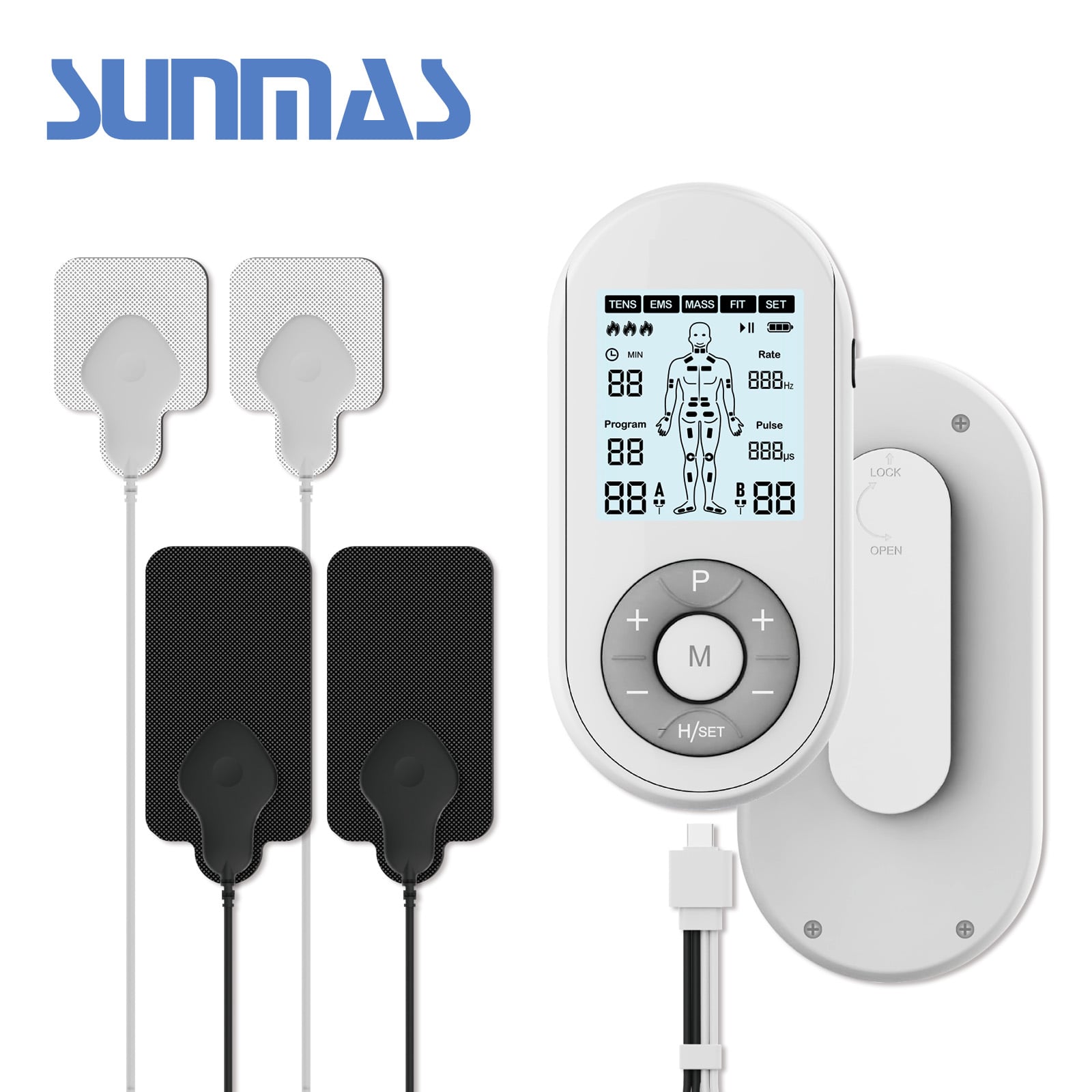
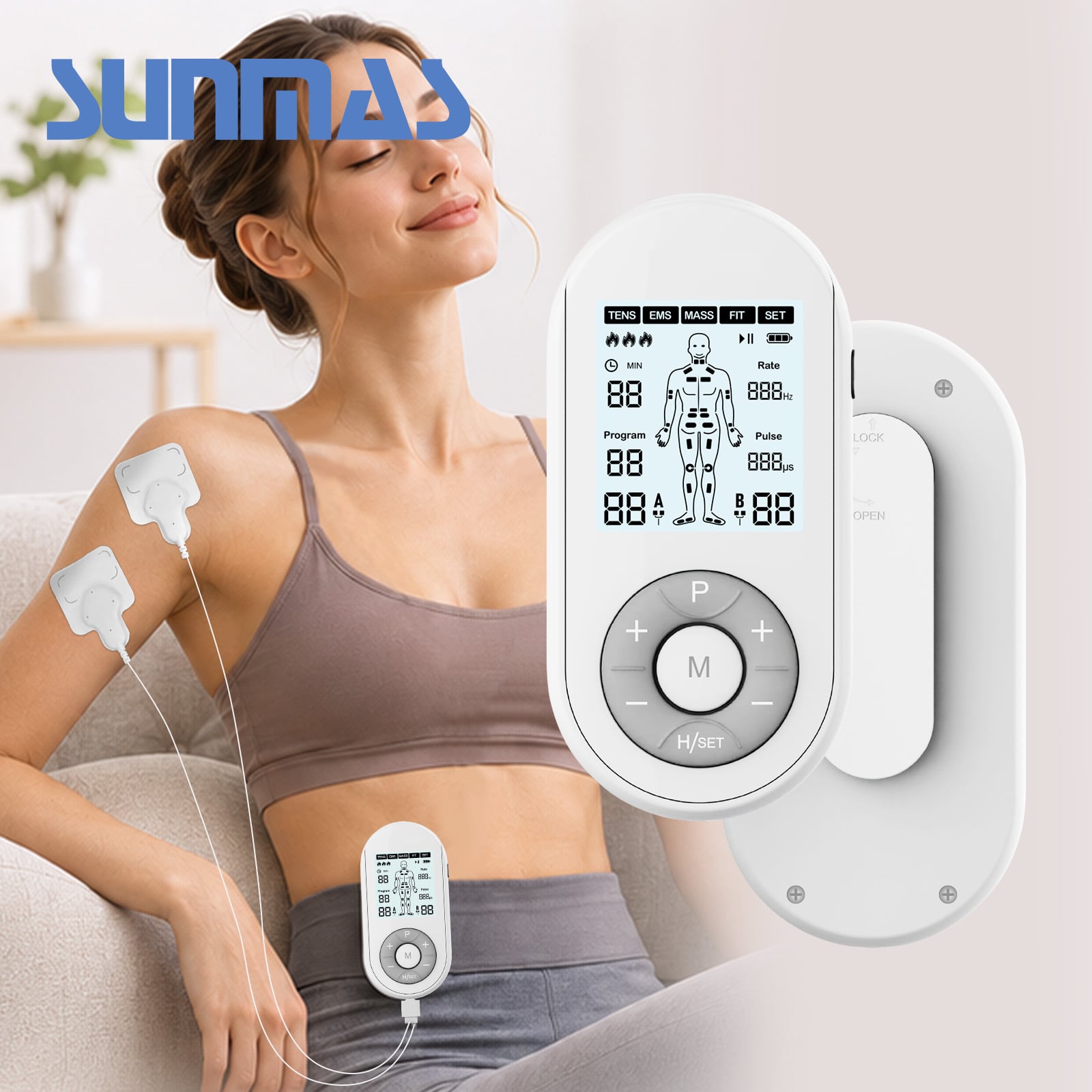
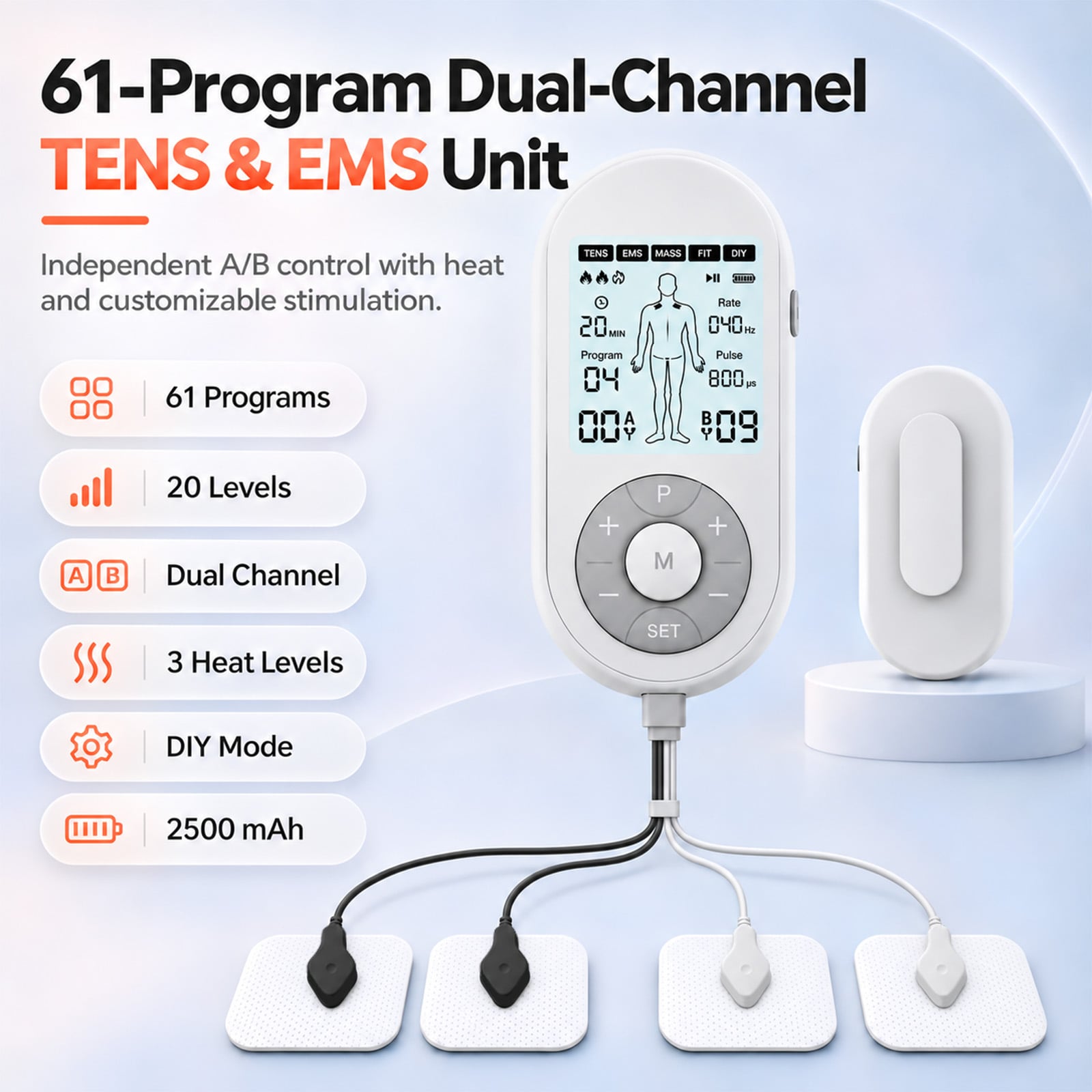
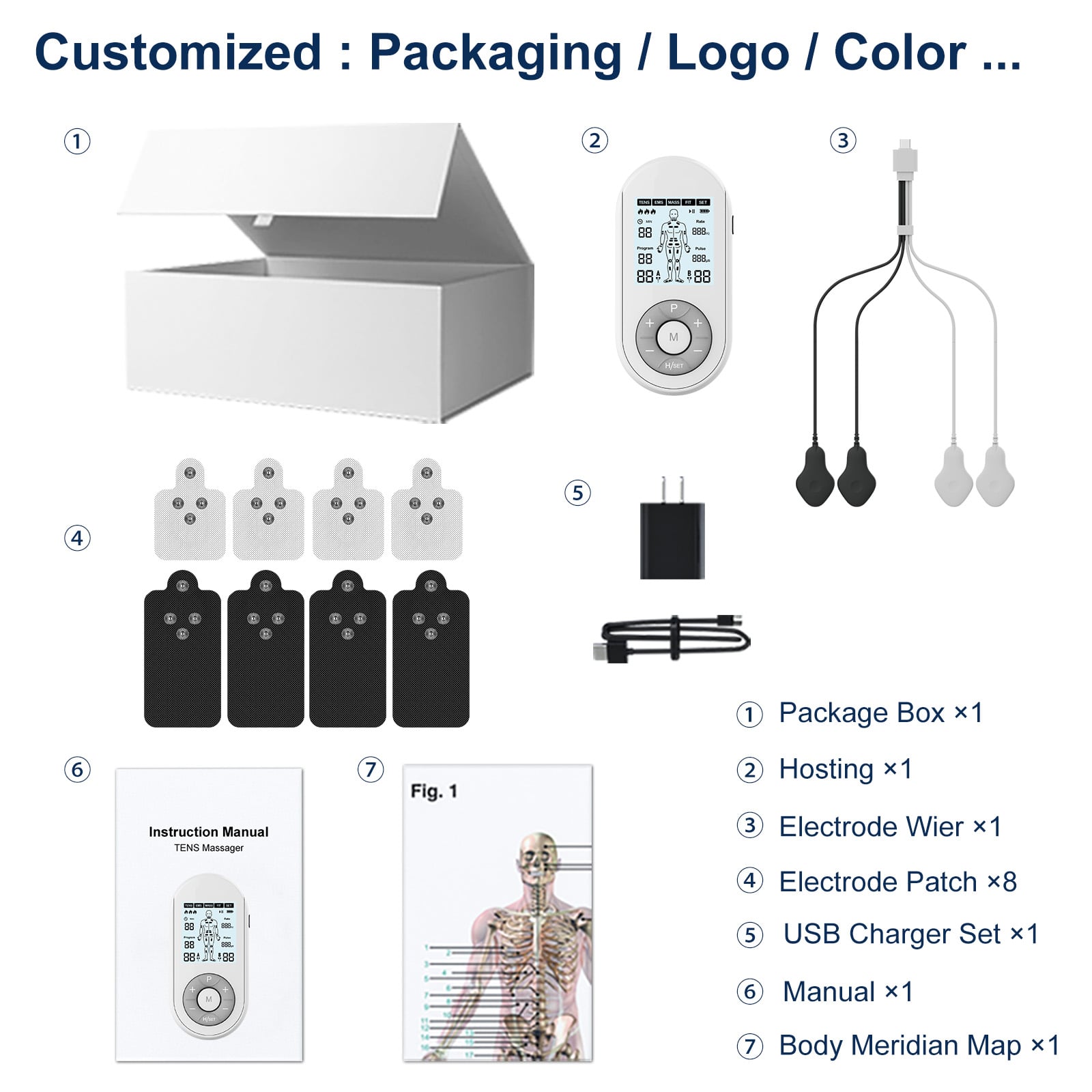
The SUNMAS SM9201A is a rechargeable, dual channel stimulation device with TENS, EMS, massage, fitness and DIY programs. It combines adjustable pulse stimulation with heated electrode pads and an LCD display. The two channels can run with independently selected modes and intensity levels, allowing users to adjust each connected pad to their preference. Physical buttons provide direct access to the main program groups and channel settings.
Product Overview
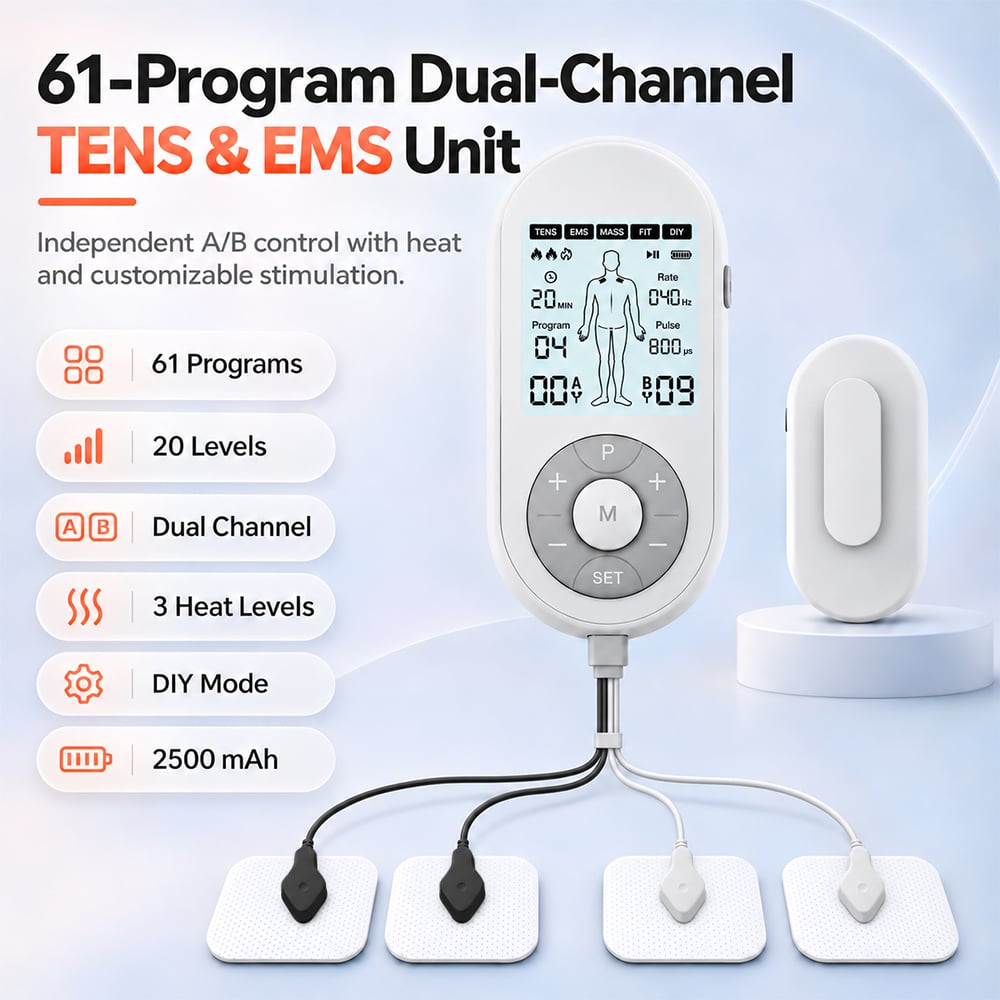
Here's a question worth asking before buying any stimulation device: what happens when you want two different settings in two different places at once? On a single-channel unit, the answer is compromise — one setting applies everywhere. The SUNMAS SM9201A is built to avoid that. It's a rechargeable dual channel TENS EMS unit with 61 programs split across TENS, EMS, massage, fitness and DIY groups, and each channel runs its own mode and intensity. Heated electrode pads add three controlled heat levels, an LCD keeps track of program, output, battery and countdown, and physical buttons get you to the main groups quickly. The 2,500 mAh battery charges over Type-C in roughly four hours.
A Closer Look at the Device
Single-channel stimulation devices have a built-in limitation that only becomes obvious once you've used one for a while: every pad you connect receives the same setting. Work on one area and that's fine. Work on two, and you're constantly renegotiating — turn the intensity up for the shoulder and the lower back pad gets it too, whether that's comfortable or not. The SM9201A exists because that compromise is avoidable.
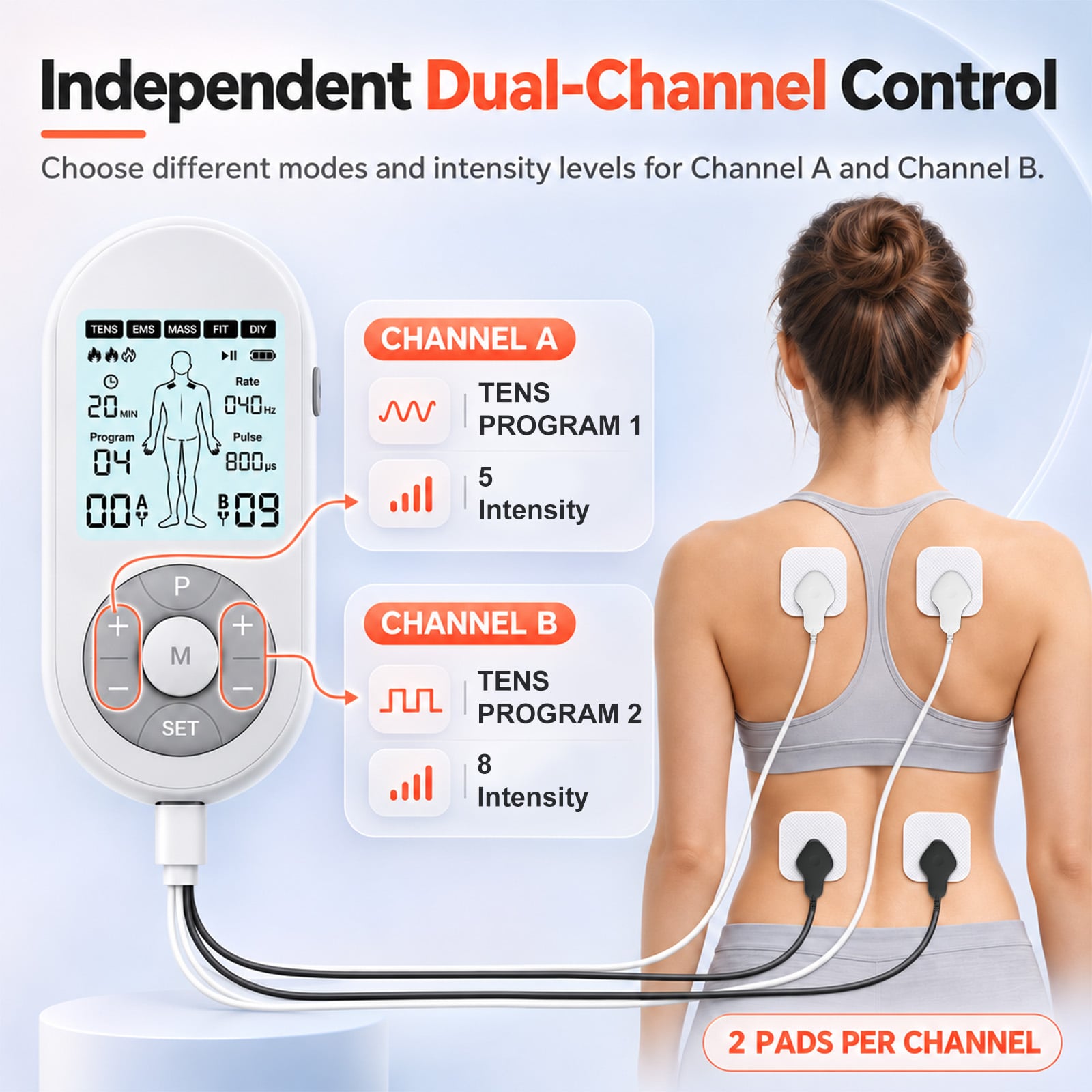
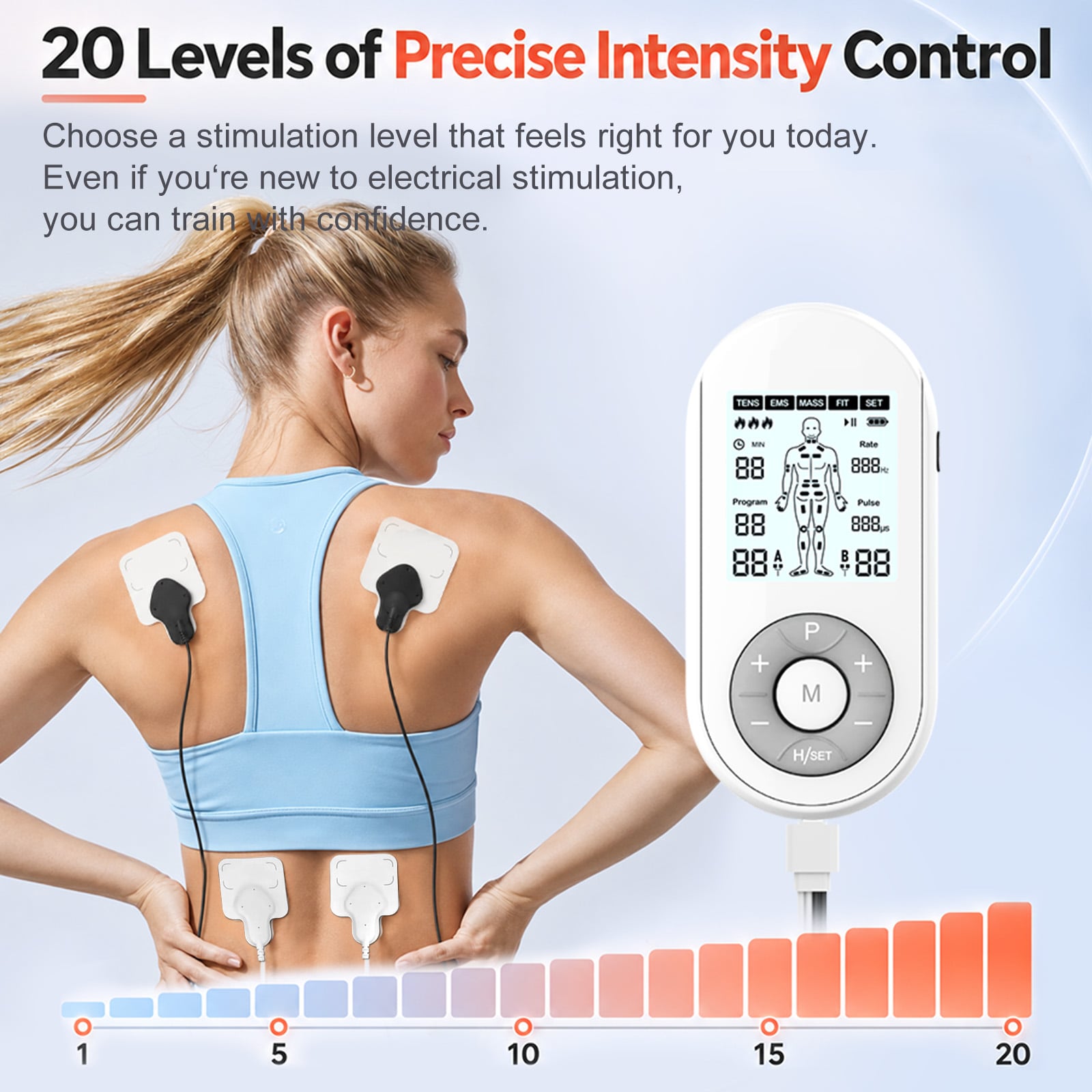
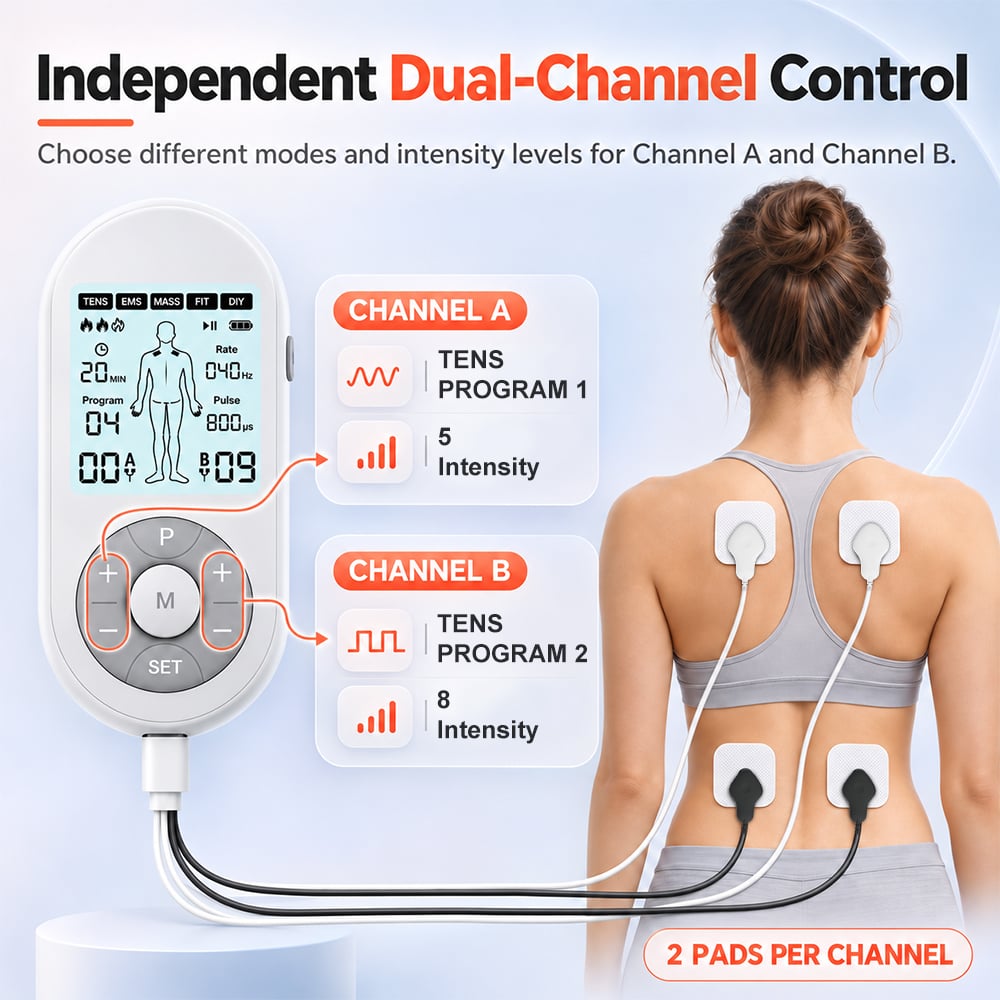
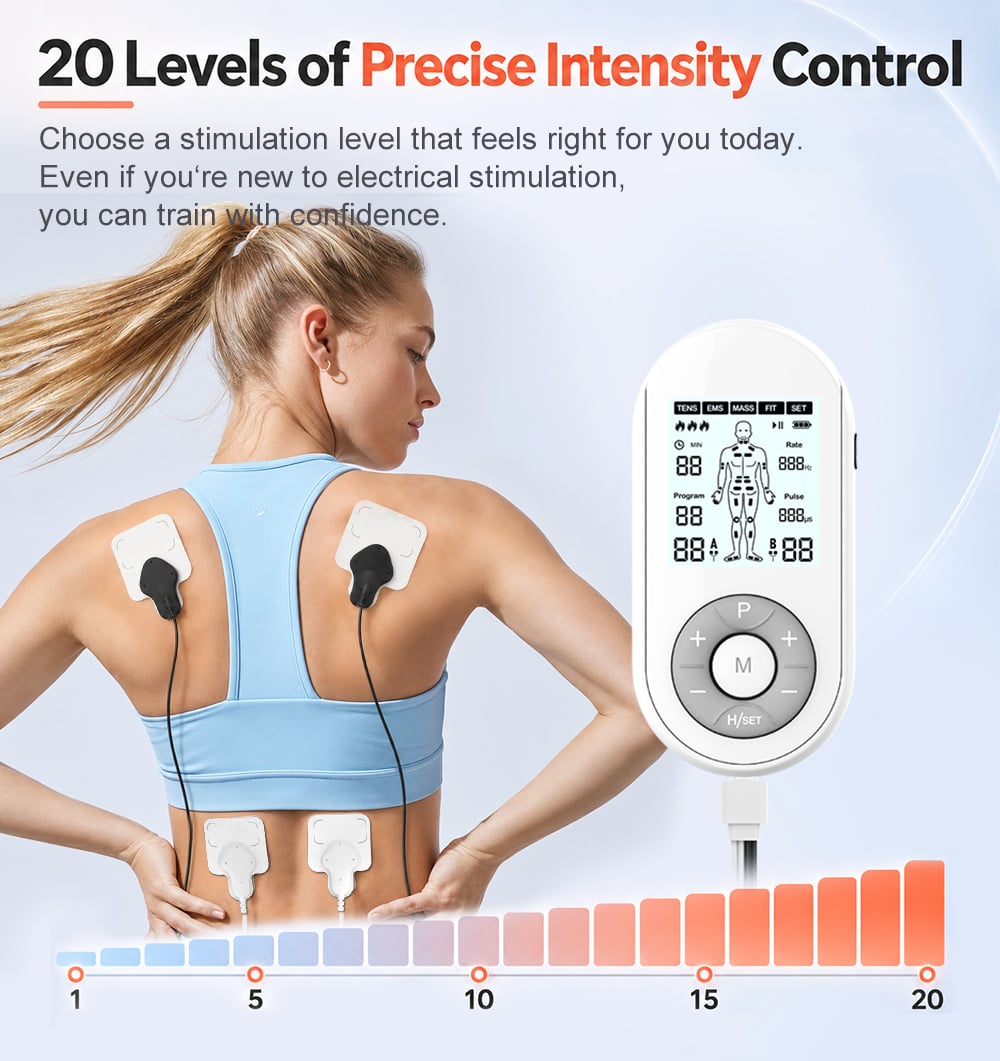
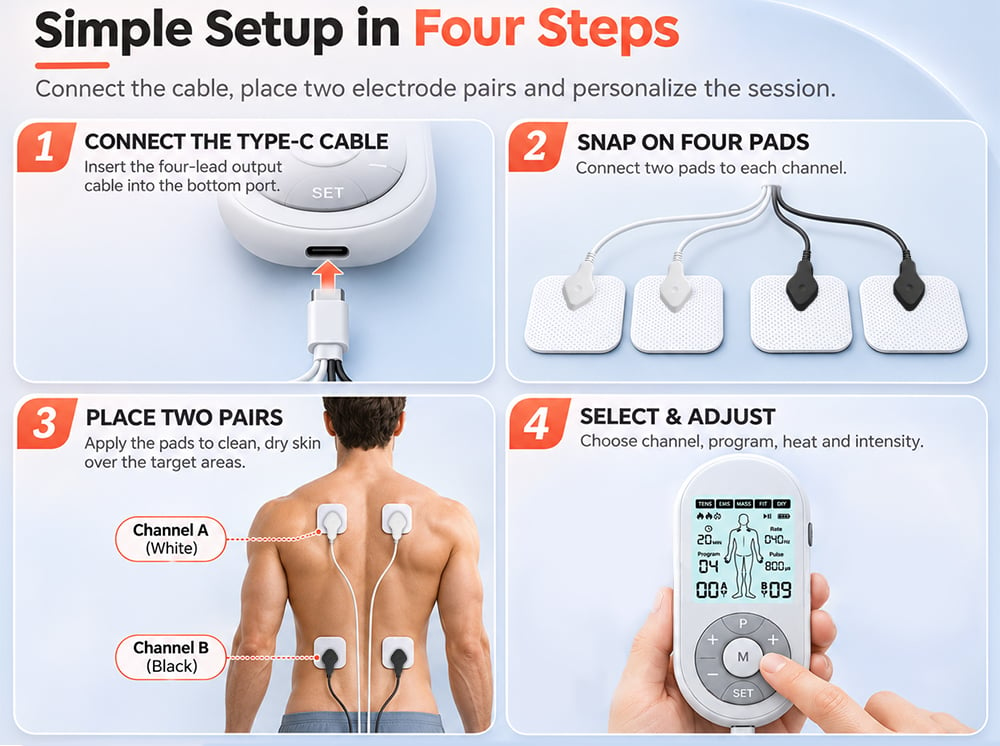
Channels A and B each have their own mode and intensity selection, with 20 output levels per channel. Set one side to a gentle massage program and the other to a firmer TENS pattern, then adjust either without disturbing the other. Once you've used a device that works this way, going back to a shared setting feels like a step backward.
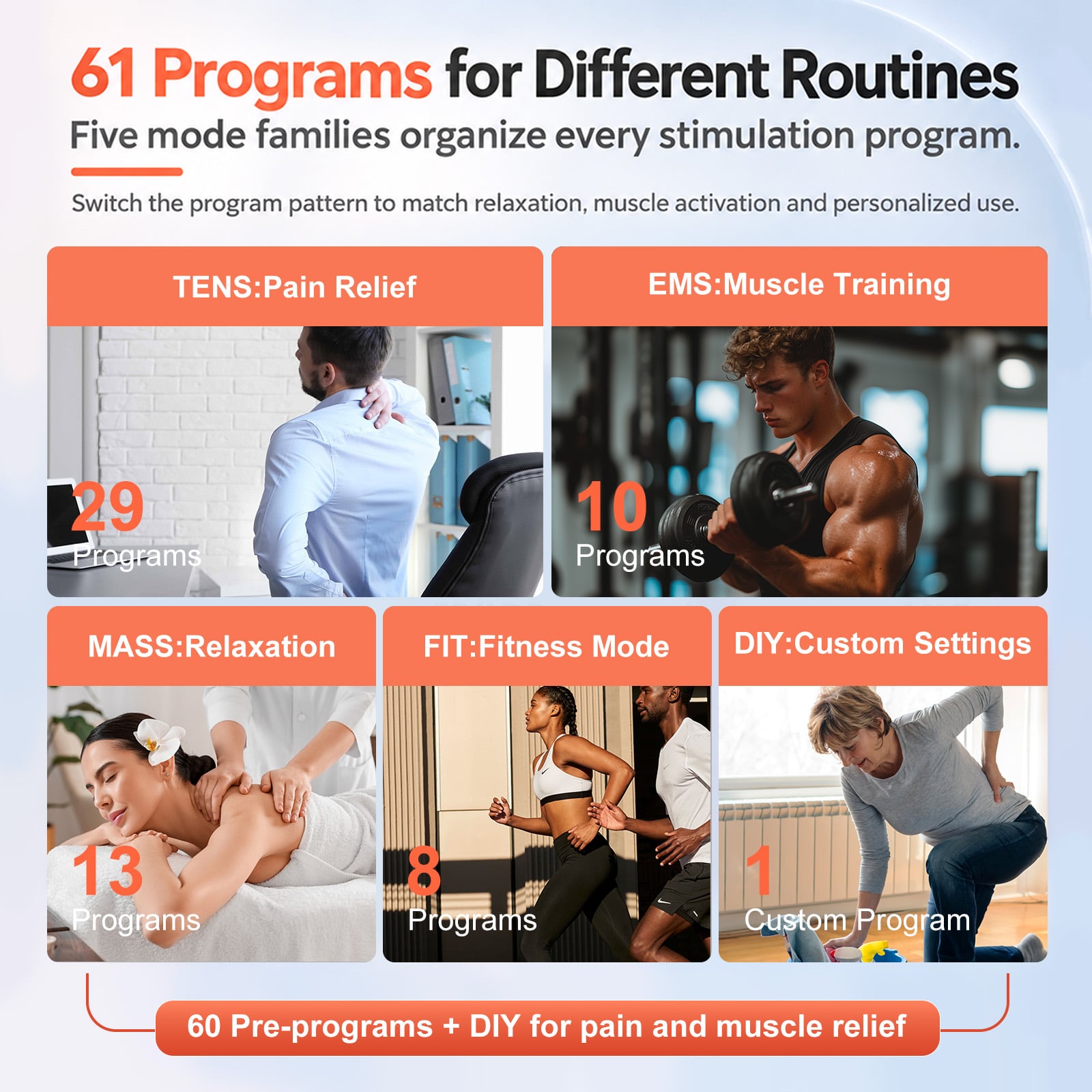
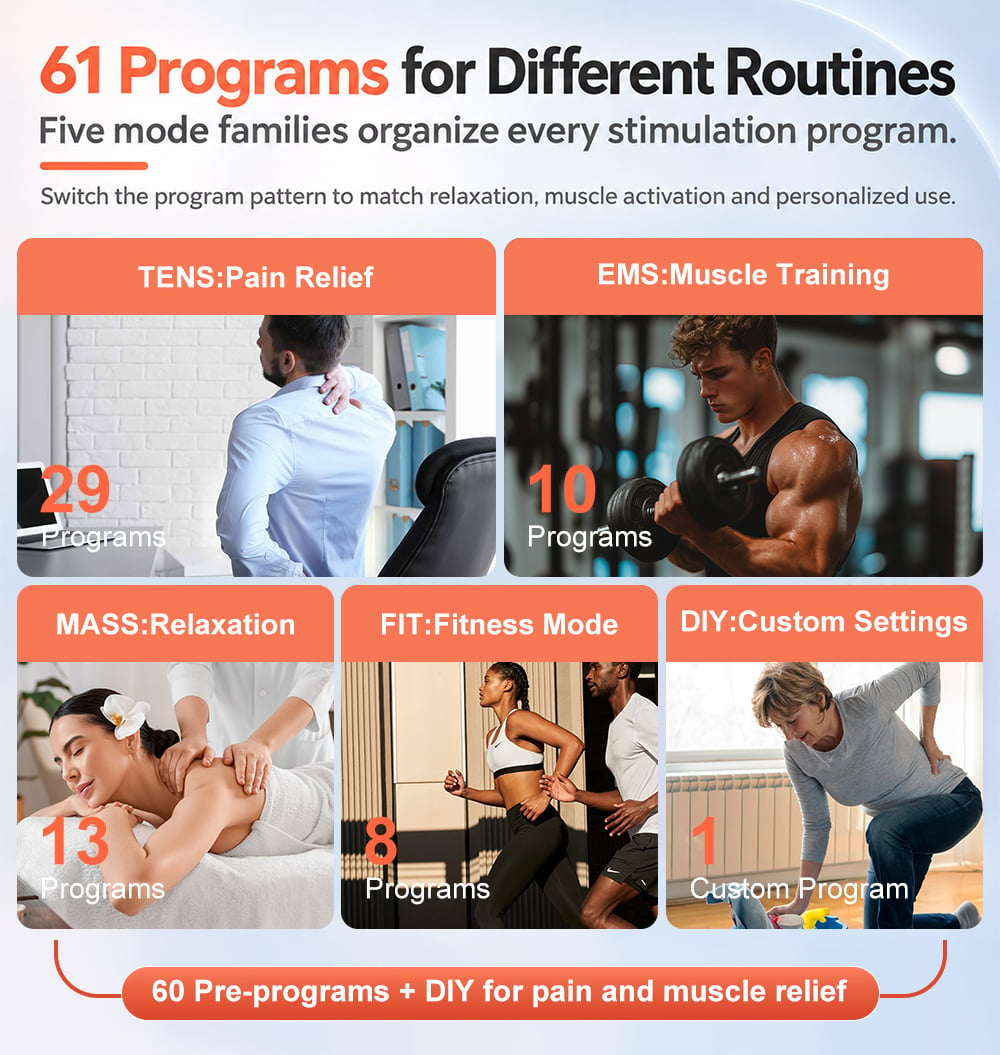
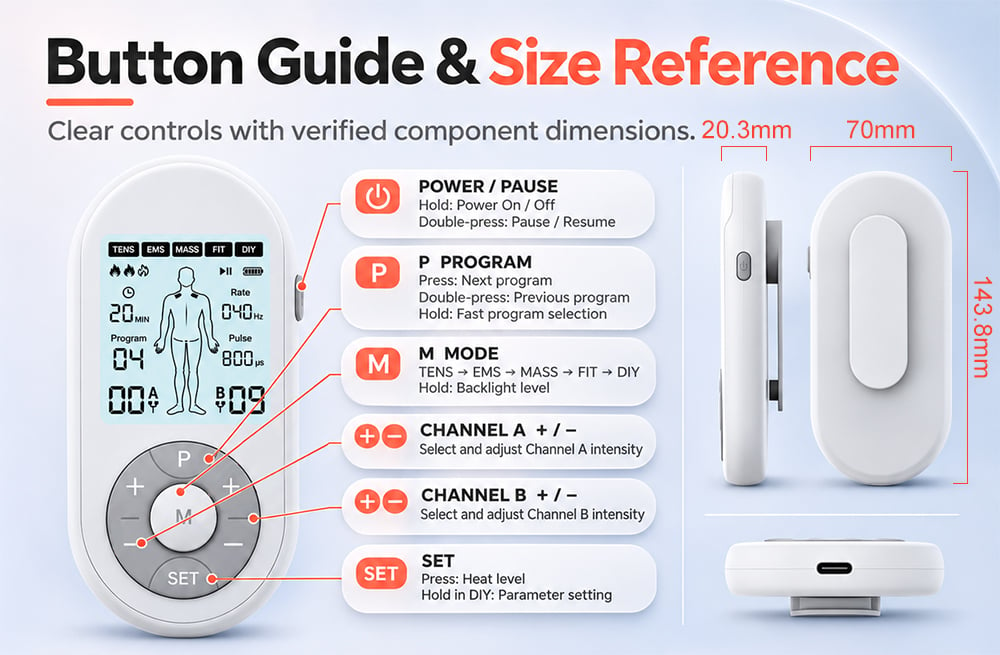
Then there's the program library, which is unusually large for a device in this category: 29 TENS programs, 10 EMS programs, 13 massage programs, 8 fitness programs and one DIY program. That's 61 in total, and the number alone isn't the interesting part — the five-group structure is. Sixty-one options in a flat list would be a chore to navigate. Split into groups, with physical buttons that jump straight to each one, the library becomes usable during a session rather than something you scroll through before starting.
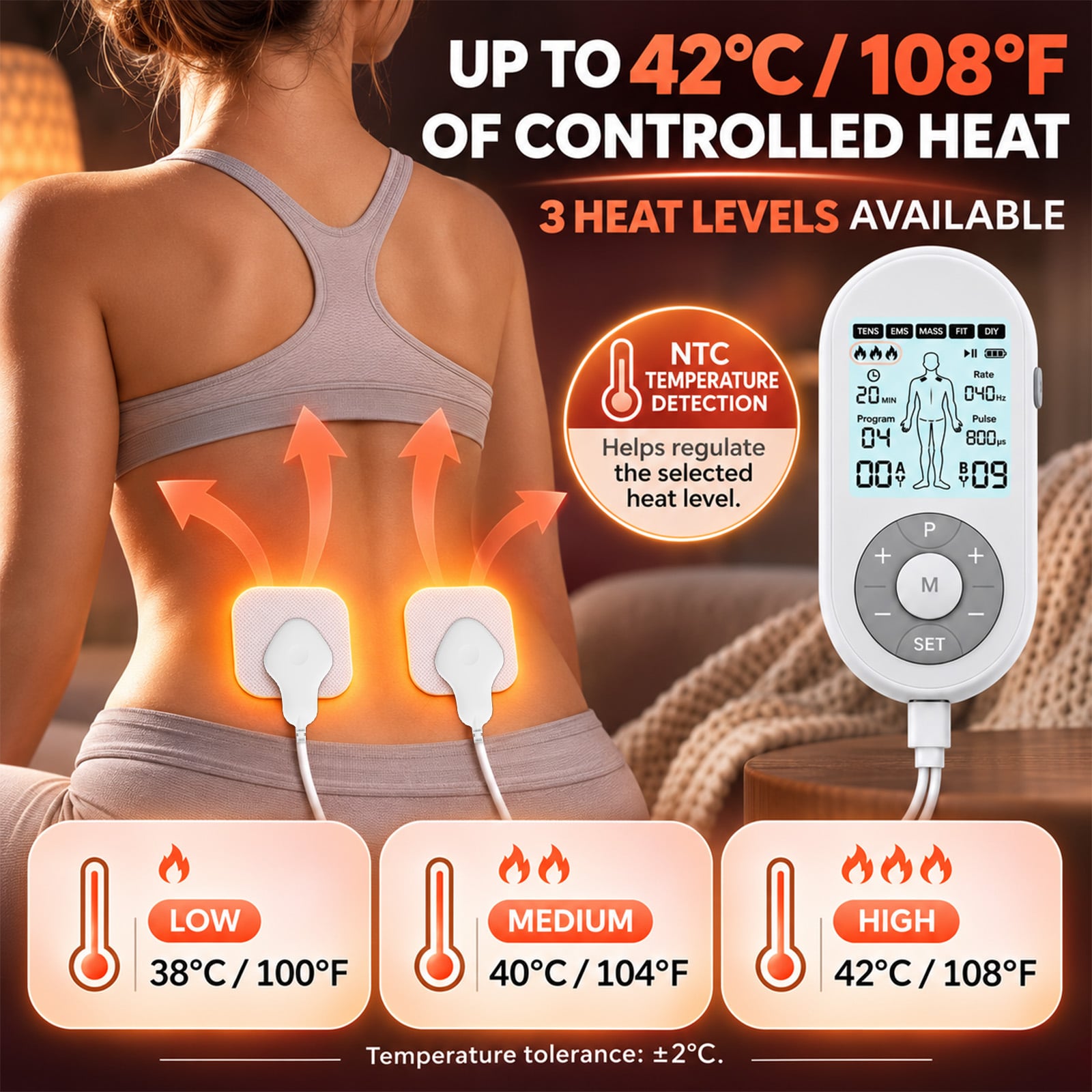
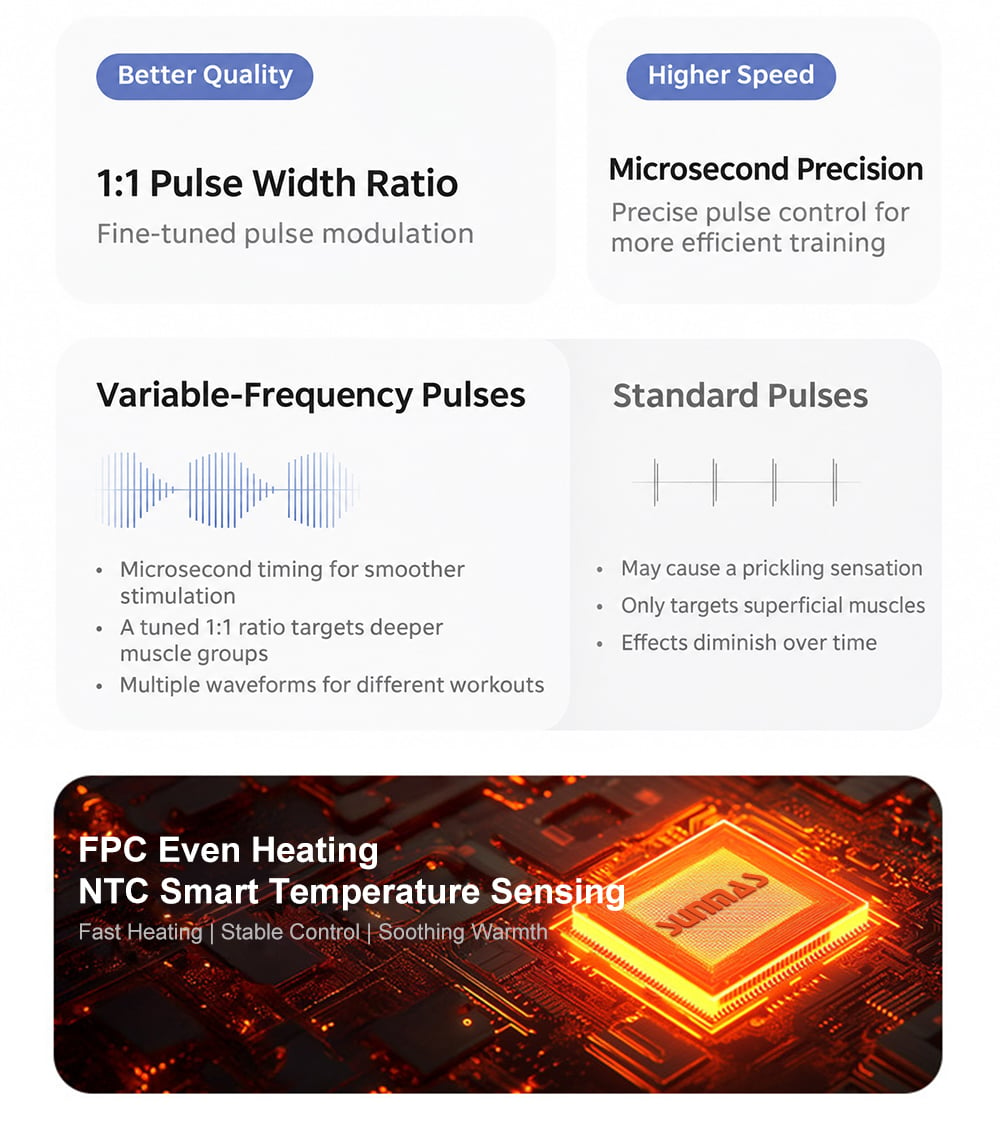
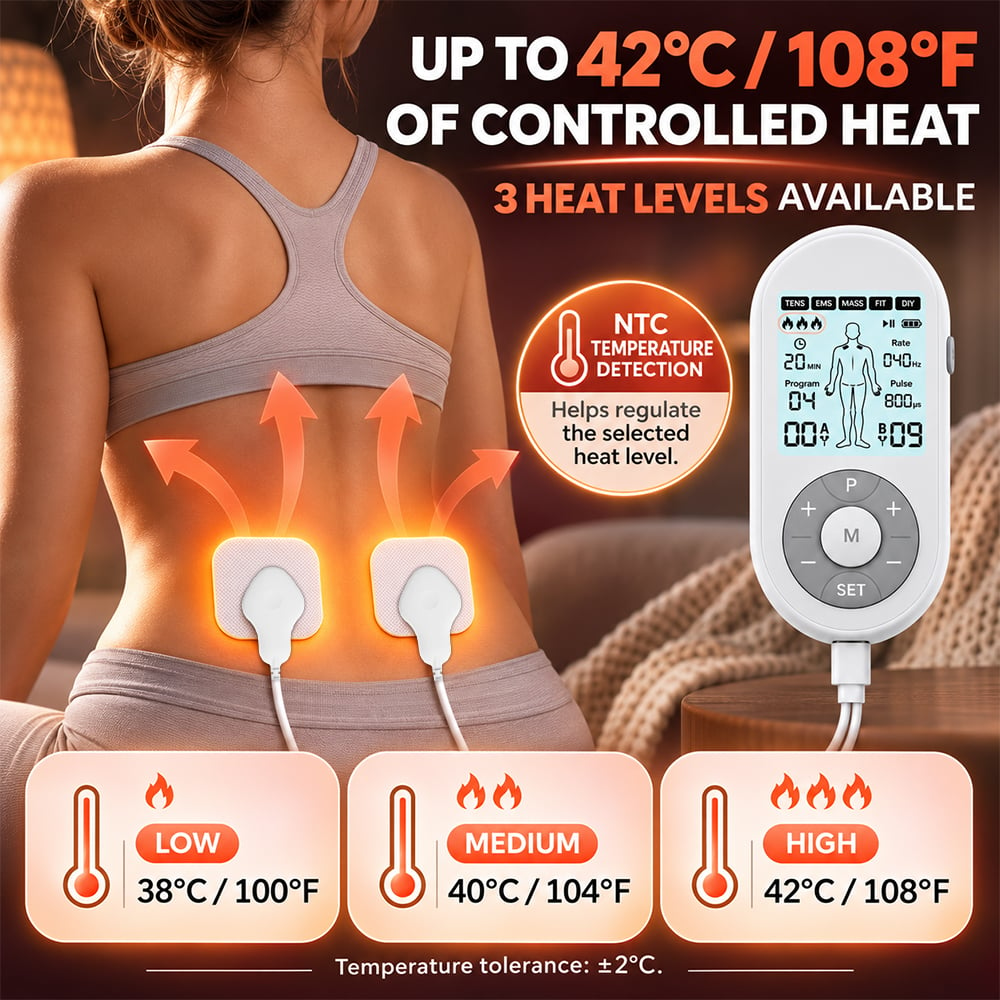
Heating runs through the electrode pads at three controlled levels: 38°C, 40°C and 42°C, each with a tolerance of ±2°C. The detail worth pausing on is the NTC temperature sensor. A stated tolerance range plus a sensor providing the feedback loop is a more honest specification than a single rounded temperature, and it tells you something about how the heating is actually regulated.
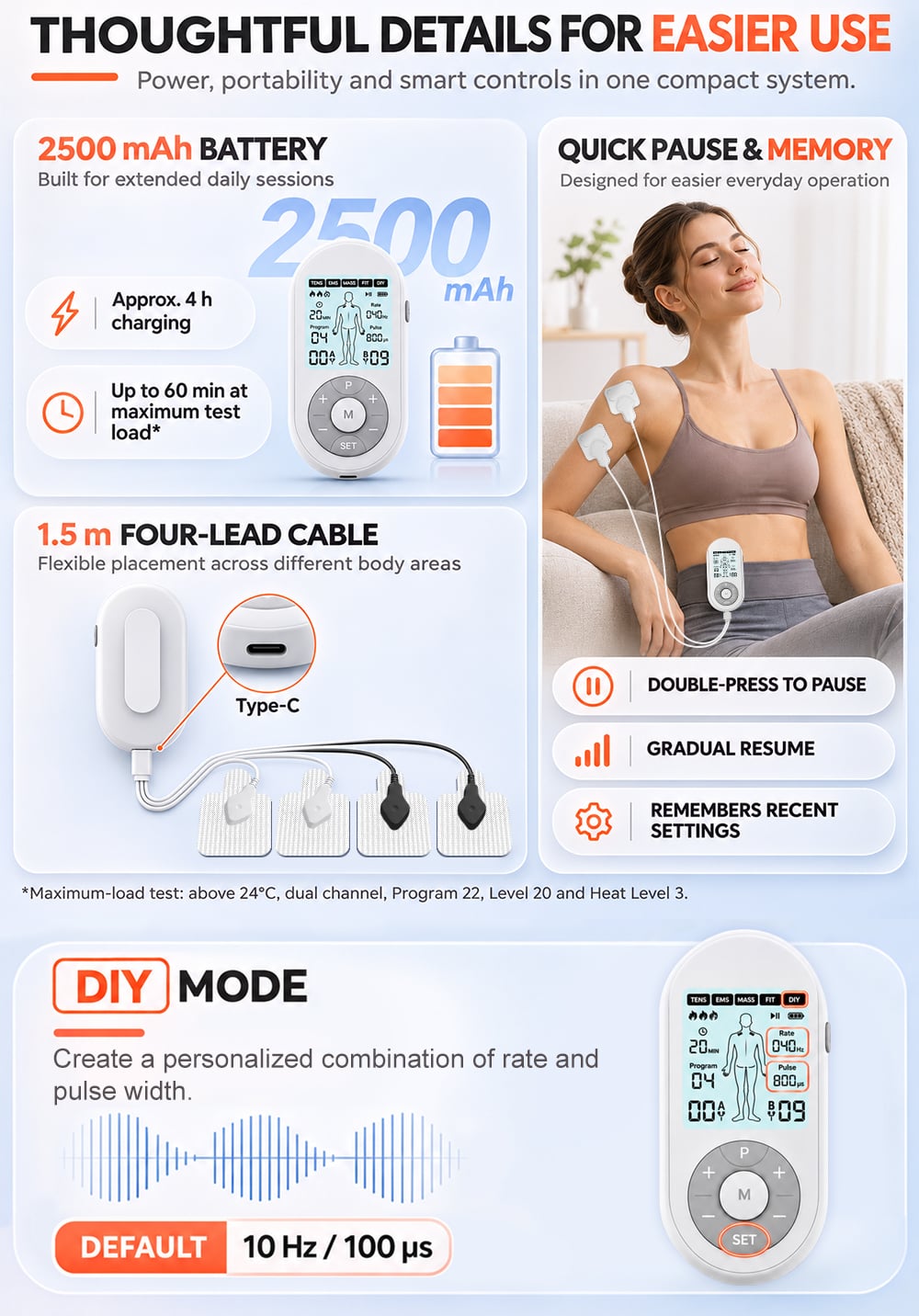
The DIY program is aimed at a different kind of user. It lets you adjust pulse frequency and pulse width within the device's specified ranges, building a custom pattern instead of picking from presets. Not every buyer will touch it. But for distributors serving experienced users, it's the feature that separates this device from a preset-only unit.
Day-to-day operation is handled by the LCD, which shows the selected program, output settings, battery level and session countdown. A pause function stops the session without wiping your settings, and the device shuts down after two minutes without output or operation — useful when it gets set aside mid-session.
Power comes from a 2,500 mAh battery charged through a Type-C port, reaching full from low in approximately four hours. That capacity is generous for a device of this type, and it's matched to the way the unit is used: dual channels, longer sessions, and program changes mid-session all draw more power than a single-channel preset device would.
Key Features
61 programs across five groups — 29 TENS, 10 EMS, 13 massage, 8 fitness and 1 DIY.
Independent dual channel control — separate mode and intensity for Channels A and B, 20 output levels per channel.
Three controlled heat levels — 38°C, 40°C and 42°C, each with ±2°C tolerance, regulated by an NTC temperature sensor.
Customizable DIY program — adjustable pulse frequency and pulse width within specified ranges.
LCD display showing program, output settings, battery level and session countdown.
Physical buttons for direct access to program groups and channel settings.
Pause function plus automatic shutdown after two minutes without output or operation.
2,500 mAh rechargeable battery with Type-C charging, approximately four hours from low to full.
Technical Advantages
Independent channels change what the device can do, not just how it's configured. Two pad positions with different sensitivity, two different stimulation approaches used at once, or one channel adjusted mid-session while the other stays put — none of these are possible on a shared-setting device. This is the design decision the rest of the product is built around.
Grouping 61 programs is what makes 61 programs usable. A large program count is easy to advertise and hard to use. Splitting the library into TENS, EMS, massage, fitness and DIY, with physical buttons for direct access, keeps the selection process short during a session.
Temperature tolerance stated, not rounded away. Listing heat as 38°C, 40°C and 42°C with ±2°C tolerance, controlled by an NTC sensor, gives buyers a specification they can document accurately. It's a small thing that matters when product listings need to match actual behavior.
DIY mode serves the technical end of the market. Adjustable pulse frequency and pulse width within specified ranges gives experienced users room to build custom patterns. For buyers whose customers compare specifications closely, this is a meaningful differentiator.
Battery capacity matched to the use pattern. 2,500 mAh supports dual-channel sessions and program changes without constant recharging, and the four-hour charge time is stated plainly.
Session controls that reduce handling issues. Pause preserves settings mid-session; the two-minute auto shutdown covers the device being set down without being turned off.
Where It Fits
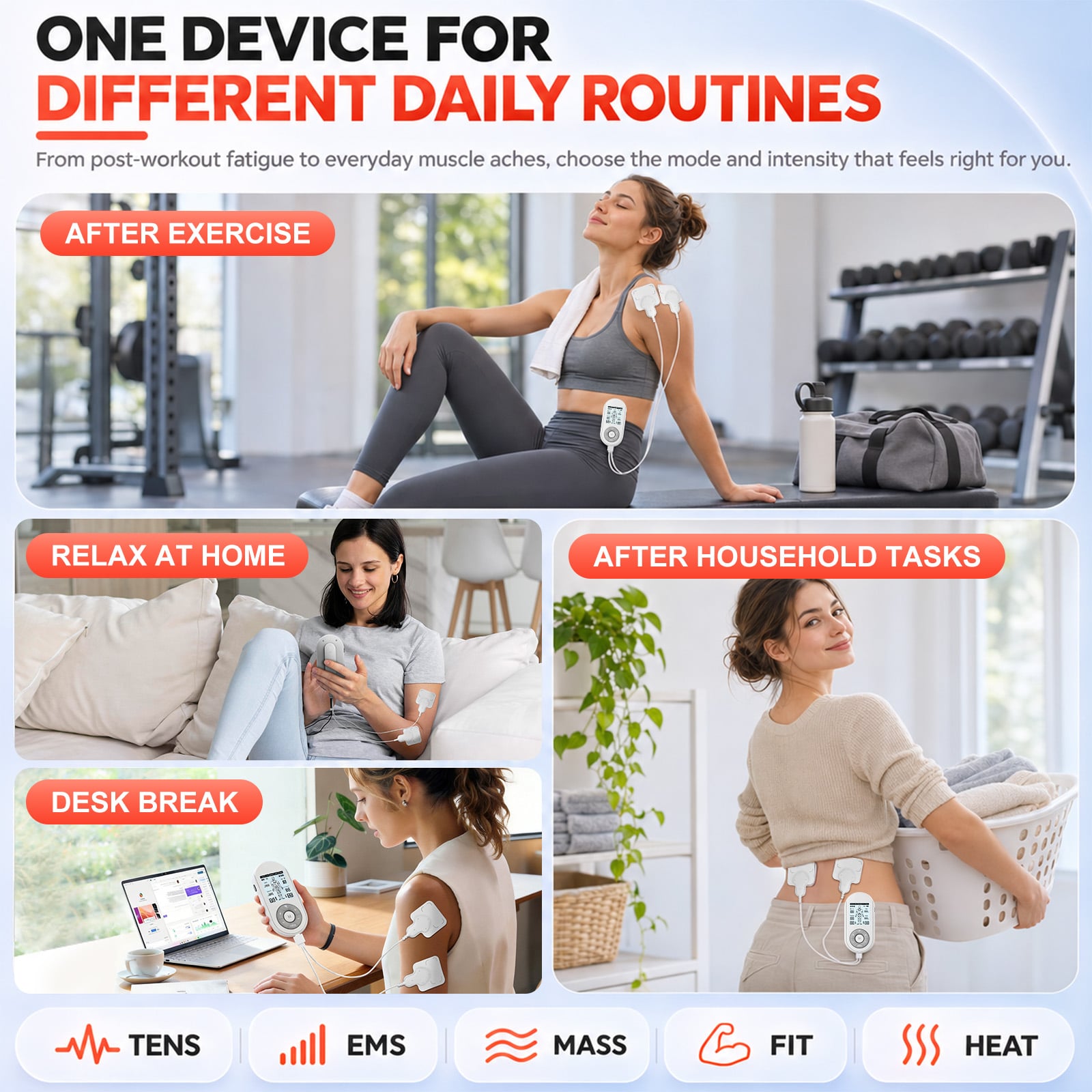
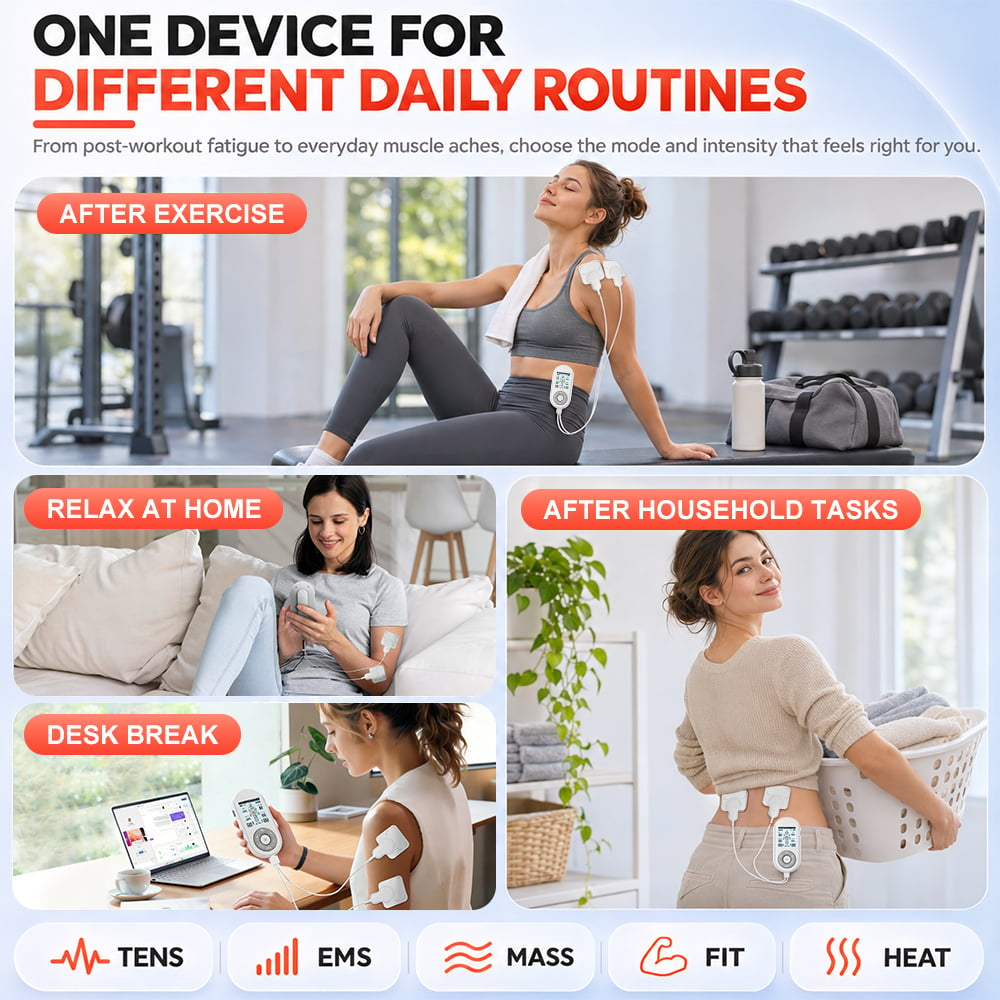
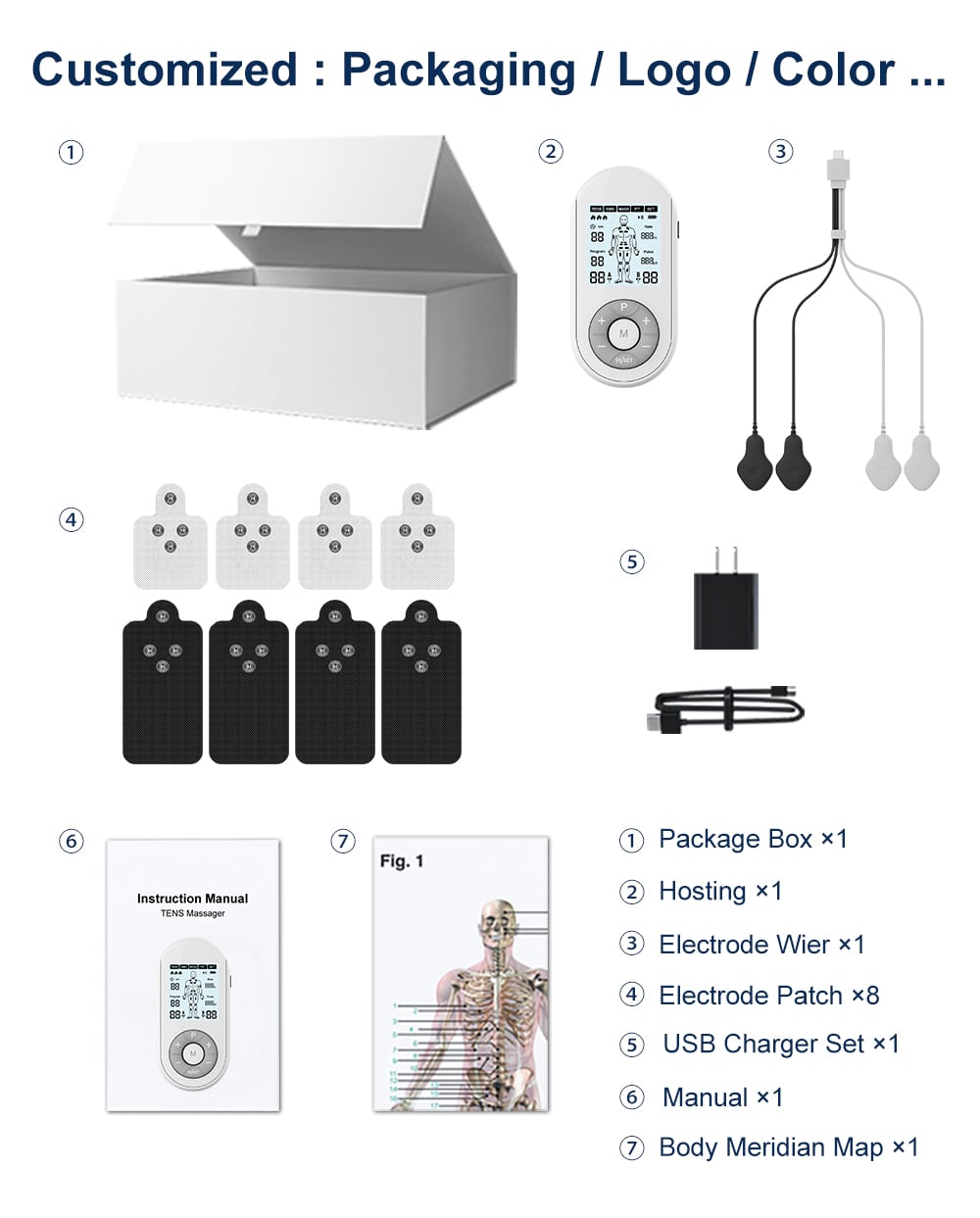
The SM9201A suits buyers looking for a wired TENS and EMS device for personal stimulation, massage or fitness routines. Its two independent channels are useful when different settings are preferred for two connected pad positions. Users can select a preset program or adjust the DIY mode, then follow the supplied instructions for electrode placement and operation.
A few patterns come up again and again in practice. Someone working on two areas at once sets each channel to a different program and intensity. A user with different sensitivity on each side adjusts one channel without changing the other. A fitness-oriented user moves between EMS and fitness programs while keeping the same pad placement. And a user who wants heat alongside stimulation adjusts the pads' heat level independently of the channel settings. As with any device of this type, users should follow the product instructions for electrode placement and operation.
For distributors, the positioning is worth noting: this is a device that rewards a slightly more detailed product listing. The features that matter — dual channel independence, program groups, DIY mode — are the ones that need a sentence of explanation, and buyers who understand them are the ones most likely to see the value.
Why Buyers Choose SUNMAS
SUNMAS develops TENS and EMS products for B2B customers and offers OEM and ODM project support. The SM9201A combines multiple program groups, independent channel settings, controlled heat and rechargeable operation in one device.
On the commercial side, each major feature can be explained in a sentence rather than a paragraph — 61 programs, dual channel control, three heat levels, LCD display, DIY mode — which keeps packaging and listing copy manageable. Specifications are stated with tolerances and test conditions, which supports accurate listings and reduces the gap between marketing claims and actual device behavior.
OEM and ODM support covers branding, packaging and the product configuration required for individual markets, so buyers can shape the device around their channel and customer base rather than adapting to a fixed SKU.
FAQ
What programs are included?
61 programs across five groups: 29 TENS, 10 EMS, 13 massage, 8 fitness and 1 DIY.
Can the two channels run different settings?
Yes. Channels A and B have separate mode and intensity settings, with 20 output levels per channel.
What are the heat settings?
Three levels: 38°C, 40°C and 42°C, each with ±2°C tolerance, controlled by an NTC temperature sensor.
What can I adjust in DIY mode?
Pulse frequency and pulse width, within the device's specified ranges.
How long does charging take?
Approximately four hours from low battery to full, via the Type-C port. Battery capacity is 2,500 mAh.
Does the device shut off automatically?
Yes. It shuts down after two minutes without output or operation. There's also a pause function for mid-session breaks.
Is this a wireless device?
No. The SM9201A is a wired unit with heated electrode pads; the dual channel design refers to the two independent output channels.
Do you offer OEM and ODM services?
Yes — for branding, packaging and product configuration.
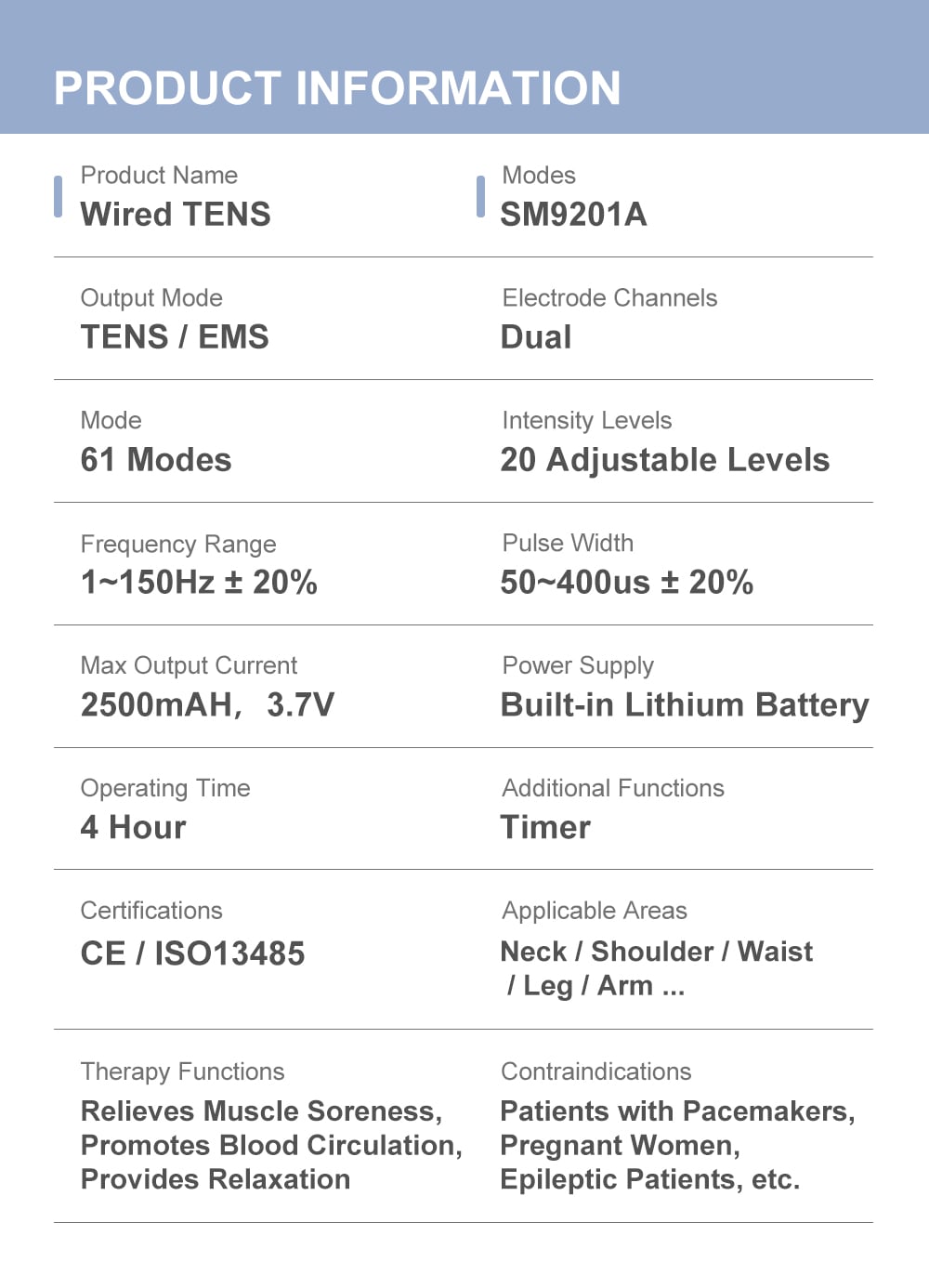
| Attribute | Specification |
| Product Name | Dual Channel TENS EMS Unit with Heat and LCD Display |
| Model No. | SM9201A |
| Application | TENS and EMS stimulation, massage and fitness routines |
| Main Function | TENS, EMS, massage, fitness stimulation and heating |
| Modes | 61 modes: TENS 29, EMS 10, Massage 13, Fitness 8, DIY 1 |
| Channels | 2 Channels |
| Intensity Levels | 20 Levels |
| Heating | 3 Levels: 38°C, 40°C and 42°C (±2°C) |
| Timer | Program-based countdown |
| Control Method | Main Unit Button Control |
| Display | LCD Display |
| Battery Capacity | 3.7V / 2500mAh |
| Charging Port | Type-C |
| Charging Input | DC 5V; 2A or Higher Charger Recommended |
| Charging Time | Approximately 4 Hours |
| Pulse Frequency | 1–150Hz ±20% |
| Pulse Width | 50–400μs ±20% |
| Customization | OEM/ODM Available |


 EN