 ×
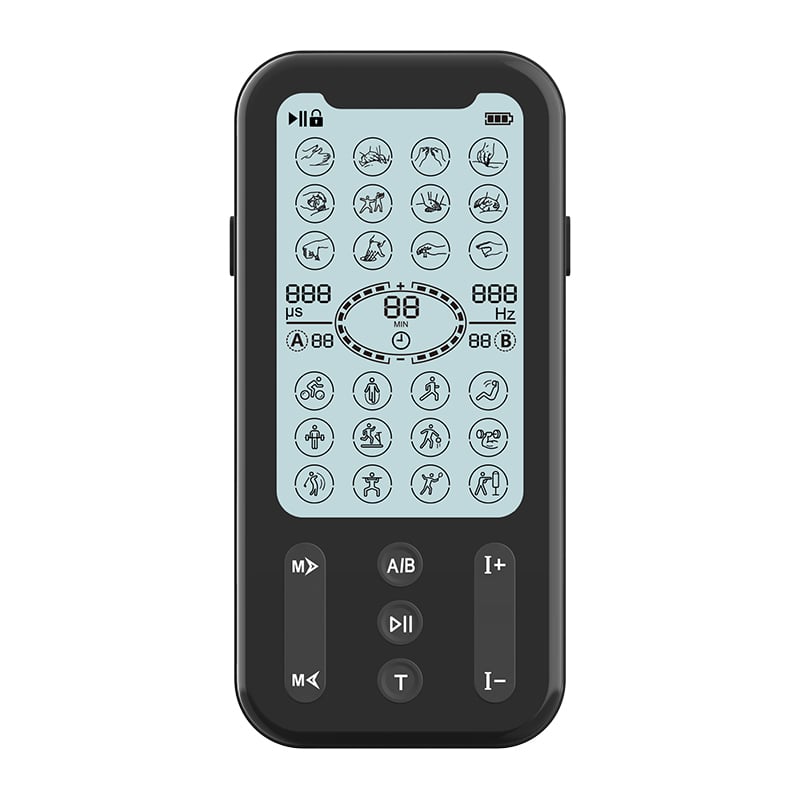
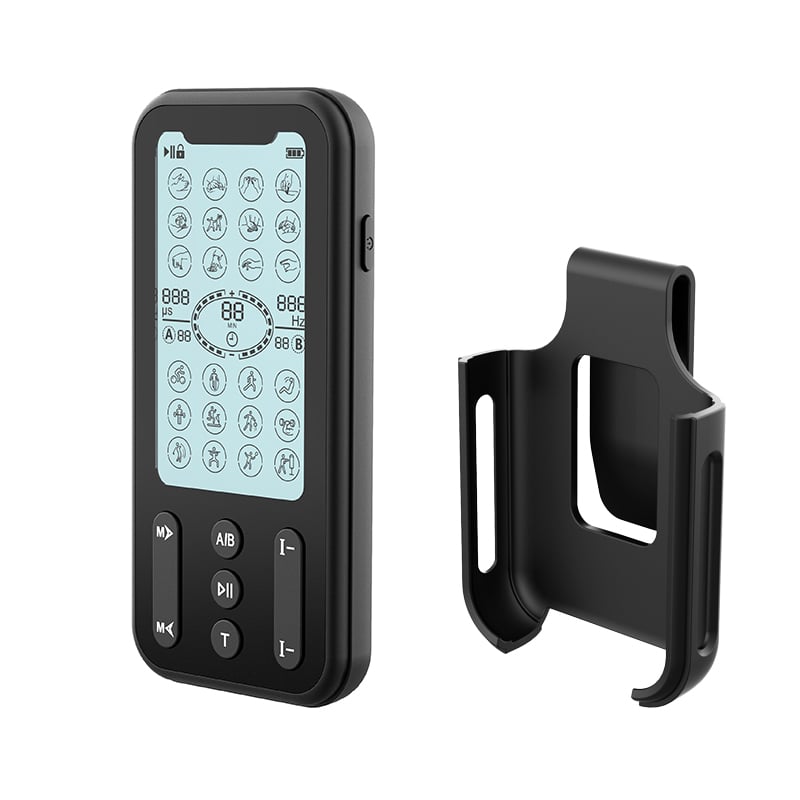
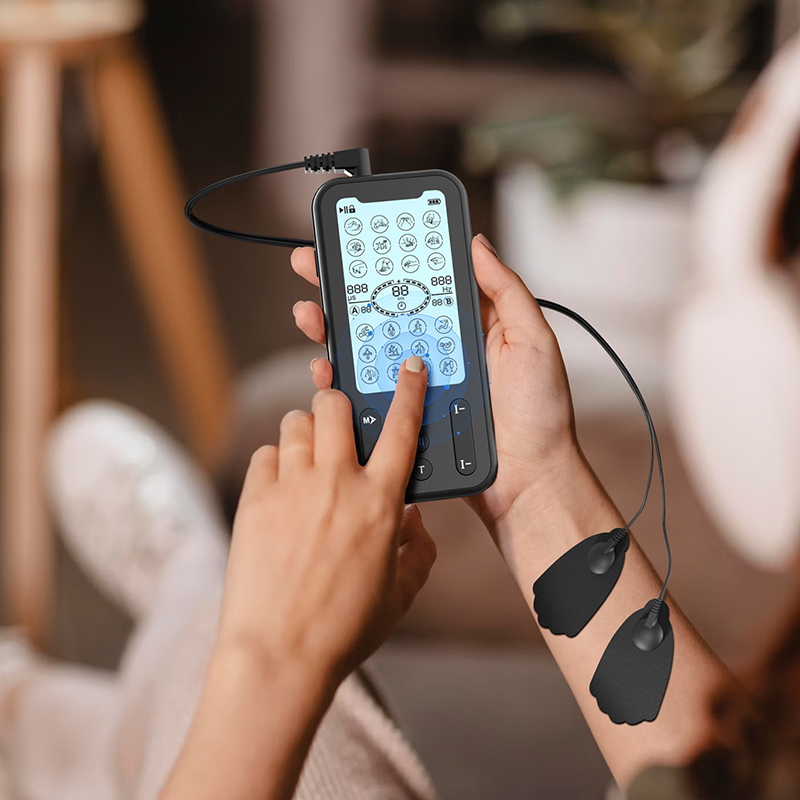
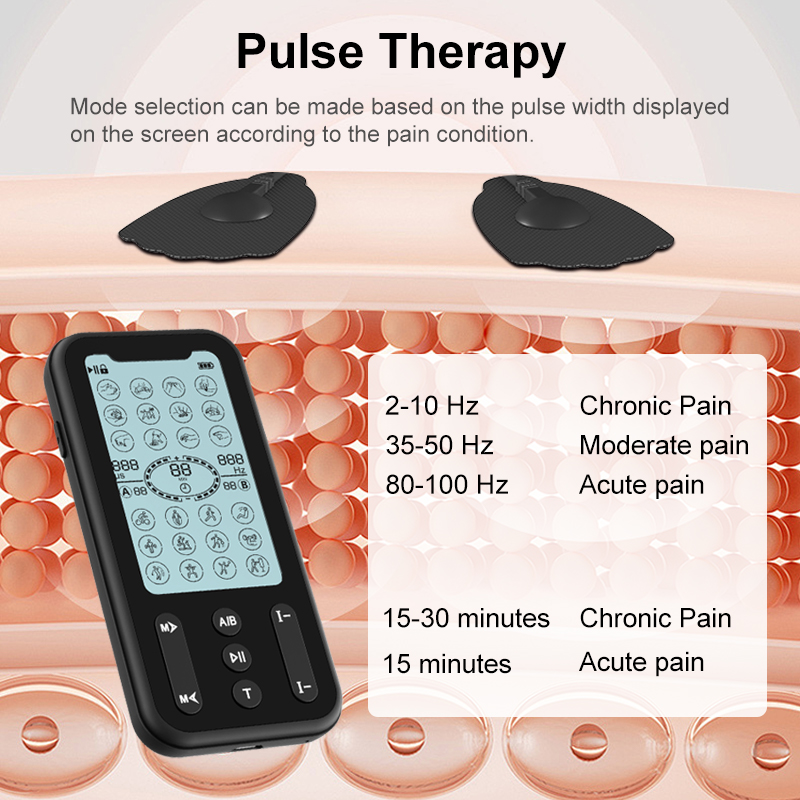
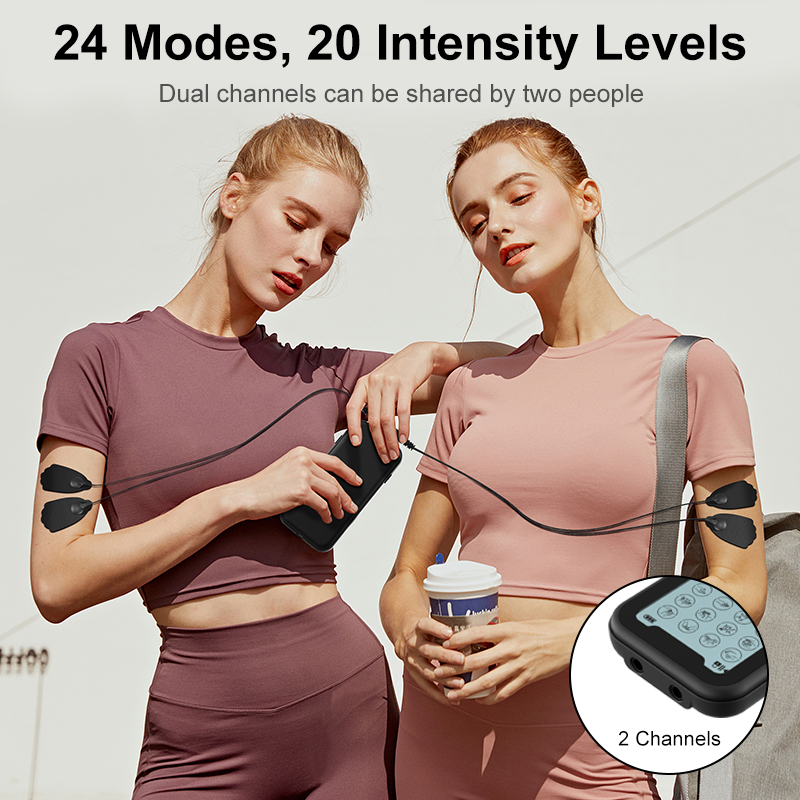
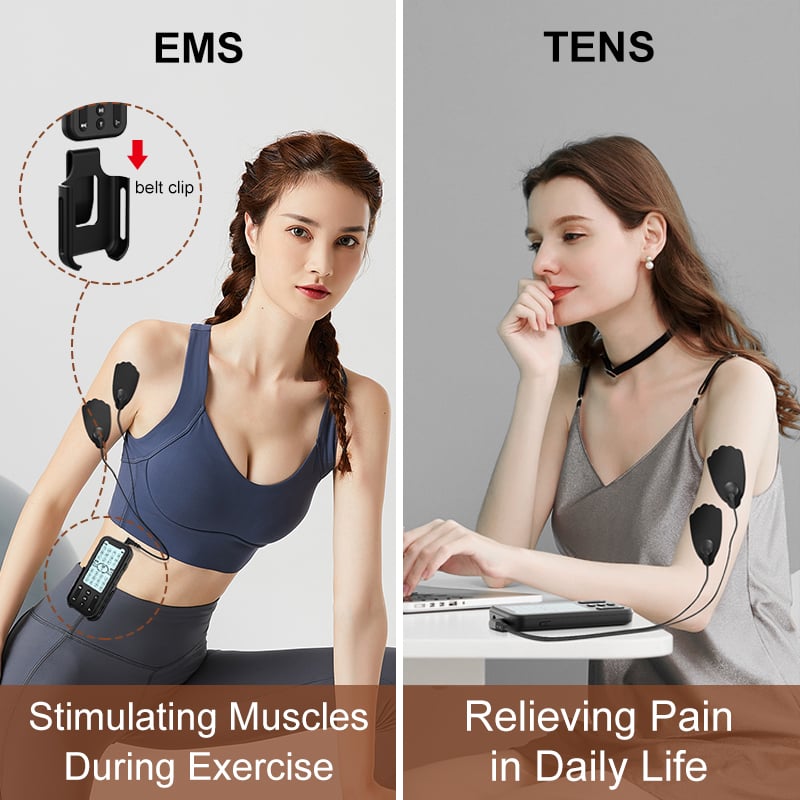
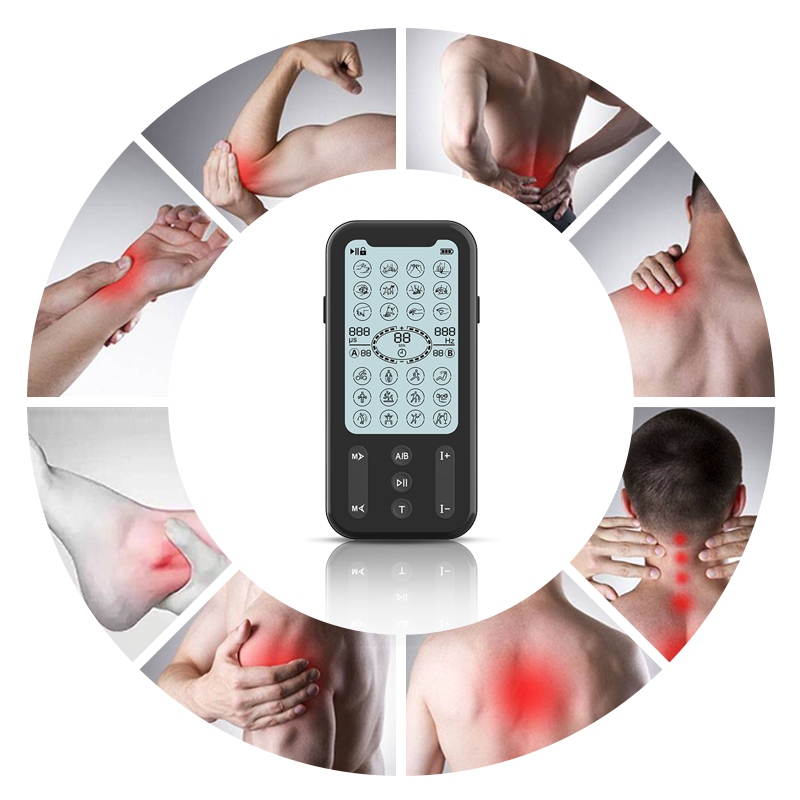
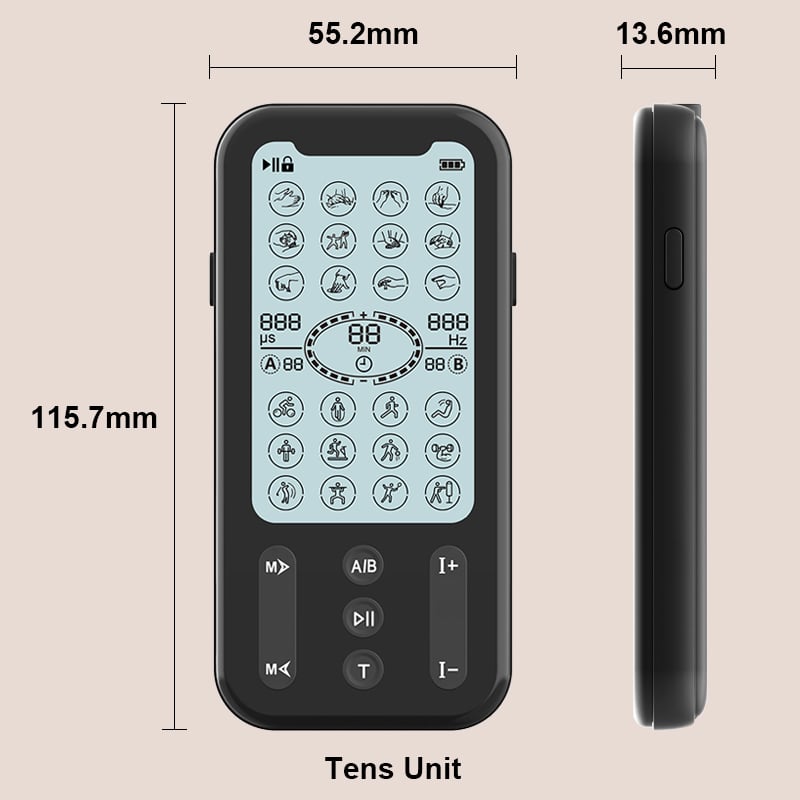
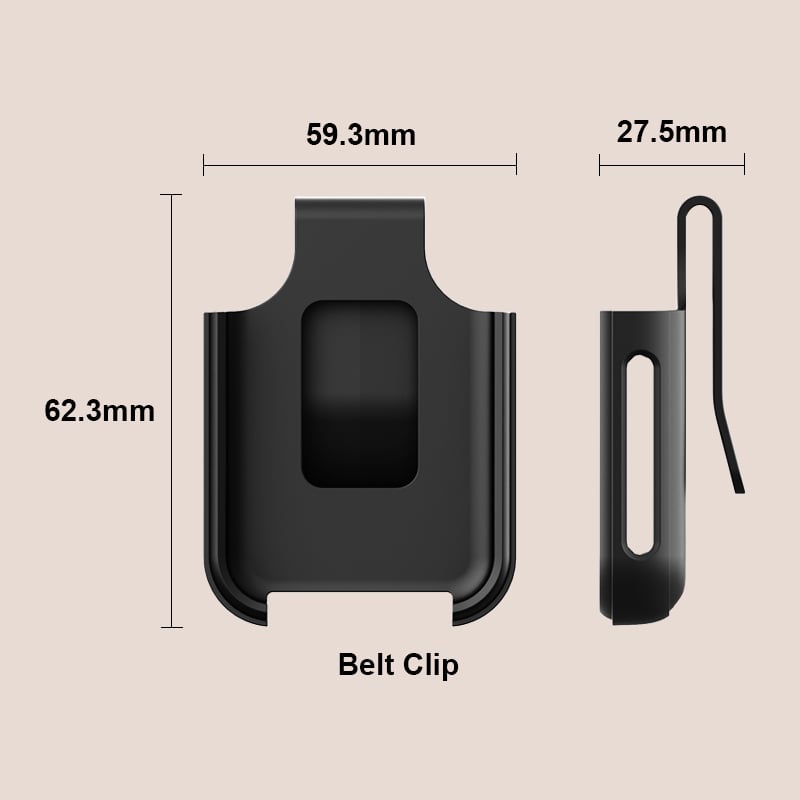
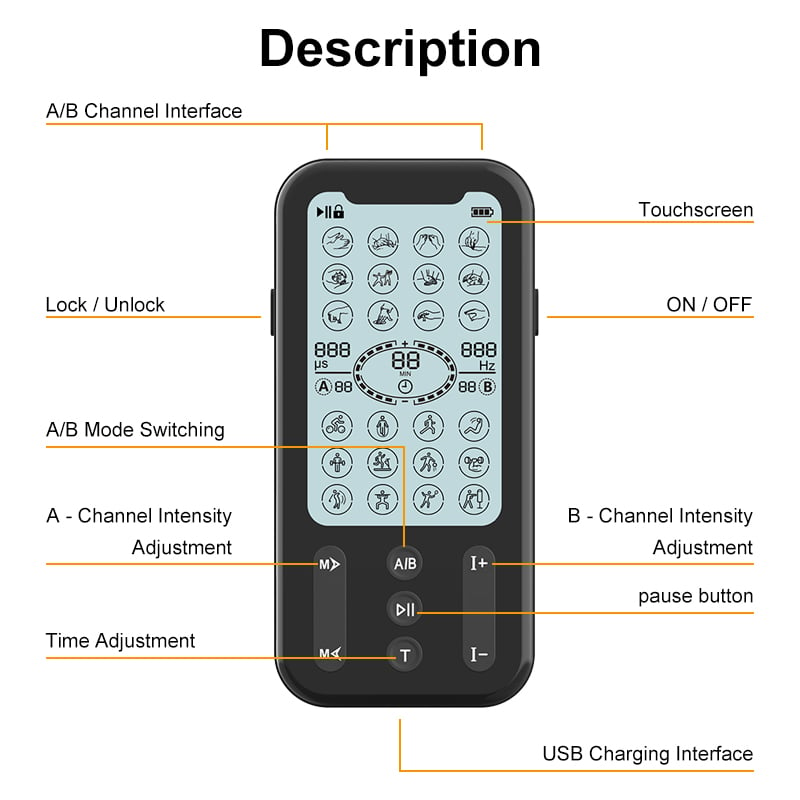
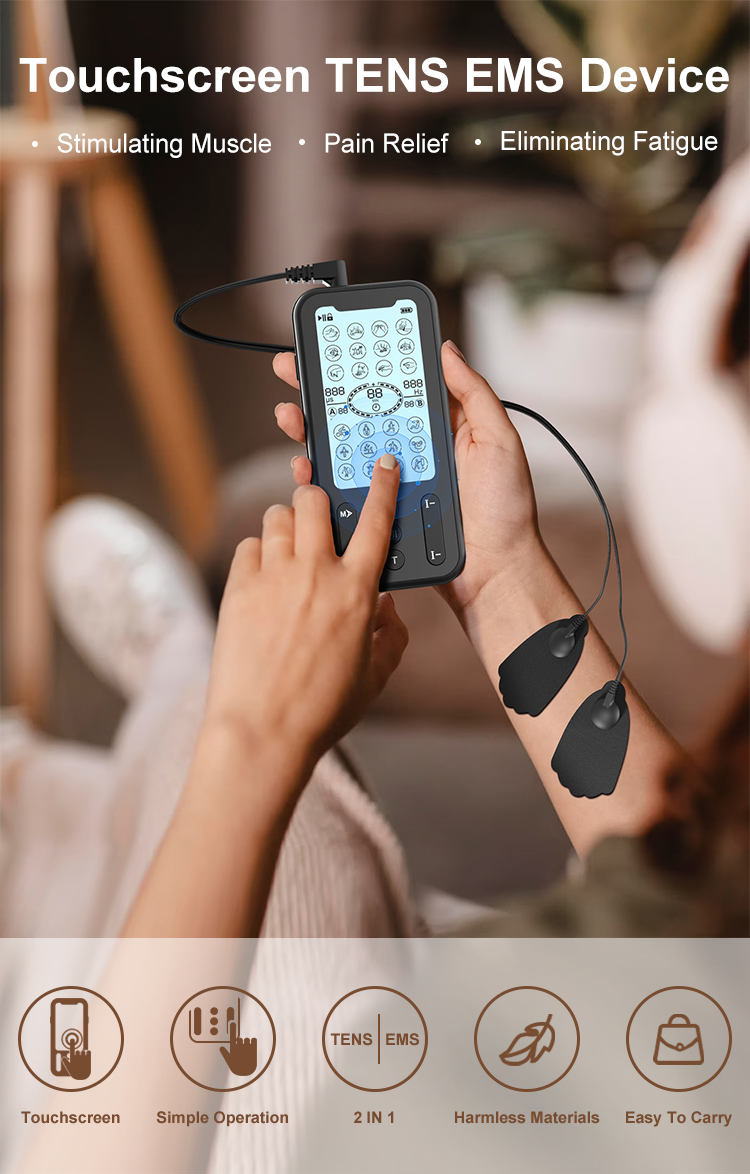
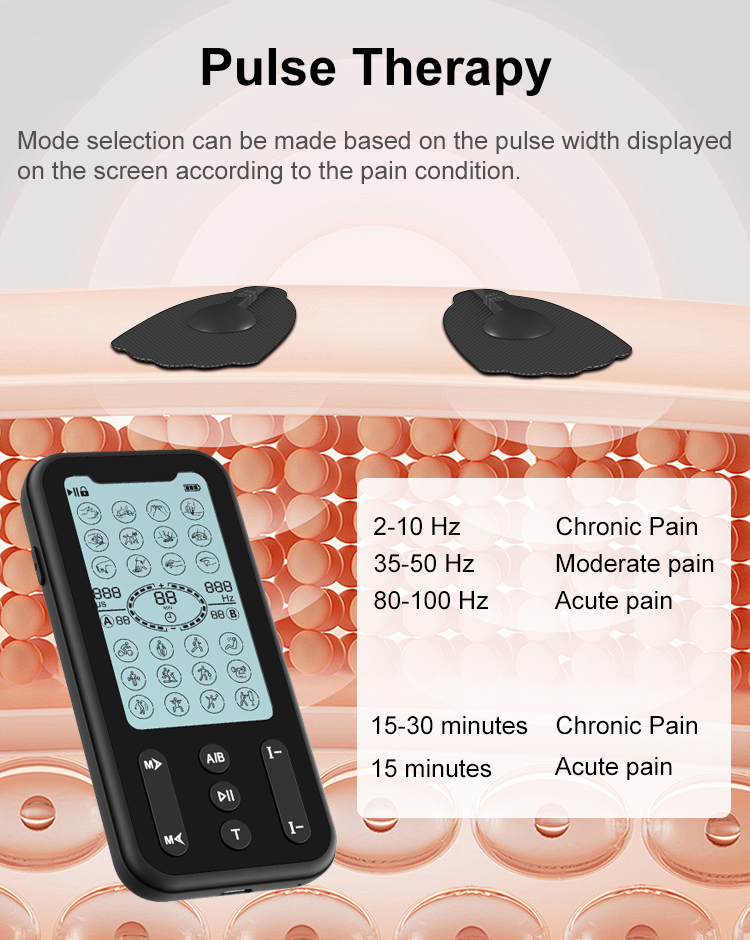
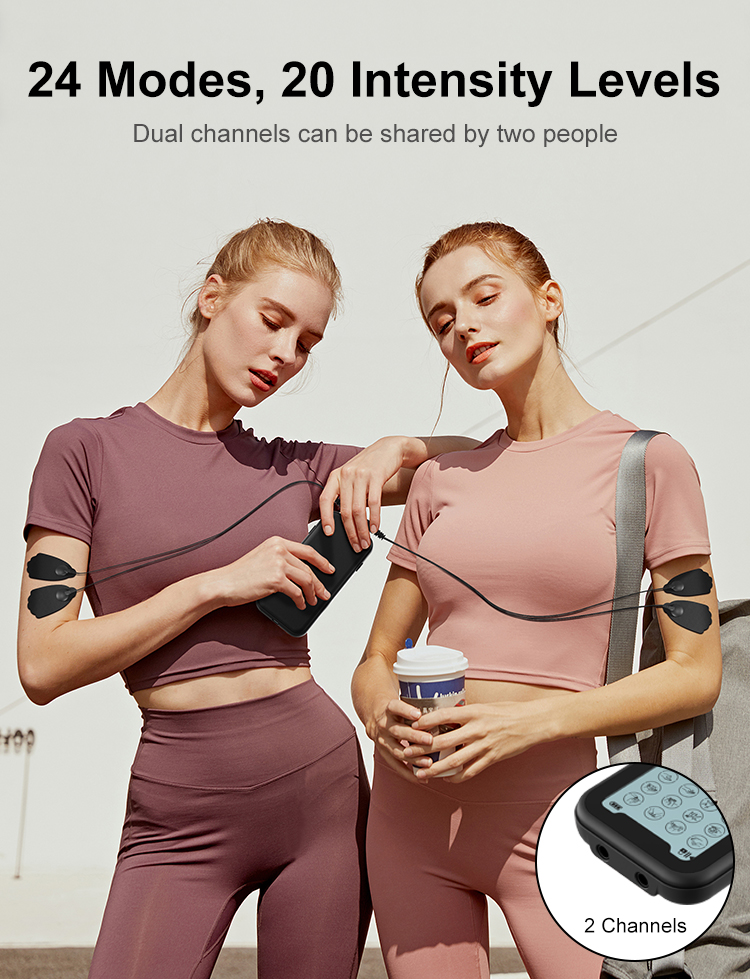
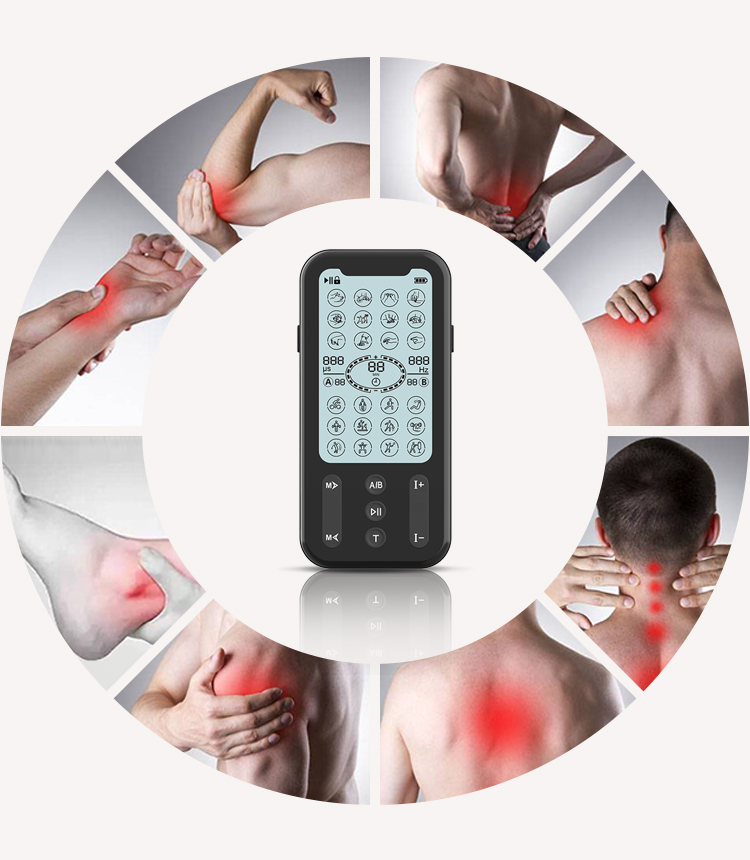
The SUNMAS SM9031 is a rechargeable dual channel TENS unit designed for low frequency stimulation, muscle exercise and relief of muscle soreness. It offers 24 modes and 20 intensity levels, with independently controlled modes and intensity for channels A and B. The main unit combines physical buttons with a white backlit display, allowing users to view channel settings, pulse frequency, pulse width and session time during operation.
Product Overview
Buyers comparing dual channel TENS units usually run into the same question: what does "independent" actually mean on this model? On the SUNMAS SM9031, it means both mode and intensity are set separately for Channels A and B, so two electrode positions can run different patterns at different strengths. The unit offers 24 modes and 20 intensity levels, with a white backlit display showing channel settings, pulse frequency, pulse width and session time during use. Physical buttons handle operation, a lock function blocks accidental changes, and the 3.7V, 180 mAh battery charges through a Mini USB port. It's built for low frequency stimulation, muscle exercise and relief of muscle soreness.
A Closer Look at the Device
Two-channel TENS units tend to fall into one of two camps. In the first, the channels share a program and split only the intensity. In the second, each channel is genuinely its own thing — mode, intensity, the lot. The SM9031 belongs to the second camp, and that distinction is the first thing worth pinning down, because the phrase "dual channel" appears in listings for both types.
What that means in practice: Channel A might run one pattern at level 8 while Channel B runs a different pattern at level 14. Two electrode positions, two different sensations, adjusted independently. For users working on areas with different sensitivity, or comparing two patterns side by side, this is the capability that justifies the second channel in the first place.
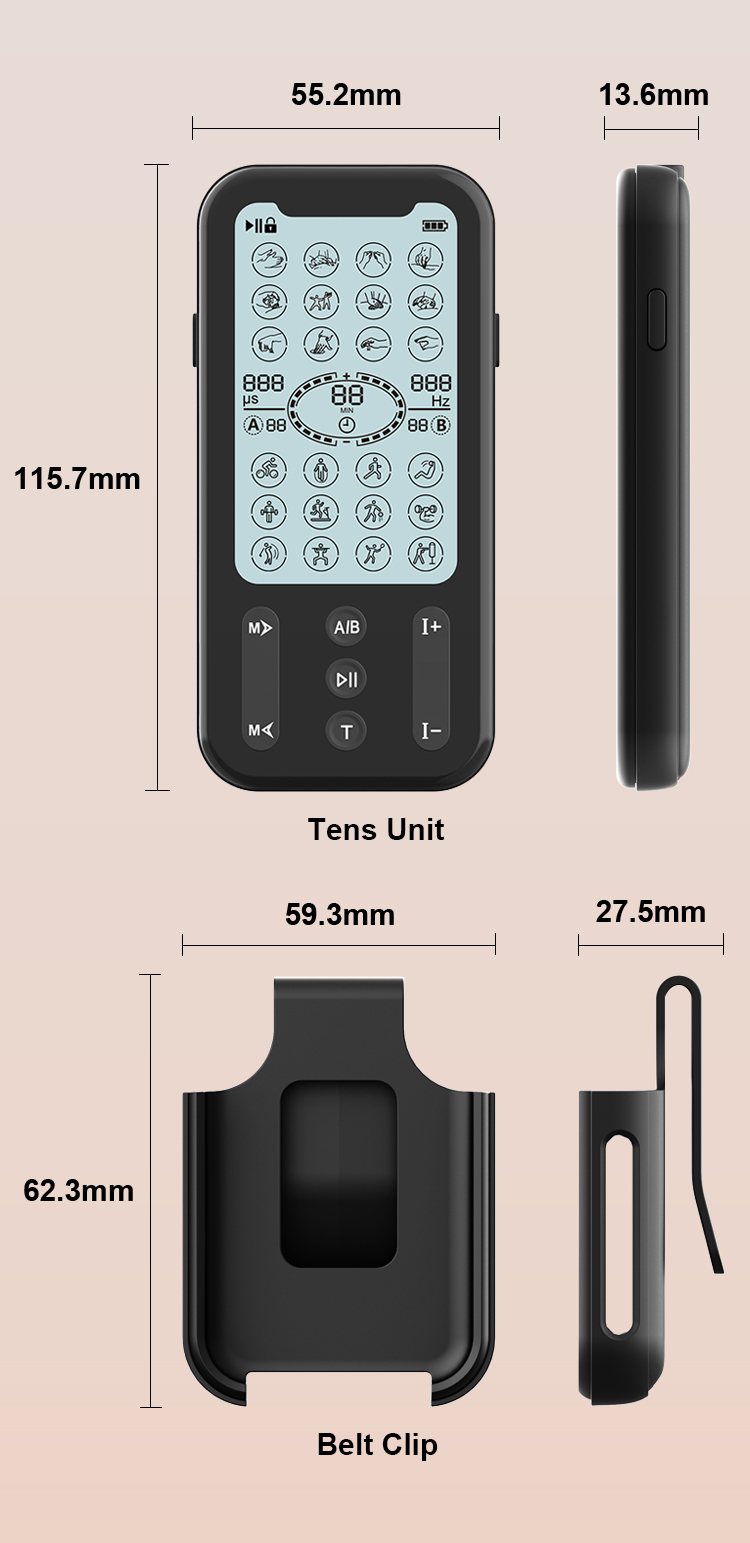
The display is where this unit makes its other argument. It's white backlit, and during operation it reports channel settings, pulse frequency, pulse width and session time. Pulse frequency and pulse width are the two parameters that determine how a stimulation pattern actually feels — the numbers behind the sensation, so to speak. Having them visible on the device rather than in a manual is useful for anyone who wants to understand what they're changing, not just that something changed.
Mode selection is supported by illustrations on the display. With 24 modes, names and numbers alone get hard to keep straight, and a visual cue identifies the active program faster than cycling through and waiting to feel the difference.
Intensity runs across 20 levels, starting at 0 and climbing one step at a time. There's a behavior here worth understanding before purchase: changing a mode resets intensity to 0. It can read as an inconvenience in a specification table, but the reasoning holds up. A new pattern may feel quite different from the one before it, and inheriting a strength setting from a previous mode means the first impression of the new program is shaped by a number chosen for something else. Starting at zero lets the user judge the new pattern on its own.
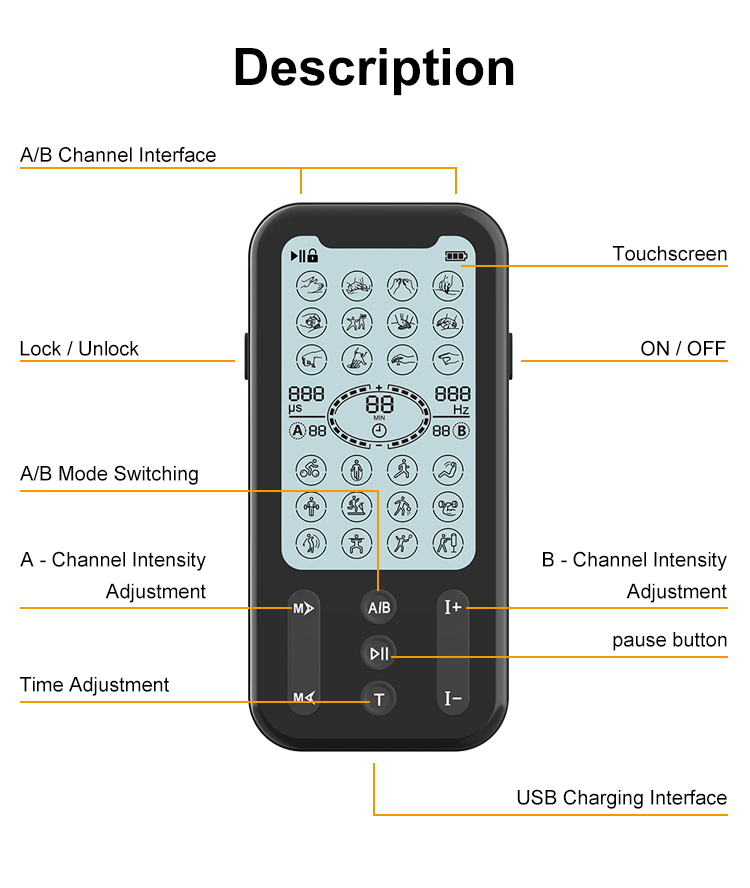
Session control is handled with a 20-minute default and dedicated buttons for working time and pause. The device switches off when the timer ends. There's also a button lock, which blocks setting changes from the other buttons while leaving the power button usable — a sensible arrangement for a unit that travels in a bag or gets handed to someone unfamiliar with it. The backlight goes off after 20 seconds without operation, so the display doesn't stay lit indefinitely.
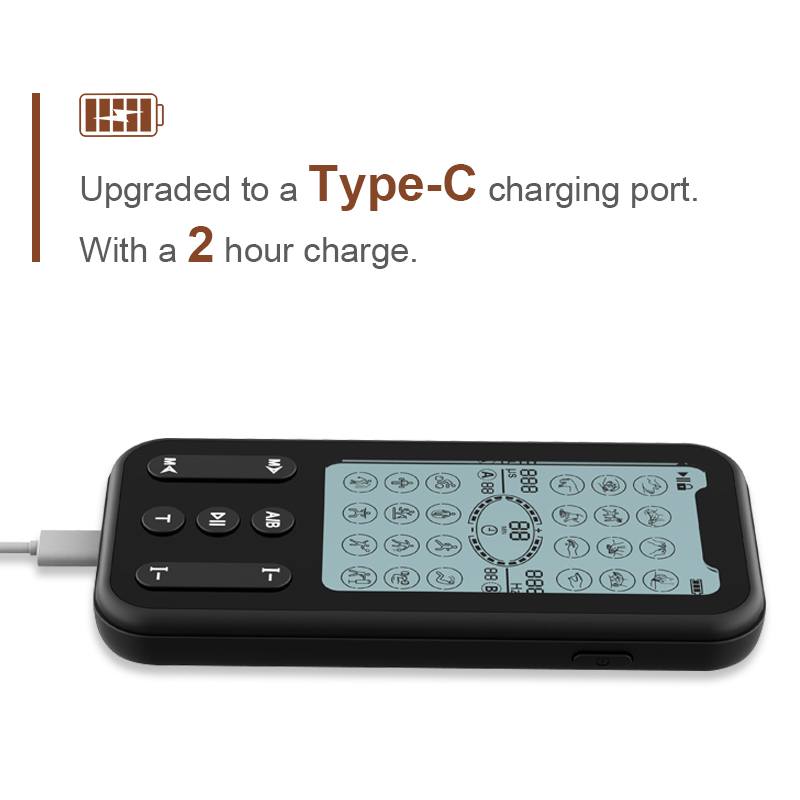
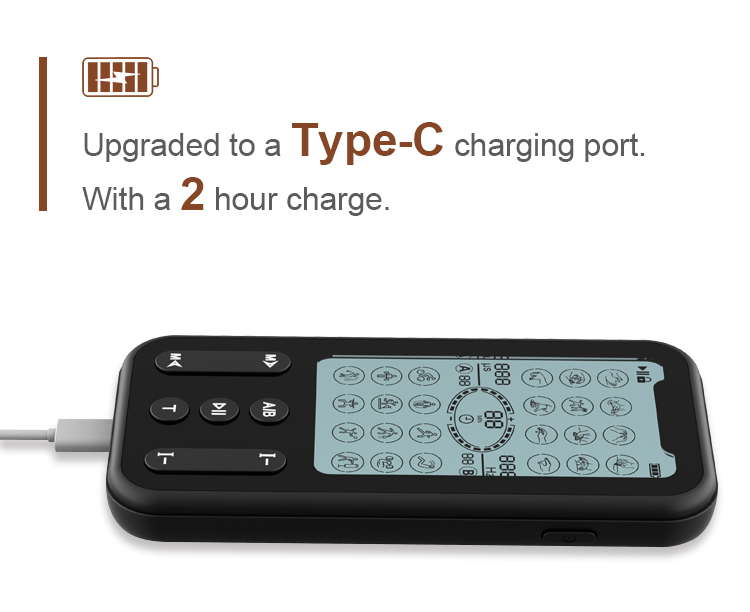
One specification deserves a direct comment: the Mini USB charging port. USB-C has become the default across consumer electronics, and buyers will notice that this unit uses Mini USB instead. It's worth stating plainly rather than glossing over, since it affects what retailers include in the box and what end users need to keep track of. The battery is 3.7V, 180 mAh, with indicators showing charge level, and stimulation is disabled while charging.
Key Features
24 selectable modes — change patterns with the mode button; program illustrations on the display identify the active mode.
Independent dual channel operation — Channels A and B allow separate mode and intensity settings.
20 intensity levels — output starts at level 0 and increases one level at a time; changing a mode resets intensity to 0.
Adjustable timer and pause control — 20-minute default session, dedicated buttons for working time and pause; the device switches off when the timer ends.
Button lock — prevents setting changes through the other buttons while keeping the power button available.
White backlit display — channel settings, pulse frequency, pulse width and session time; backlight off after 20 seconds without operation.
Rechargeable battery — 3.7V, 180 mAh, Mini USB charging; battery indicators; stimulation disabled while charging.
Physical button controls.
Technical Advantages
Per-channel independence covers both parameters. Separate mode and intensity for Channels A and B means two positions can run genuinely different patterns, not the same pattern at two strengths. For buyers comparing dual channel models, this is the specification that separates one tier from another.
The display reports the parameters behind the sensation. Pulse frequency and pulse width are visible during operation, alongside channel settings and session time. Users can see what they're adjusting rather than inferring it from how the output feels.
Visual mode identification at 24 options. Program illustrations cut down the time spent working out which mode is active, which matters once the mode count climbs past a dozen.
Mode change resets intensity to zero. A new pattern begins from a known baseline. The behavior supports gradual adjustment and avoids carrying over a strength setting that was chosen for a different program.
Button lock with the power button exempted. Accidental changes are blocked without trapping the user in a locked device. It's a small design decision with practical consequences for a portable unit.
Charging behavior documented. Mini USB port, battery indicators, and stimulation disabled during charging are all stated, giving buyers accurate material for packaging and manuals.
Where It Fits
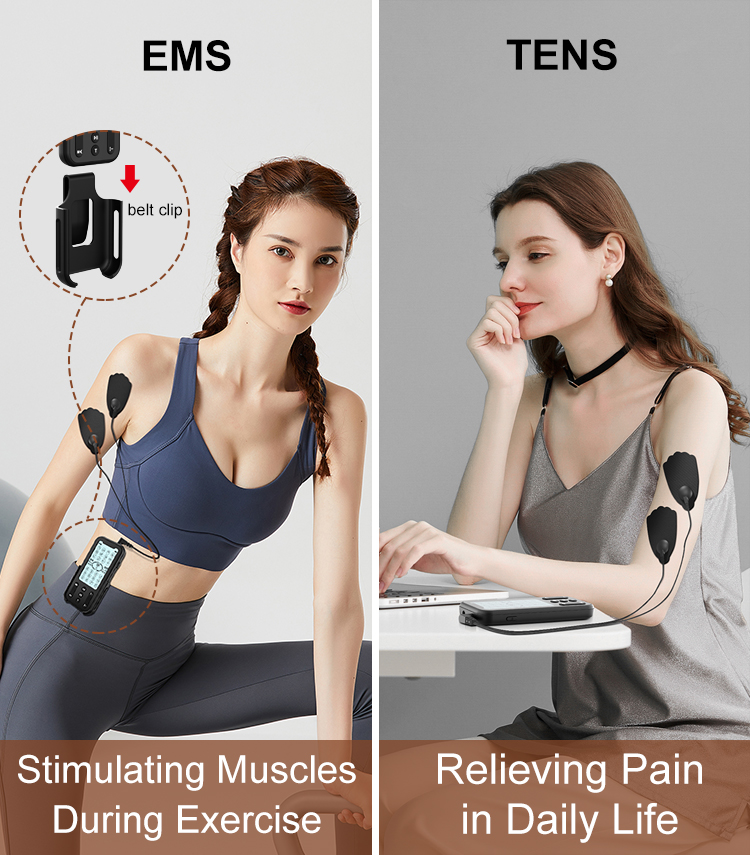
The SM9031 supports personal routines involving muscle stimulation and relief of soreness on suitable body areas. Its independent channels allow users to select different settings for two connected electrode positions. The backlit display makes it convenient to check settings during use at home or while traveling. Follow the supplied instructions for electrode placement and operation.
Choosing between this and a higher-tier dual channel unit usually comes down to two things. Models with larger program libraries, heating or Type-C charging cover more ground, at a higher cost and with more to configure. The SM9031 keeps the per-channel independence and the parameter-level display while staying simpler elsewhere. For buyers building a range, that makes it the model to position for customers who want two genuinely separate channels without the rest of the feature stack.
Why Buyers Choose SUNMAS
SUNMAS develops TENS and EMS products for B2B customers and offers OEM and ODM project support. The SM9031 combines independent channel control, selectable programs, adjustable intensity and practical display functions in one rechargeable device.
For a catalog, the device is straightforward to describe accurately: 24 modes, two channels with separate mode and intensity, a 20-minute default timer, a backlit display reporting four operating readings, a button lock, and a documented charging setup including the Mini USB port. That last point matters commercially — buyers who know the port type in advance can plan cables and packaging accordingly, and end users aren't surprised after purchase.
OEM and ODM support covers branding, packaging, compatible electrodes and order requirements. Since the device runs on compatible electrodes, planning those alongside the unit avoids a gap in the finished offer.
FAQ
How many modes and intensity levels does it have?
24 modes and 20 intensity levels. Output starts at level 0 and increases one level at a time.
Are the two channels fully independent?
Yes. Channels A and B allow separate mode and intensity settings, so two electrode positions can run different patterns at different strengths.
What happens to intensity when I change a mode?
Intensity resets to 0, so the new program can be adjusted gradually from a known starting point.
What does the display show?
Channel settings, pulse frequency, pulse width and session time. The backlight turns off after 20 seconds without operation.
Can I pause a session?
Yes — there's a dedicated pause button, and the device switches off when the session timer ends. The default session time is 20 minutes.
What does the button lock do?
It prevents setting changes through the other buttons while keeping the power button available.
What charging port does it use?
A Mini USB port, with a 3.7V, 180 mAh battery. Battery indicators show charge level, and stimulation is disabled while charging.
Do you offer OEM and ODM services?
Yes — for branding, packaging, compatible electrodes and product configuration.
| Attribute | Specification |
| Product Name | Dual Channel TENS Unit with Backlit Display |
| Model No. | SM9031 |
| Application | Muscle stimulation and relief of muscle soreness |
| Main Function | Low Frequency Pulse Stimulation |
| Modes | 24 Modes |
| Channels | 2 Channels |
| Intensity Levels | 20 Levels |
| Timer | Default 20 Minutes; Adjustable |
| Control Method | Main Unit Button Control |
| Display | White Backlit Display |
| Battery Capacity | 3.7V / 180mAh |
| Charging Port | Mini USB |
| Charging Input | DC 5V / 500mA |
| Pulse Frequency | 1–100Hz ±10% |
| Pulse Width | 100–300μs ±20% |
| Load Detection | Yes |
| Button Lock | Yes |
| Customization | OEM/ODM Available |


 EN